 Pin It
 My first attempt at tom yum soup was a disaster of burnt lemongrass and fish sauce that lingered in my kitchen for three days, but somewhere between that smoky failure and now, I discovered that the magic lives in timing, not perfection. One quiet Tuesday evening, I decided to fold wontons while simmering the broth, and the whole experience shifted from stressful to meditative, like two conversations happening at once. That night, a friend mentioned she'd never had authentic Thai soup before, and watching her eyes light up at the first spoonful made me realize this dish had become something I needed to share. This tom yum wonton fusion brings together the best of both worlds, and honestly, it's become my go-to when I want to impress without the fuss.
I made this soup for my partner during a particularly gray winter when we both needed something bright and warming, and the way the aromatics filled our apartment felt like opening a window to somewhere sunny. He'd been skeptical about Asian fusion until that first sip, when the lemongrass and lime hit him all at once, and he actually paused mid-spoon to ask for the recipe. Those small moments, when food becomes a conversation starter rather than just sustenance, are exactly why I keep coming back to this one.
Ingredients
- Ground pork (200 g): The filling's backbone that carries flavor and texture; it's meatier than chicken if you want richness, though either works beautifully.
- Wonton wrappers (20): These thin sheets are your vessel for magic, and keeping them under a damp cloth prevents them from drying out before you fold.
- Soy sauce (1 tbsp for filling): This seasons the wonton filling with umami depth without overpowering the delicate wrapper.
- Sesame oil (1 tsp): A little goes a long way here, lending that toasted nuttiness that makes you pause and wonder what's missing, then realize it's this.
- Ginger and garlic: Fresh ginger keeps the filling bright; I learned the hard way that pre-minced tastes like sadness compared to freshly grated.
- Chicken stock (1.5 liters): Use low-sodium because you're building the flavor with fish sauce and lime, and you want control over the salt balance.
- Lemongrass (3 stalks): Smash it gently first to release those citrusy oils; this is where the soup's heart lives.
- Kaffir lime leaves (4): These torn leaves give you a different kind of lime flavor than juice alone, almost floral and complex.
- Galangal (4 slices): It's ginger's spicier cousin and worth seeking out, though fresh ginger works in a pinch with slightly less sophistication.
- Red chilies (2): Slice them and leave the seeds in if you're fearless; remove them if you prefer to control the heat.
- Mushrooms (200 g): Shiitake adds earthiness and body to the broth; button mushrooms are lighter but still lovely.
- Tomatoes (2 medium): They soften into the broth and add sweetness that balances the heat and tang.
- Fish sauce (3 tbsp): I know it smells like a fishing dock at low tide, but trust that it transforms into savory depth once it hits the heat.
- Lime juice (2 tbsp): Fresh lime is non-negotiable here; bottled tastes tinny and flat by comparison.
- Bok choy or spinach (100 g): Add this at the very end so it stays tender and bright green rather than sad and wilted.
- Shrimp (optional, 100 g): If using, peel them first and they'll cook through in the residual heat while the wontons float up.
Tired of Takeout? 🥡
Get 10 meals you can make faster than delivery arrives. Seriously.
One email. No spam. Unsubscribe anytime.
Instructions
- Craft your wonton filling:
- Combine the ground pork with soy sauce, sesame oil, ginger, garlic, spring onion, and white pepper in a bowl, mixing until everything is evenly distributed and the mixture feels alive in your hands. The filling should smell aromatic but not aggressive, a promise of what's to come.
- Wrap with intention:
- Place about one teaspoon of filling in the center of each wrapper, dampen the edges with your finger dipped in water, then fold into a triangle and seal by pressing the edges firmly. I like to set them on a parchment-lined plate under a damp cloth so they don't dry out while you work on the broth.
- Build your broth foundation:
- Pour the chicken stock into a large pot and bring it to a simmer over medium-high heat, then add the smashed lemongrass, torn kaffir lime leaves, galangal slices, and red chilies. Let this infuse quietly for ten minutes, filling your kitchen with an aroma that signals something delicious is happening.
- Deepen the flavor:
- Add the sliced mushrooms and quartered tomatoes to the simmering broth and let them cook for five minutes until they start to soften and give themselves to the liquid. Then, using a slotted spoon, fish out the lemongrass, galangal, and kaffir lime leaves, which have done their job and can rest now.
- Season to your soul:
- Pour in the fish sauce, lime juice, and sugar, then taste and adjust with more lime if you want brightness or more fish sauce if you want savory depth. This is your moment to make it yours, so taste generously and don't apologize for preferring more tang or more heat.
- Introduce the wontons:
- Gently lower the wontons into the simmering broth and let them cook for four to five minutes, watching as they rise to the surface like little boats, a sign they're ready. If using shrimp, add them at the same time so they cook through together.
- Finish with greens:
- Add the bok choy or spinach and simmer for just one minute until it wilts into the broth, keeping its color and texture bright. Don't skip this step even if you're tempted, as fresh greens transform the final bowl from good to balanced.
- Serve with ceremony:
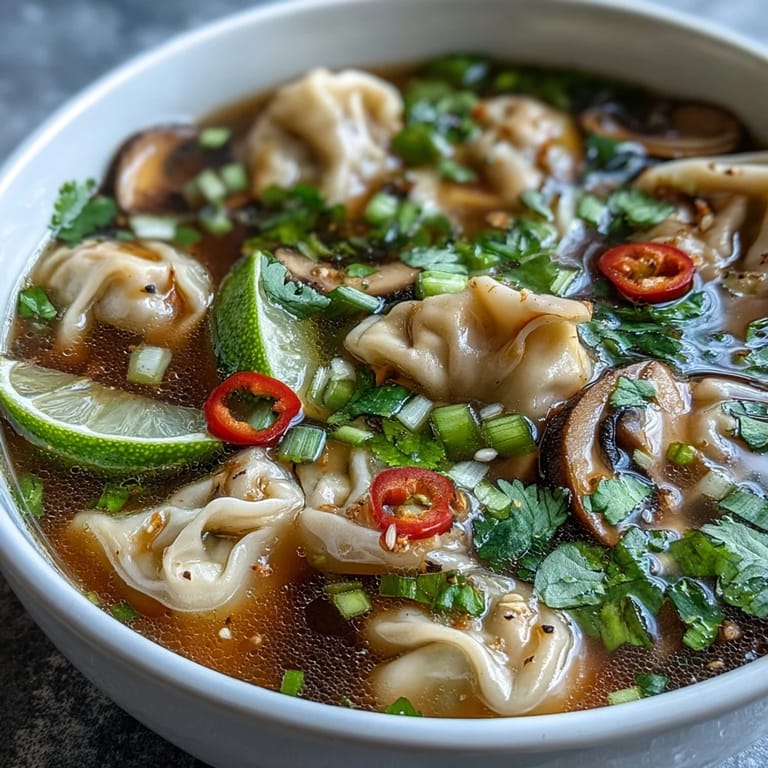
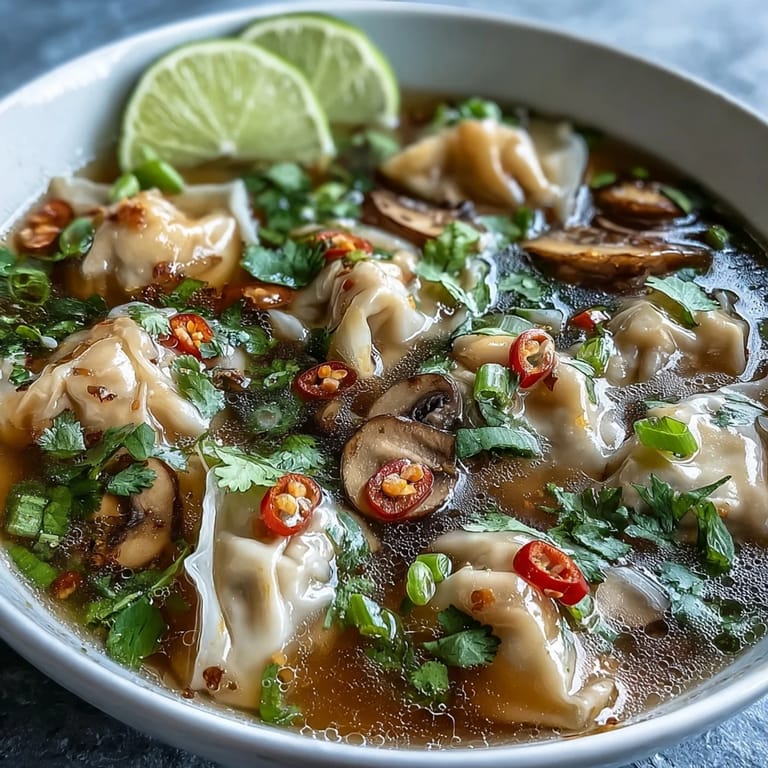
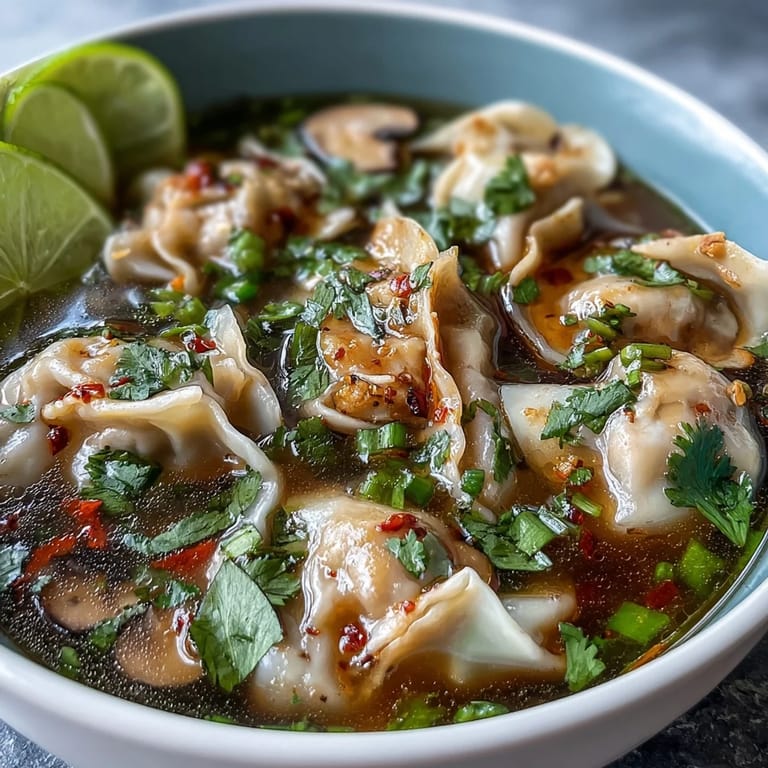
- Ladle the soup into bowls, making sure each one gets wontons, broth, and vegetables, then crown it with fresh coriander, sliced spring onions, lime wedges, and a drizzle of chili oil if you're feeling it. This is where the soup becomes a complete experience.
 Pin It
 My grandmother once told me that soup is where you see a person's patience, and I didn't understand until I made this bowl for someone I cared about and watched them slow down to appreciate each element. That's when I realized this isn't just tom yum with wontons tacked on, but rather two cooking traditions meeting in a quiet moment of harmony.
The Art of Wonton Folding
Wontons intimidated me for years because I thought they required some secret technique passed down through generations, but the truth is simpler: they just need respect and consistency. Once you fold your first three, your hands remember the motion, and suddenly you're in a rhythm that's almost meditative. The key is not overfilling them, as tempting as that is, because a tiny pouch cooks evenly and floats beautifully, while an overstuffed one bursts and breaks your heart.
Why This Fusion Works
Thai and Chinese cooking aren't opposites; they're neighbors with overlapping pantries and shared respect for balance, which is exactly why this soup feels natural rather than forced. The wonton wrapper provides a soft container for richness, while the tom yum broth remains bright and aromatic, each component lifting the other instead of competing. What makes this special is that you can taste both traditions clearly rather than them dissolving into something generic.
Making It Your Own
This recipe is a starting point, not a mandate, and some of my favorite moments in the kitchen have come from the second or third time I made something when I finally felt brave enough to adjust. Maybe you prefer extra heat, or you want to add coconut milk for richness, or you discovered a love for Thai basil and throw it in at the end. The beauty of understanding how something works is that you can then play with it freely.
- For vegetarians, swap the pork for pressed tofu mixed with the seasonings, and use vegetable stock instead of chicken stock, which will taste lighter but equally delicious.
- If you can't find galangal or kaffir lime leaves, increase your ginger and add a lime zest to the broth instead of leaving them out entirely, because the aromatics matter more than hitting every ingredient perfectly.
- Serve with jasmine rice on the side to soak up the broth, making this a heartier meal that feels like a complete dinner rather than just soup.
 Pin It
 This soup has taught me that fusion isn't about diluting traditions but rather about honoring multiple lineages in one bowl, and every time I make it, I'm grateful for that lesson. Serve it hot, slowly, and with people who appreciate the effort you've put into bringing two worlds together.
Recipe FAQs
- → What makes tom yum broth different from other Asian soups?
Tom yum broth is distinctively Thai, featuring a hot and sour profile created by fresh chilies for heat and lime juice for acidity. The addition of lemongrass, kaffir lime leaves, and galangal gives it aromatic citrusy and piney notes that set it apart from Chinese or Japanese soup bases.
- → Can I freeze the wontons for later use?
Yes, uncooked wontons freeze beautifully. Arrange them in a single layer on a baking sheet until firm, then transfer to an airtight container or freezer bag. They'll keep for up to 2 months. Cook frozen wontons directly in the broth, adding 1-2 minutes to the cooking time.
- → How can I make this soup vegetarian?
Substitute the pork filling with crumbled tofu or finely chopped vegetables like shiitake mushrooms and water chestnuts. Use vegetable stock instead of chicken stock, replace fish sauce with soy sauce or tamari, and omit the shrimp. The result remains deeply flavorful and satisfying.
- → What's the best way to wrap wontons?
Place a teaspoon of filling in the center of the wrapper. Moisten all four edges with water using your finger. Fold diagonally into a triangle, pressing out any air pockets. For extra security, bring the two bottom corners together and overlap them, sealing with a bit more water. Keep wrapped wontons covered with a damp cloth to prevent drying.
- → Can I prepare the components in advance?
Absolutely. You can make and refrigerate the wontons up to 24 hours ahead, keeping them covered with a damp towel. The broth base (stock with aromatics) can also be prepared a day early and reheated. Add fresh vegetables and finish cooking just before serving for the best texture and flavor.
- → What can I serve with this soup?
Steamed jasmine rice is the traditional accompaniment, making the meal more substantial. You could also serve it with crispy spring rolls, Thai salad, or simply enjoy it on its own as a complete meal. The soup itself contains protein, vegetables, and carbohydrates in one bowl.