 Pin It
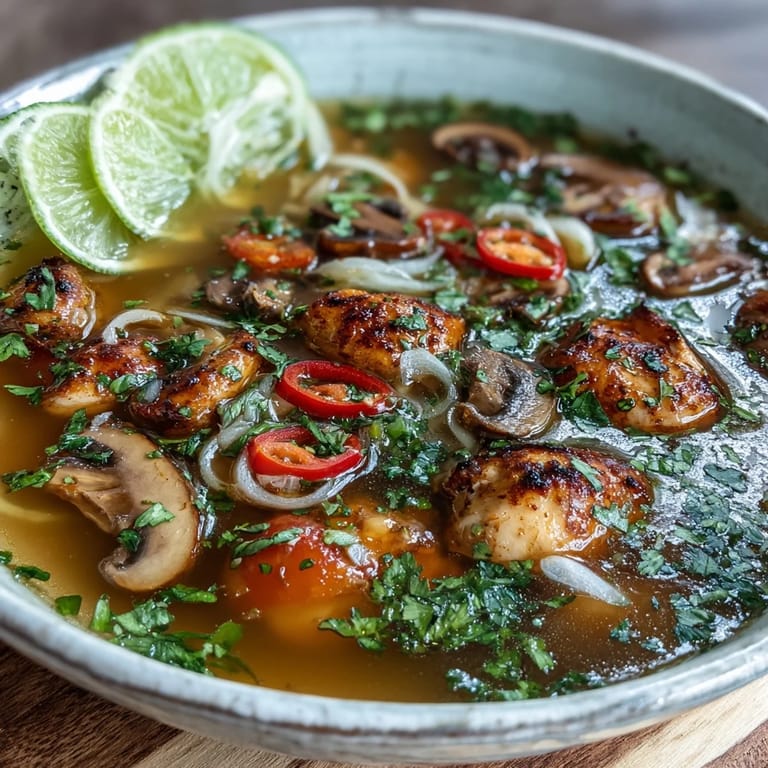
 Bangkok's humid afternoons have a way of making you crave something that cuts through the heat, and Tom Yum Gai does exactly that. I discovered this soup years ago while sitting in a tiny shophouse kitchen watching an older woman work without a recipe, just instinct and her senses guiding every move. The way she'd pause to smell the lemongrass bruising in the pot, the casual toss of lime juice at the end like she was seasoning by feel alone—it taught me that this soup isn't about following steps, it's about building layers of heat, sourness, and aroma until something magical happens. Now whenever I make it, I chase that same feeling: the moment the broth transforms from simple stock into something alive and complex.
I made this for a friend who'd just moved to town and was feeling homesick for Southeast Asia. Watching her face when that first spoonful hit—the immediate shock of heat, then the brightness of lime—reminded me why food matters. She asked for the recipe that night, and I realized it wasn't the ingredients she wanted, it was the permission to make something this vibrant at home.
Ingredients
- Chicken breast or thighs: Thighs stay more tender if you're nervous about overcooking, but breast works fine if you slice it thin and don't leave it in the broth too long.
- Chicken stock: Use something with body—homemade or a good quality brand makes a real difference in the final taste.
- Lemongrass: The tough outer layers protect the tender heart; smash it gently to release oils without turning it to pulp.
- Kaffir lime leaves: They taste nothing like regular limes but everything like Thai cooking; tear them by hand so they release more fragrance.
- Galangal: Firmer and more peppery than ginger, but ginger is an honest substitute if you can't find it.
- Thai bird's eye chiles: Small but fierce—start with one and add another if you want more heat, but you can't take it back.
- Nam prik pao: This roasted chili paste is the soul of the soup; it's salty, slightly sweet, and packed with umami that fresh ingredients alone can't touch.
- Fish sauce: Use it boldly—a timid hand here makes the whole soup taste thin and forgettable.
- Fresh lime juice: Add it at the end so the brightness doesn't cook away; taste as you go.
Tired of Takeout? 🥡
Get 10 meals you can make faster than delivery arrives. Seriously.
One email. No spam. Unsubscribe anytime.
Instructions
- Build your aromatic base:
- Bring the chicken stock to a gentle boil in a large saucepan, then add lemongrass, kaffir lime leaves, galangal, and smashed chiles. Let them simmer together for 5 minutes—you'll notice the broth shifting color and the kitchen filling with that grassy-spicy-woody smell that says you're on the right path.
- Cook the chicken:
- Add your sliced chicken and simmer for 3 to 4 minutes until the pieces turn opaque all the way through. Skim any foam that rises—it's not wrong to leave it, but removing it gives you a cleaner broth.
- Add the vegetables:
- Stir in mushrooms, tomatoes, and onion, then simmer for another 3 to 4 minutes until they're tender but still have some resistance when you bite them. This is where restraint matters; overcooked mushrooms turn into sponges.
- Season with intention:
- Stir in nam prik pao, fish sauce, sugar, and salt, then let everything marry for 2 minutes. Taste before moving on—this is your moment to adjust the balance.
- Finish with brightness:
- Remove from heat and stir in fresh lime juice, tasting as you go to find the right amount of sourness for your palate.
- Serve and garnish:
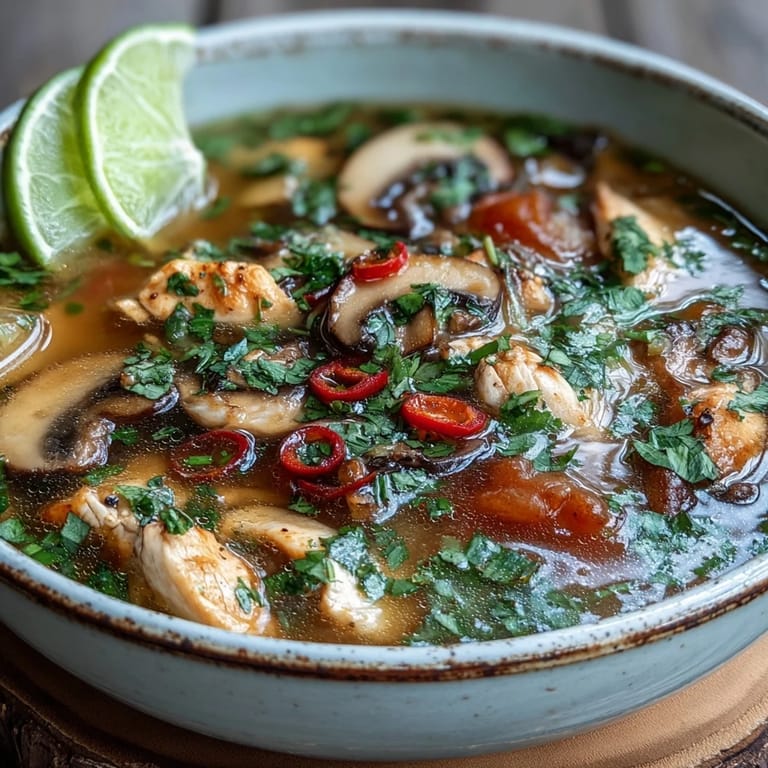
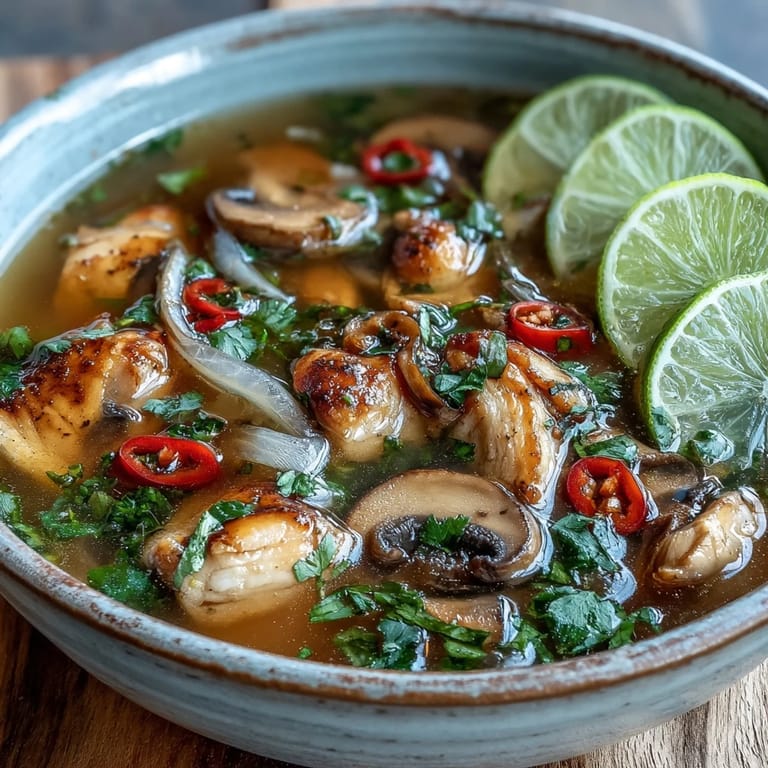
- Ladle into bowls and finish with fresh cilantro and sliced chiles if you want extra heat. Set lime wedges on the side so people can adjust the sourness to their liking.
 Pin It
 There's a moment in every good bowl of Tom Yum when everything stops mattering except what's in front of you. The heat clears your sinuses, the sour makes your mouth water, and you forget to check your phone or think about tomorrow's tasks.
The Difference Between Good and Great
Most people rush the infusion step, tossing everything in and bringing it straight to a boil. But those first 5 minutes matter more than you'd think—that's when the lemongrass, galangal, and lime leaves have time to actually perfume the broth instead of just floating through it. I learned this by accident when I once simmered the aromatics for a full 10 minutes while answering texts, and the soup came out noticeably more complex and rounded.
Heat and Balance Are Personal
Thai cooking respects the eater's preferences, which is why lime wedges and extra chiles always come on the side. Some people want their Tom Yum fierce enough to make them sweat; others prefer to ease into the heat. I've learned to make the base with restraint and let people customize their own bowl rather than assuming everyone wants to suffer.
Playing with the Recipe
Once you understand the template, variations come naturally—swap shrimp for chicken, add a splash of evaporated milk for creaminess, throw in a handful of spinach at the end if the vegetables feel sparse. The core flavors (sour, salty, spicy, aromatic) stay constant while everything else can shift based on what's in your fridge or what you're craving.
- A tablespoon of evaporated milk stirred in at the end softens the heat without making it creamy soup.
- Fish sauce quality matters more than you'd expect—smell it before buying if you can, because some brands are funky in an unpleasant way.
- Make extra stock and freeze it in portions so you can throw together Tom Yum whenever the craving hits without starting from scratch.
 Pin It
 Tom Yum Gai is the kind of soup that makes you feel like you've traveled somewhere without leaving your kitchen. Make it often enough and you'll stop thinking about recipes and start trusting your instincts instead.
Recipe FAQs
- → What makes Tom Yum Gai authentic?
Traditional Tom Yum Gai relies on the holy trinity of Thai aromatics: lemongrass kaffir lime leaves and galangal. The addition of nam prik pao roasted chili paste creates depth while fresh lime juice and fish sauce provide the signature spicy-sour-salty balance that defines this soup.
- → Can I make this soup less spicy?
Absolutely. Start with one smashed bird's eye chile instead of two and add the nam prik pao gradually. You can always incorporate more heat later but remember that removing it once added is impossible. Serving extra lime wedges also helps balance intense spice.