 Pin It
 The first time I served lemon brûlée posset, my guest set down her spoon mid-bite and just closed her eyes. That moment—when someone discovers that dessert can be both impossibly silky and brilliantly sharp, all at once—is exactly why I keep making this. It's one of those dishes that feels fancy enough for a dinner party but simple enough that you won't spend the whole evening stressed in the kitchen. The contrast between the cold, tart cream and the hot crack of caramelized sugar on top never gets old, no matter how many times I make it.
I made this for my cousin's birthday last summer, and what I remember most isn't the recipe going perfectly—it didn't, actually—but the sound of laughter when everyone torched their own topping at the table. Someone held the torch too long and charred theirs black, and instead of being embarrassed, they just shrugged and tasted it anyway. Turns out a little extra char isn't a disaster. That's when I realized this dessert has built-in forgiveness, which makes it even better.
Ingredients
- Double cream (500 ml): This is the foundation—don't skip it for single cream or heavy cream will feel thin and sad. You want that rich, silky body that will barely thicken the lemon juice.
- Caster sugar (140 g for the base, plus 6–8 tsp for topping): Finer sugar dissolves faster and gives you that smooth texture. I've learned the hard way that regular granulated sugar leaves a gritty aftertaste.
- Lemon zest from 2 lemons: Zest while the lemons are still whole, before you juice them—it's easier that way and the oils stay fresher.
- Fresh lemon juice (90 ml): Bottled juice will work in a pinch, but freshly squeezed makes all the difference in brightness and that signature posset tang.
- 6 large lemons for shells: Look for lemons with thicker skins that won't collapse when hollowed—they need to be sturdy enough to hold the mixture.
Tired of Takeout? 🥡
Get 10 meals you can make faster than delivery arrives. Seriously.
One email. No spam. Unsubscribe anytime.
Instructions
- Hollow out your lemon shells with care:
- Slice each lemon in half lengthwise and juice them gently—you'll need about 90 ml from the batch. Use a spoon or small melon baller to scoop out the flesh without piercing the shell. Trim a thin slice off the base of each shell so it doesn't rock when you set it down, then pop the shells in the fridge to firm up.
- Heat the cream and sugar until the magic moment:
- Combine cream, sugar, and lemon zest in a saucepan and bring it to a gentle boil—watch it carefully because cream can bubble up fast. Once it's boiling, let it simmer for 3 minutes to infuse the zest, then pull it off the heat.
- Add the lemon juice and watch it transform:
- Stir in the fresh lemon juice and you'll see the mixture thicken slightly—this is the posset doing what it's supposed to do. Let it cool for about 10 minutes, then strain it through a fine mesh to remove the zest pieces if you like it silky smooth.
- Pour into your shells and be patient:
- Fill each chilled lemon shell almost to the rim with the warm posset mixture. Slide them into the fridge for at least 3 hours—this is when the mixture sets into that luxurious, creamy texture.
- Torch the topping just before serving:
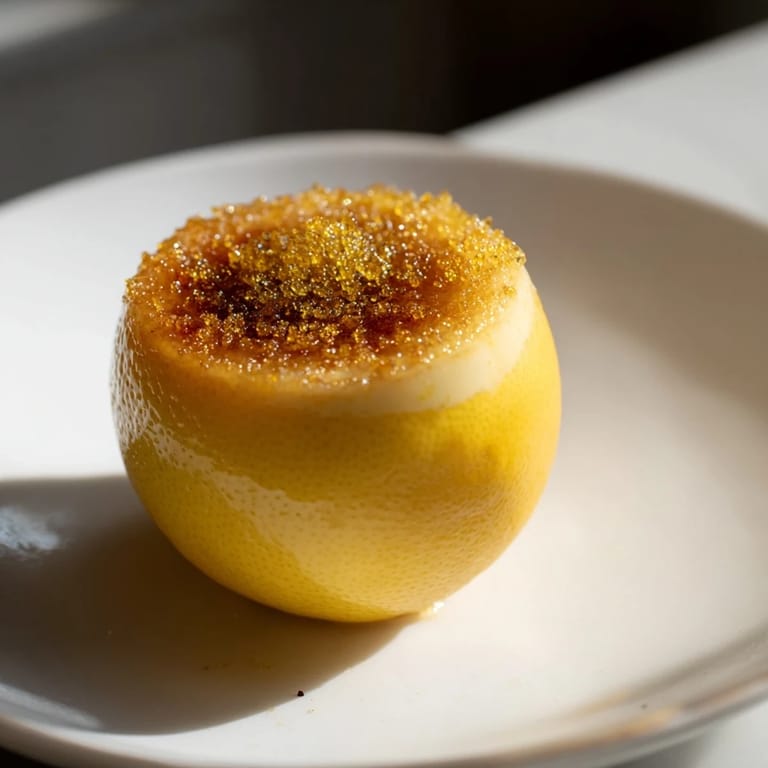
- Sprinkle about a teaspoon of caster sugar over each posset, then use a kitchen blowtorch to caramelize it into a crisp, golden crust. If you don't have a torch, a very hot grill or broiler works, but watch it constantly so it doesn't burn.
 Pin It
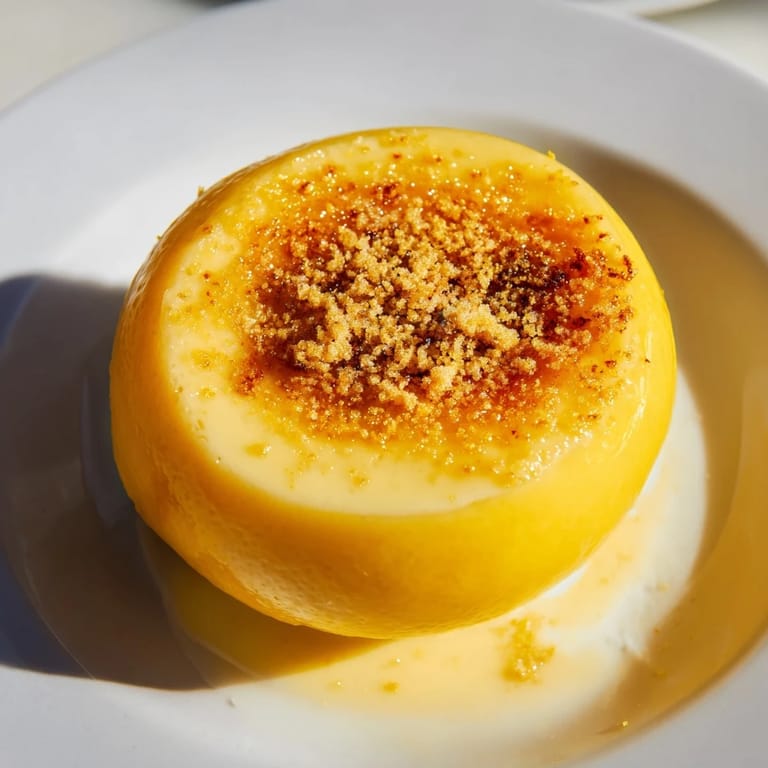
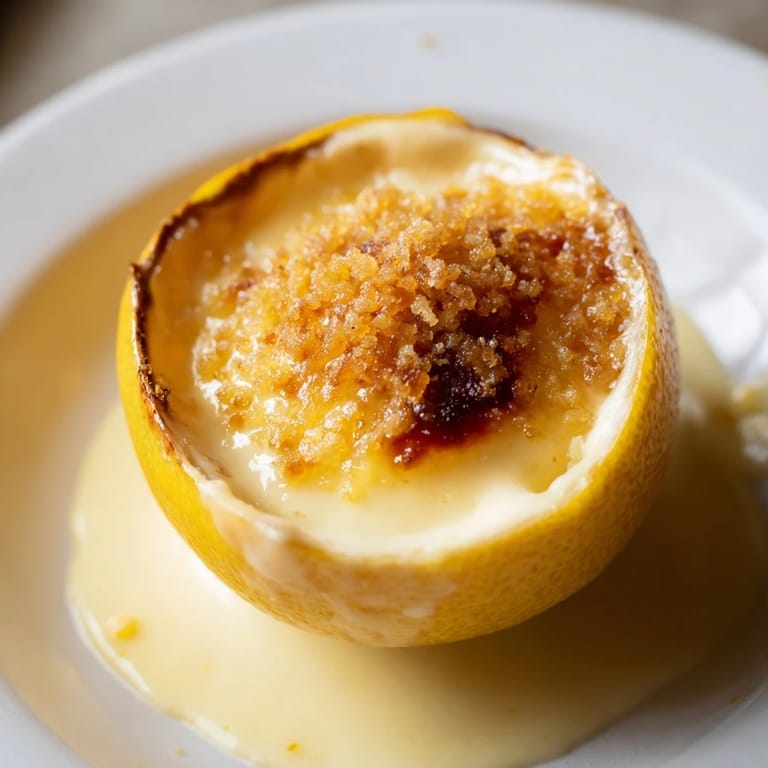
 There's something wonderful about presenting this dessert—pulling out those yellow shells filled with pale cream, each one topped with a thin shell of caramelized sugar. It's the kind of dish that makes people feel celebrated, even if it's just a quiet dinner for two. You're not just giving them dessert; you're giving them an edible work of art that tastes like sunshine and refinement.
Why Lemon and Cream Are Meant to Be Together
The chemistry of this dessert is actually beautiful—the acid in the lemon juice reacts with the fat in the cream to create that velvet texture you get when you stir them together. It's why posset has been made for centuries, long before modern techniques. The tartness cuts through the richness so you never feel overwhelmed, even though you're essentially eating sweetened cream. Every spoonful feels fresh and elegant, not heavy or cloying.
Small Tweaks That Make It Yours
I've experimented with infusing the cream before you add the lemon juice—a sprig of thyme or basil simmered in the cream changes the whole feel of the dessert without overpowering the lemon. You remove the herb before adding juice, so you get just a whisper of something herbal and sophisticated underneath. You can also make the posset mixture a full day ahead and keep the shells in the fridge, then torch them just before your guests arrive.
The Blowtorch Moment and Other Serving Notes
If you don't own a kitchen blowtorch, a very hot grill or broiler will caramelize the sugar—just put the shells on a baking tray and slide them under the heat, watching like a hawk because it happens fast. The topping only needs 2–3 minutes to set, and you want that amber color, not black. Serve these with something crispy on the side—shortbread or almond biscuits are perfect—because the texture contrast of a crisp cookie against creamy posset makes the whole thing feel even more special.
- Make sure your lemon shells are cold before you fill them so the posset sets evenly.
- If you're serving these at a dinner party, you can torch them tableside for a bit of drama.
- The posset keeps in the fridge for up to a day, but the brûlée topping is always better done fresh.
 Pin It
 This dessert reminds me that sometimes the fanciest-looking food on the plate is actually the simplest to make. Serve it with pride and watch everyone's face when they break through that caramelized top.
Recipe FAQs
- → How do you prepare the lemon shells?
Halve large lemons lengthwise, gently juice and scoop out the flesh while keeping shells intact. Trim the bottoms for stability and chill before filling.
- → What is the key to a smooth cream base?
Simmer cream with sugar and lemon zest gently, avoid boiling over, and strain after adding lemon juice to remove zest for extra smoothness.
- → How is the brûlée topping created?
Sprinkle caster sugar evenly on the set cream and carefully caramelize using a kitchen blowtorch or a hot grill until crisp and golden.
- → Can the preparation be done in advance?
Yes, the cream can be prepared and chilled up to a day ahead. The caramelized topping should be added just before serving.
- → What are suitable accompaniments for serving?
Crisp shortbread or almond biscuits complement the creamy lemon and caramel flavors beautifully.