 Pin It
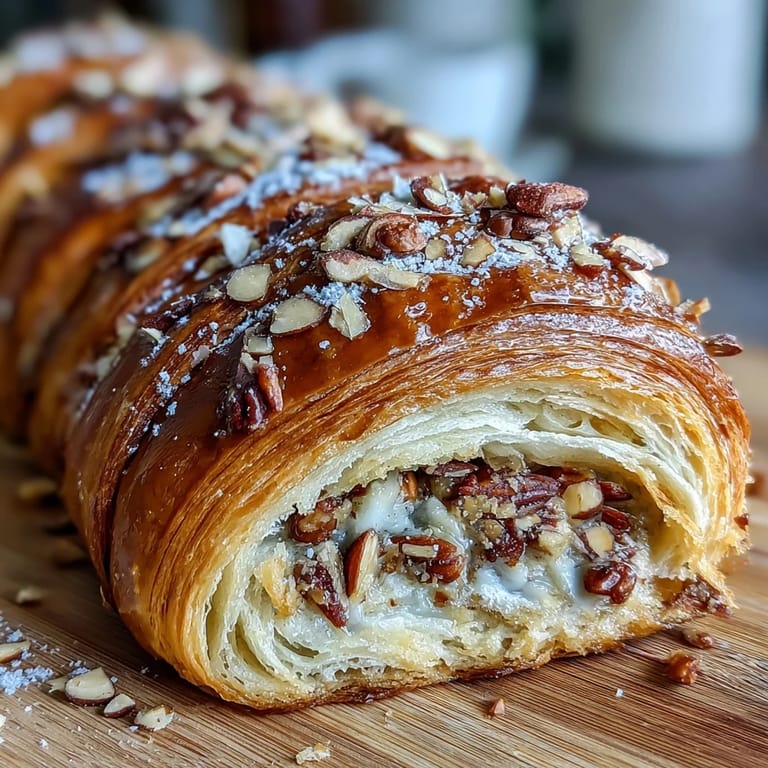
 There was this Tuesday morning when my neighbor knocked on my door with fresh sourdough starter and a challenge: make something between a croissant and a cinnamon roll that didn't require laminating butter seventeen times. I stood in my kitchen thinking about those buttery almond croissants from the patisserie down the street, the ones that cost too much and tasted like they held secrets. What if I could capture that flaky, almond-filled magic using dough I already had on hand? That afternoon, I rolled out sourdough, spread silky almond cream across it, and cut it into spirals. The rolls that came out of the oven were golden, fragrant, and somehow even better than the expensive originals.
I made these for a small gathering last spring when my sister visited from out of town, and she devoured three while telling me about her new apartment. There was something perfect about watching her pull apart the warm spiral, almond cream still soft in the center, powdered sugar dusting her fingers as she talked about fresh starts. That moment felt like the whole reason I love to cook, honestly—not for the recipe itself, but for what happens when food lands on the table at exactly the right time.
Ingredients
- Sourdough dough (1 lb): Store-bought or homemade works beautifully; the sourness provides subtle depth that rounds out the sweetness and gives your rolls a sophisticated edge that regular dough can't match.
- Almond flour (1/2 cup): This is your secret weapon—finer and more flavorful than almond butter, it creates that creamy, tender filling that feels almost luxurious without being heavy.
- Granulated sugar (1/4 cup): Sweetness for the filling itself; it dissolves into the butter and almond flour to create something closer to traditional frangipane than a simple paste.
- Unsalted butter (1/4 cup): Softened, not melted—you want it to cream properly with the sugar so the filling becomes light and airy rather than dense.
- Egg (1 large): This binds everything and adds moisture; room temperature eggs blend in smoothly without creating lumps in your almond cream.
- Vanilla and almond extracts (1/2 tsp each): A tiny amount goes such a long way; these give the filling that complex flavor that makes people wonder if you added something mysterious.
- Sliced almonds (1/2 cup): Toast them lightly first if you want deeper flavor, but raw works fine too—they soften during baking and add texture that stops the rolls from feeling too soft.
- Milk (2 tbsp) and powdered sugar (2 tbsp): Milk brushed on top creates shine and helps the almonds stick; powdered sugar dusted at the end is purely joy.
Tired of Takeout? 🥡
Get 10 meals you can make faster than delivery arrives. Seriously.
One email. No spam. Unsubscribe anytime.
Instructions
- Ready your workspace:
- Heat your oven to 375°F and line a baking sheet with parchment paper; this prevents sticking and lets you slide the rolls around if you need to adjust their spacing as they puff up.
- Shape the foundation:
- On a lightly floured surface, roll your sourdough dough into a 12 by 16-inch rectangle, working gently so you don't deflate the air bubbles that will make these rolls tender. The thickness should feel substantial but not thick enough to resist rolling.
- Make the almond cream magic:
- In a bowl, cream the softened butter and sugar until pale and fluffy, which takes about 2 minutes with a mixer or patient hand-stirring; then add the egg, extracts, and salt, stirring until completely smooth and without any butter streaks. This is your frangipane, the soul of the whole thing.
- Spread and fill:
- Distribute the almond cream evenly across your dough rectangle, leaving a 1/2-inch border all around; this stops the filling from leaking out the sides as the rolls bake and rise. Use an offset spatula or the back of a spoon to spread it gently.
- Roll into spirals:
- Starting from one of the long edges, roll the dough toward you into a tight log, sealing the seam by pinching it against the dough as you go; then slice it with a sharp knife into 8 equal pieces. This is meditative, cutting through all those layers and seeing the spiral reveal itself with each cut.
- Arrange for baking:
- Place the rolls cut-side up on your prepared baking sheet, spacing them about 2 inches apart; gently reshape any that got squished during cutting, pressing them into rough circles with your fingertips.
- Apply the finishing touches:
- Brush the top of each roll with milk using a pastry brush, then scatter sliced almonds generously over each one; the milk helps the almonds adhere and creates a light, lacquered finish.
- Bake until golden:
- Bake for 22 to 25 minutes until the rolls are puffed and the tops are a deep golden brown; your kitchen will smell like toasted almonds and caramelized sugar. The edges should look crispy while the centers feel soft when you press gently.
- Cool and dust:
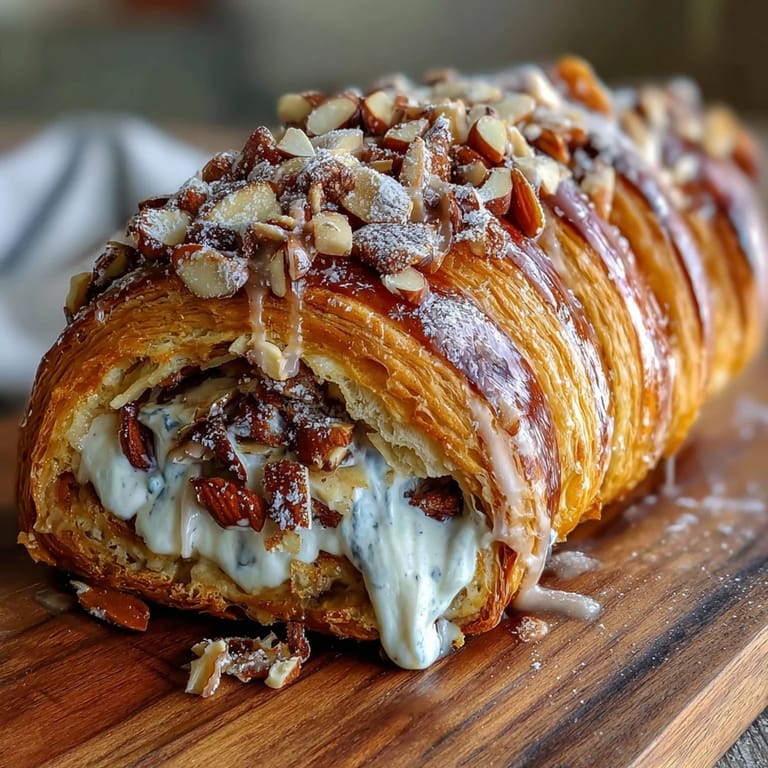
- Let the rolls sit on the baking sheet for 2 to 3 minutes before transferring to a cooling rack; once they're still warm but not actively steaming, dust generously with powdered sugar for that snow-covered pastry look.
 Pin It
 My partner came home early one Friday and caught me mid-dusting with powdered sugar, my hands looking like I'd been finger-painting with snow. He laughed and grabbed one straight off the cooling rack, burning his mouth slightly because they were still too hot, and that small moment of impatience somehow made the whole thing feel worth it. Food is funny that way—sometimes the best part isn't the eating, it's the person who can't wait.
The Sourdough Advantage
Using sourdough instead of regular dough changes the entire flavor profile in ways that feel subtle but matter deeply. The natural fermentation gives these rolls a gentle tang that prevents them from tasting one-dimensional or cloyingly sweet, the way some pastries can feel if they're all sugar and butter without anything to balance them. It's like adding a pinch of salt to chocolate—you don't necessarily taste the sourdough directly, but you notice how it makes everything else taste better. If you're starting from scratch with sourdough starter, give yourself at least 12 hours for bulk fermentation, but if you're using store-bought dough, you can have these rolls baked and dusted within an hour. That's the real magic here—complicated flavor without complicated timing.
Making Almond Cream That Feels Luxurious
The frangipane here is the difference between a competent pastry and one that makes people close their eyes while chewing. Traditional frangipane gets its richness from butter and almonds, but it also needs that emulsion moment when the egg binds everything together into something creamy rather than gritty. I learned this the hard way when I first made these and skipped the creaming step, thinking I could just throw ingredients together—the result tasted fine but felt sandy on the tongue, like someone had swapped out half the cream for almond flour. Now I cream the butter and sugar for a full minute before adding anything else, letting it get pale and fluffy. The egg goes in next, stirred thoroughly, and then the flour, extracts, and salt. This method takes maybe 3 minutes total and transforms the texture completely.
Variations That Taste Like Inspired Choices
These rolls are a canvas, and once you understand the basic structure, you can paint differently depending on your mood or what's in your pantry. Some mornings I brush the dough with a thin layer of melted butter before spreading the almond cream—it creates an extra flaky layer that mimics proper laminated croissants without any of the folding labor. Other times I add a teaspoon of raspberry or apricot jam spread thinly over the almond cream before rolling, which adds brightness and breaks up the richness beautifully. I've also experimented with adding a tablespoon of orange zest to the almond cream mixture, which gives everything a subtle citrus note that feels particularly good in spring.
- Try a brush of melted butter before the almond cream for deeper flakiness and a more croissant-like texture.
- A thin spread of raspberry jam mixed in with the almond cream adds fruity brightness without making things wet.
- Orange or lemon zest stirred into the almond cream creates a sophisticated flavor that feels intentional rather than improvised.
 Pin It
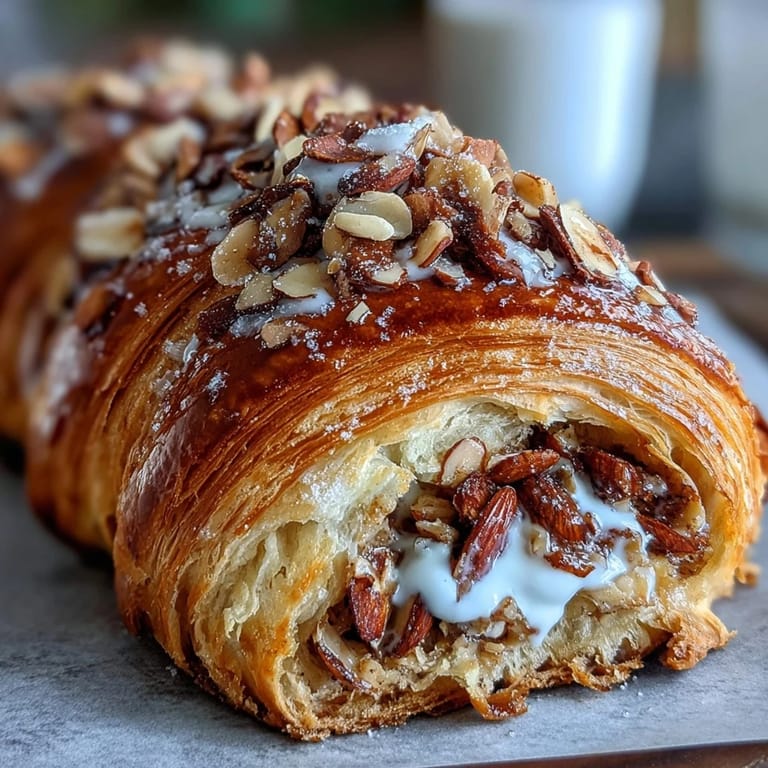
 These almond croissant-style rolls have become the thing I make when I want breakfast to feel special without spending all morning in the kitchen. There's something deeply satisfying about pulling together ingredients that transform sourdough into something that tastes like you've been awake since dawn, carefully folding and proofing, when really you've just been clever.
Recipe FAQs
- → What dough is best for these rolls?
Store-bought or homemade sourdough pizza dough works well, providing a sturdy but tender base that bakes into flaky layers.
- → How do I get the almond cream smooth?
Cream almond flour, sugar, softened butter, egg, and extracts until completely smooth for even spreading and texture.
- → Can I make these rolls ahead of time?
You can assemble the rolls and refrigerate before baking; allow them to come to room temperature for even rising.
- → What is the purpose of brushing milk on top?
Milk helps the sliced almonds brown nicely and contributes to a shiny, golden crust.
- → How can I add more flakiness?
Brushing melted butter on the dough before spreading the almond cream enhances flakiness and richness.