 Pin It
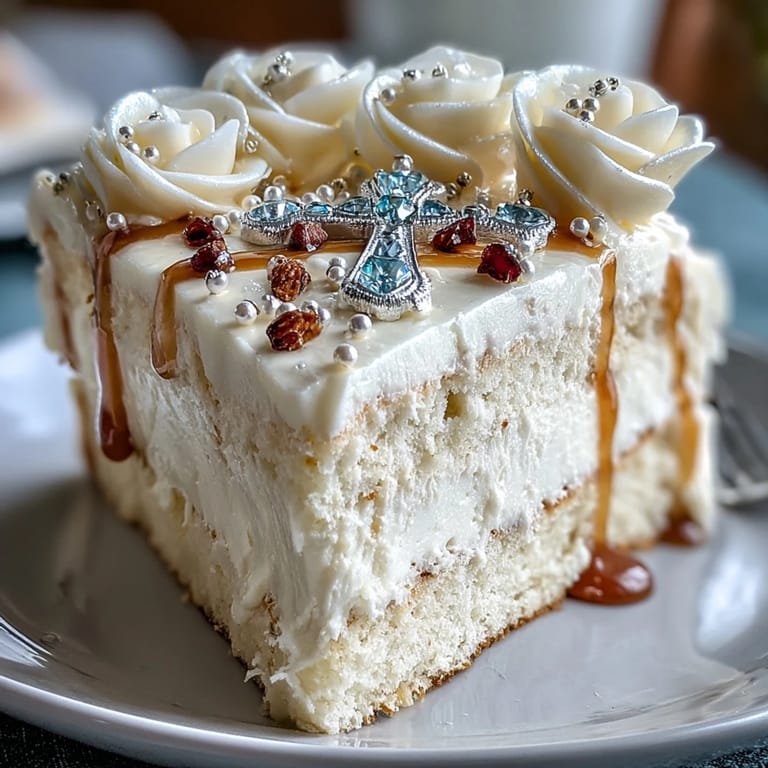
 There's something about baking a First Communion cake that shifts the whole kitchen into a different gear—suddenly it's not just about following steps, it's about creating something that will sit at the center of someone's most meaningful day. I learned this while standing in my aunt's kitchen on a humid Saturday morning, watching her hands work the buttercream with this focused tenderness, humming softly between tasks. The vanilla sponge layers had just cooled, filling the air with that warm, comforting sweetness that makes you understand why people call baking therapeutic. She mentioned, almost offhandedly, that the fondant roses were her favorite part because they're forgiving—each petal is its own little sculpture, and imperfection just reads as artistry. By the time we placed that delicate cross topper on top, the whole cake felt less like dessert and more like an edible blessing.
I'll never forget my neighbor's face when she saw this cake for her daughter's celebration—she actually teared up, not because it was perfect, but because it was made with intention. That's when I realized this isn't a recipe you rush; it's something you settle into, maybe over two afternoons, letting each component get the attention it deserves. The whole experience becomes part of what makes the cake special.
Ingredients
- All-purpose flour (2 ½ cups): The foundation of a tender crumb—make sure it's spooned and leveled, not scooped straight from the bag, or your cake will be dense.
- Baking powder (2 ½ tsp): This is your rise guarantee; don't swap it for baking soda unless you're adding acid.
- Unsalted butter (1 cup for sponge, 1 ½ cups for frosting): Room temperature is non-negotiable here—cold butter won't cream properly, and you'll lose that airy texture that makes this cake sing.
- Granulated sugar (2 cups): Creaming it with butter for a full three minutes creates tiny air pockets that keep the cake light and delicate.
- Large eggs (4, room temperature): Cold eggs won't incorporate smoothly and can cause the batter to break; set them out while you prep everything else.
- Pure vanilla extract (1 tbsp for sponge, 2 tsp for frosting): The real stuff matters here—imitation extract will taste noticeably thin against the delicate crumb.
- Whole milk (1 cup, room temperature): Alternating this with flour keeps the batter from becoming tough from overmixing.
- Powdered sugar (5 cups, sifted): Sifting removes lumps and makes your frosting silky instead of grainy.
- White fondant (16 oz): Invest in a quality brand; cheaper fondant cracks and tastes waxy, while good fondant is smooth and pliable.
- Green gel food coloring (optional): Gel holds its color better than liquid coloring, which can make fondant too wet.
- Edible pearls or silver dragees (optional): These add a subtle shimmer that reads as celebration without being loud.
- Cross topper: Check that it's food-safe if it touches the cake directly, or use it as a standalone centerpiece.
Tired of Takeout? 🥡
Get 10 meals you can make faster than delivery arrives. Seriously.
One email. No spam. Unsubscribe anytime.
Instructions
- Set your stage:
- Preheat the oven to 350°F and grease those cake pans generously, then line the bottoms with parchment—this is how you guarantee your layers come out clean. While the oven heats, pull your eggs and milk out of the fridge; room temperature ingredients mix into a smoother, more cohesive batter.
- Build your dry mix:
- Whisk flour, baking powder, and salt together in a bowl—this distributes the leavening evenly so your cake rises uniformly. Don't skip this step; it's the difference between an even crumb and one with dense pockets.
- Cream the foundation:
- In a large bowl, beat softened butter and sugar together for a full three minutes until it looks pale and fluffy, almost like whipped cream. This creaming action is where your cake's tender texture begins.
- Incorporate the eggs:
- Add eggs one at a time, beating well after each addition so each one fully integrates before the next arrives. This prevents the batter from looking broken or curdled.
- Mix in vanilla:
- Stir in the vanilla extract until it's evenly distributed, then pause before moving forward.
- Alternate wet and dry:
- With your mixer on low speed, add about a third of the flour mixture, then half the milk, then another third of flour, then the remaining milk, and finally the last of the flour. Start and finish with flour to prevent the batter from becoming tough. Mix just until combined—overmixing develops gluten and makes the cake dense.
- Get into the pans:
- Divide the batter evenly between your prepared pans and smooth the tops with a spatula so they bake at the same rate. Uneven tops mean lopsided layers.
- Bake until golden:
- Bake for 30 to 35 minutes—your kitchen will smell incredible—until a toothpick inserted into the center comes out clean or with just a few crumbs. If the tops are browning too fast, tent them loosely with foil.
- Cool with intention:
- Let the cakes sit in their pans for ten minutes so they set slightly, then turn them out onto wire racks to cool completely. Trying to frost warm cake is an exercise in frustration.
- Make the buttercream:
- Beat softened butter until it's creamy and pale, then gradually add the sifted powdered sugar so you don't create a cloud of white dust. Add vanilla and a pinch of salt, then thin with milk or cream one tablespoon at a time until you reach a spreadable consistency.
- Assemble and coat:
- Place one cooled cake layer on your cake board, spread a thin layer of buttercream on top, then crown it with the second layer. Apply a thin crumb coat all over the cake—this seals in stray crumbs—then chill it for twenty minutes.
- Final frosting layer:
- Apply a thick, smooth final layer of buttercream, using an offset spatula dipped in warm water for a polished finish. This is where your cake starts looking like the vision in your head.
- Craft fondant roses:
- Roll out white fondant to about 1/8-inch thickness, then cut or hand-roll small balls and flatten them into petal shapes. Build roses by overlapping petals around a center, working gently so they don't tear; tint a small portion of fondant green if you're adding leaves.
- Decorate with intention:
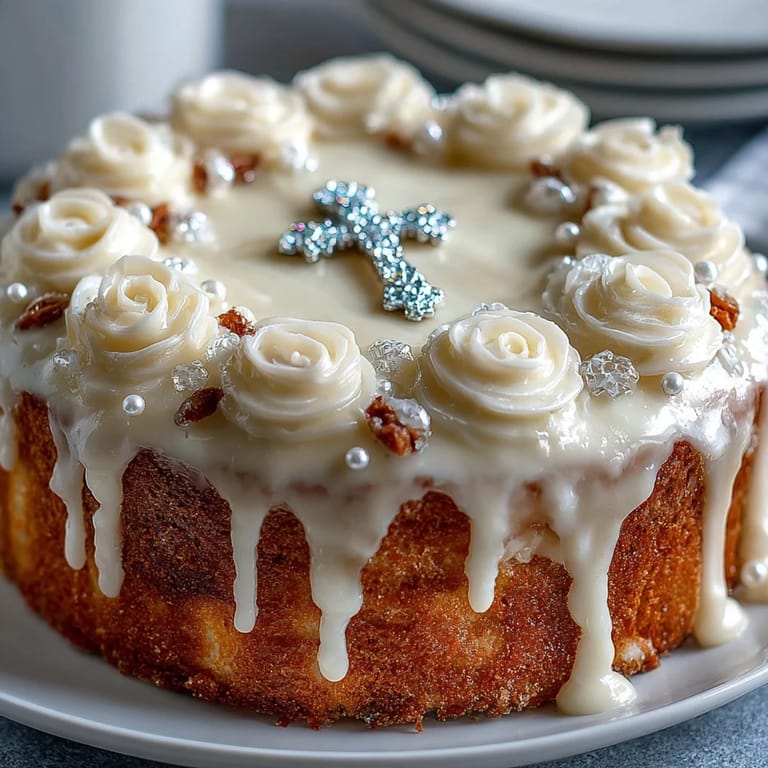
- Arrange your fondant roses and leaves on the frosted cake, pressing gently so they adhere, then scatter edible pearls or dragees for subtle shimmer. This is the moment the cake transforms from beautiful to extraordinary.
- Crown with the cross:
- Place your cross topper at the center or wherever feels right, then chill the finished cake until you're ready to serve.
 Pin It
 The day my cousin served this cake, her whole family gathered around with phones ready, but the most important moment came after—when she took the first bite and smiled at the tender crumb, the smooth frosting, the delicate roses that were slightly imperfect but somehow perfect because of it. That's when this stopped being a recipe and became a memory that tasted like love and celebration.
Storing Your Cake
This cake actually improves as it sits, because the sponge absorbs moisture from the buttercream filling and becomes even more tender by the next day. Keep it in a cool place covered loosely with plastic wrap, or refrigerate it if your kitchen is warm; it'll stay fresh for three days and tastes just as beautiful on day two as it did on day one.
Flavor Variations That Work
While vanilla is traditional and appropriate for the occasion, you can subtly shift the flavor by adding almond extract instead of some of the vanilla, or zesting a lemon into the batter for brightness without changing the cake's appearance. Some bakers brush a light vanilla or almond simple syrup between the layers for extra moisture and flavor complexity, though it's entirely optional and the cake is delicious as is.
Troubleshooting Tips
If your frosting looks curdled after adding eggs or milk, it means the temperature differential was too great—let it sit at room temperature for a few minutes, then beat it again and it should come together. If your fondant cracks when you roll it, your kitchen is too cold or you didn't knead it enough; let it sit on the counter wrapped in plastic for a few minutes until it's pliable, then try again.
- If the cake layers aren't level, use a serrated knife and a steady hand to carefully trim the domed tops flat.
- If the frosting is too soft to hold a shape, refrigerate it for ten minutes and try again.
- If fondant roses feel sticky, dust your hands and work surface with a tiny bit of cornstarch, not flour, which can discolor white fondant.
 Pin It
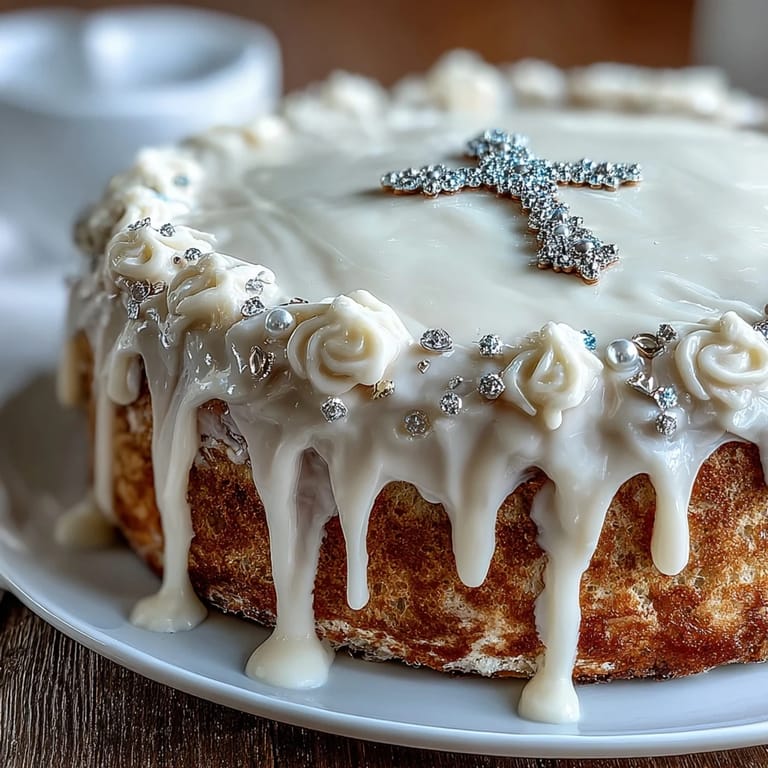
 Baking a First Communion cake is really about honoring a moment that matters to someone you care about—and that intention shows in every carefully placed rose and every tender crumb. So take your time, trust the process, and know that the love you put into this cake will be tasted in every bite.
Recipe FAQs
- → How do I achieve a tender vanilla sponge?
Use softened butter and room-temperature eggs, creaming butter and sugar until fluffy. Alternate adding dry ingredients and milk gently for a light texture.
- → What’s the best way to make smooth buttercream frosting?
Beat softened butter until creamy, then gradually incorporate sifted powdered sugar, vanilla, salt, and milk or cream until smooth and spreadable.
- → How can I shape the fondant roses effectively?
Roll small fondant balls, flatten them into petals, and assemble layer by layer to form delicate rose shapes.
- → How do I prevent the cake from drying out during baking?
Ensure not to overbake by checking with a toothpick and cool cakes in pans for 10 minutes before transferring to racks.
- → Can I add flavors to the vanilla sponge?
Yes, lemon zest or almond extract can be incorporated into the batter for an extra fragrant touch.