 Pin It
 The first time I made something this visually playful, I was honestly nervous about the grid lines. My ruler kept slipping, my knife wasn't cooperating, and I was convinced the whole thing would collapse into an unrecognizable mess. But then something magical happened—once I stopped overthinking and just moved with purpose, the checkerboard came together, and suddenly I had this gorgeous, whimsical dessert that actually tasted as good as it looked. That's when I realized texture variation doesn't just sound fancy; it fundamentally changes how you experience each bite.
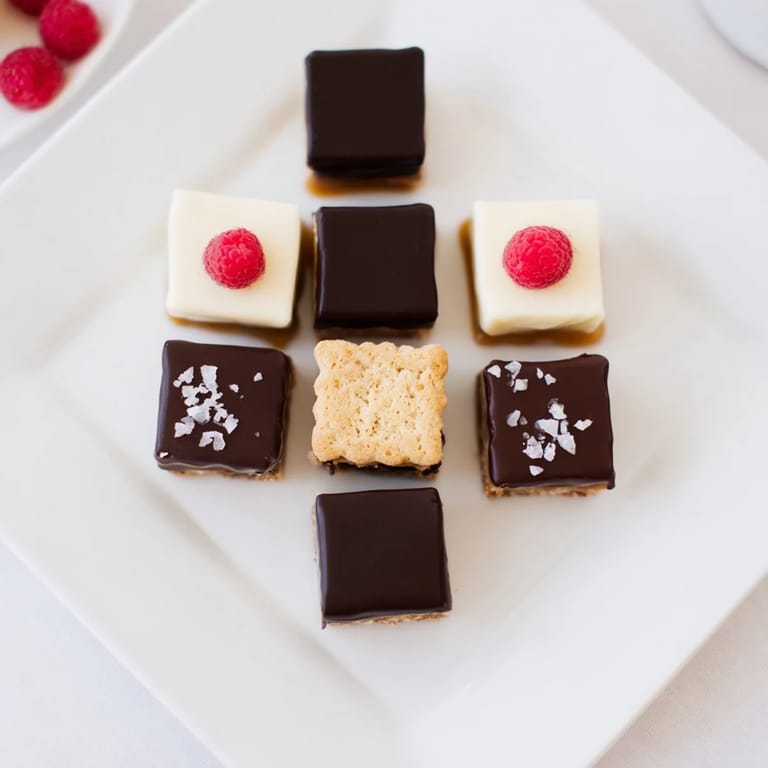
I brought this to a dinner party where someone took one bite of the crunchy square, moved diagonally to the creamy one, then the chocolate, then the caramel, and actually closed their eyes. They said it felt like a conversation happening in their mouth, which sounds pretentious until you've experienced it yourself. That night taught me that desserts don't have to be complicated to feel thoughtful, and presentation actually does matter when it changes how people engage with food.
Ingredients
- Crisp shortbread cookies or graham crackers, crushed (80 g): The foundation needs texture that stays crisp, so don't skip the chilling step afterward; it sets everything else firmly in place.
- Unsalted butter, melted (30 g): The binding agent that transforms crumbs into a structured base without adding salt that competes with the salty layer.
- Cream cheese, softened (80 g): Softening it ahead of time makes beating effortless and prevents lumps that would ruin the smooth squares.
- Powdered sugar (30 g): It dissolves instantly into the cream cheese, unlike granulated sugar which leaves grittiness.
- Vanilla extract (1 tsp): A small amount grounds the sweetness and adds complexity without being noticeable.
- Dark chocolate, chopped (100 g): Chopping it yourself rather than using chips ensures it melts evenly and creates a glossier finish.
- Heavy cream (60 ml): Just enough to create a ganache that's thick enough to hold its shape in a square but still luxurious.
- Salted caramel sauce (80 g): Store-bought saves time and honestly tastes wonderful; homemade is only worth it if you have a trusted recipe.
- Flaky sea salt, for garnish: The size of flakes matters—table salt dissolves before you taste it, but flakes create little bursts of salinity.
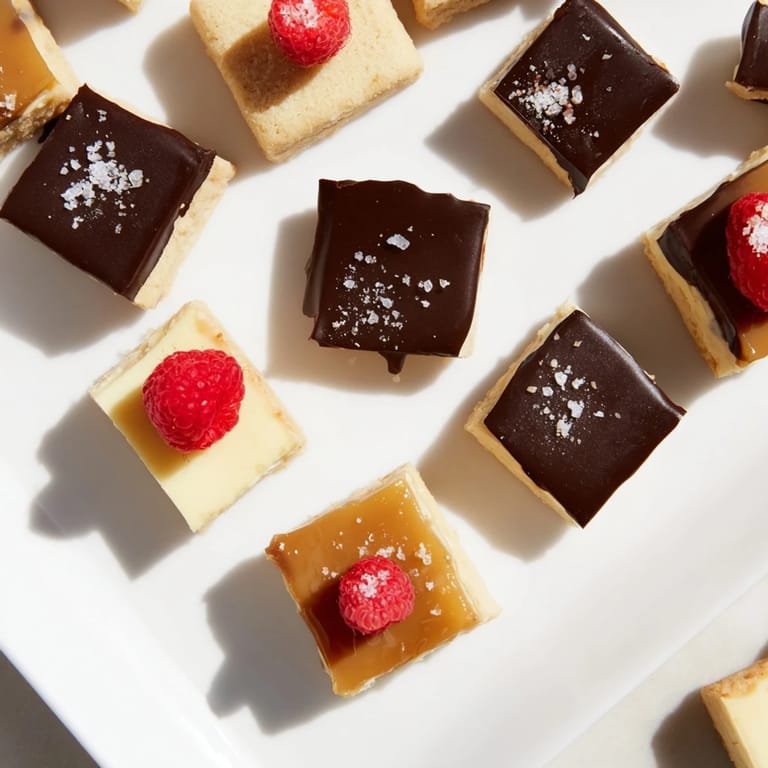
- Fresh raspberries, optional (16 small ones): They add brightness and visual appeal to the crunchy squares, though they're truly optional if you want to simplify.
Tired of Takeout? 🥡
Get 10 meals you can make faster than delivery arrives. Seriously.
One email. No spam. Unsubscribe anytime.
Instructions
- Build your crunchy foundation:
- Pulse your cookies until they're uneven crumbs—some dust, some pea-sized bits—then toss with melted butter until it feels like wet sand. Press it firmly and evenly into your baking dish, then refrigerate; this matters more than you'd think because the butter solidifies and locks everything in place.
- Whip the soft layer:
- Beat softened cream cheese with powdered sugar until it's completely smooth and pale, then add vanilla and mix just until combined. This layer should be cloud-like but hold its shape, so don't overmix or it'll separate.
- Create silky chocolate ganache:
- Heat cream until wisps of steam rise, then pour it over chopped chocolate and wait two full minutes before stirring—this waiting period is when the magic happens as the residual heat melts the chocolate evenly. Stir gently until glossy, then let it cool for five minutes so it's spreadable but still pourable.
- Prepare your caramel layer:
- If using store-bought, you're done; if making homemade, do it well ahead so it cools completely. Either way, have it ready because assembly moves quickly once you start.
- Mark your grid with intention:
- Score light lines with a ruler and sharp knife to divide the chilled base into sixteen squares, using gentle pressure rather than cutting all the way through. These marks are your guides, not your cage—they'll help you stay organized during the playful part of assembly.
- Fill the checkerboard with color and contrast:
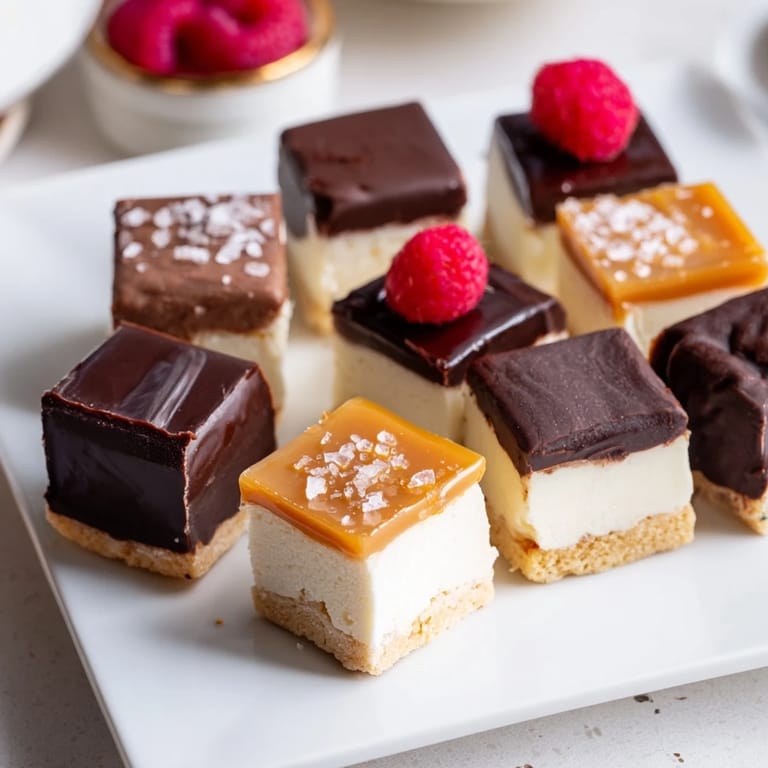
- Spoon cream cheese into four diagonal or alternating squares, chocolate ganache into four others, salted caramel into another four, and leave the final four as bare crust. If you're using raspberries, crown each crunchy square with one, pressing it gently into place so it doesn't roll off.
- Let everything set and firm up:
- Thirty minutes in the refrigerator allows all the layers to stop shifting, making clean cuts possible without the squares smudging into each other.
- Cut and serve with ceremony:
- Use a sharp knife dipped in hot water and wiped dry between each cut for clean lines that showcase your work. Serve slightly chilled so the chocolate isn't too firm and the caramel is still creamy.
 Pin It
 What I love most about this dessert is watching people's faces when they realize they can pick and choose their own texture journey. Some people go for the caramel first, others the chocolate, and it becomes this small, personal decision that makes the plate feel designed just for them. That shift from 'dessert as finale' to 'dessert as experience' is when I knew I'd actually created something worth making again.
Understanding Texture as Storytelling
Texture in dessert often gets overlooked in favor of pure sweetness, but in reality, how something feels in your mouth changes how you taste it. The crunch of the base makes the creamy layers feel softer by comparison, the chocolate ganache's smoothness highlights the caramel's slight grittiness, and the flaky salt creates these little bright moments that keep your palate engaged. When I realized this wasn't just about combining things that taste good together but about how they transform each other, that's when I stopped making desserts by formula and started actually thinking like a cook.
Why Checkerboard Matters Beyond Looks
The checkerboard pattern isn't just a visual trick; it ensures no two identical flavors or textures sit side by side, which means each square forces you to experience contrast. I've learned that adjacent flavors either amplify or dampen each other, and in this case, the arrangement prevents flavor fatigue. You're never tasting chocolate twice in a row, never getting two creamy bites consecutively, which keeps the dessert interesting all the way through your plate.
Making It Entirely Your Own
The beauty of this structure is that it's a framework, not a prescription. Swap the dark chocolate for white, add espresso powder to the cream cheese, use peanut butter in place of plain caramel—these changes don't break the dessert; they just make it feel like yours. One friend added cardamom to the cream cheese and suddenly the whole thing tasted like her grandmother's kitchen, which is exactly what cooking should do.
- Toast nuts and fold them into the cream cheese layer for earthier depth, or grind them into the shortbread base entirely.
- A squeeze of lemon zest into the soft layer brings brightness that prevents the dessert from feeling too heavy or sweet.
- Experiment with the checkerboard pattern itself—diagonal instead of grid, or creating an actual alternating checkerboard of just two textures instead of four.
 Pin It
 This dessert taught me that sometimes the most elegant thing you can do is let different elements speak for themselves rather than drowning them in each other. Serve it with intention, let people linger over the choices, and trust that simplicity with good technique is always more impressive than complexity for complexity's sake.
Recipe FAQs
- → How should I prepare the crunchy layer?
Combine crushed shortbread or graham crackers with melted butter, then press evenly into a baking dish and chill to set firmly before assembly.
- → Can I substitute the cream cheese in the soft layer?
Yes, mascarpone can be used for a richer texture, adding a creamier and slightly tangier dimension.
- → What is the best way to make the chocolate ganache smooth?
Heat the heavy cream until just simmering and pour over chopped dark chocolate. Let it sit for a couple of minutes before stirring gently until glossy and smooth.
- → How do I achieve the checkerboard effect without mixing layers?
After preparing each element, mark the chilled base into a 4x4 grid and carefully fill each square with different layers, ensuring no two identical textures are adjacent.
- → Any tips for serving or garnishing?
Garnish with fresh raspberries on the crunchy squares and sprinkle flaky sea salt on the salted caramel squares for an elegant finish.
- → Can I prepare this dessert in advance?
Yes, assembling and chilling ahead enhances the flavors and helps the layers set firmly for clean slicing.