 Pin It
 There's a particular Wednesday evening that stays with me—I was flipping through a worn cookbook in my tiny apartment kitchen when the smell of lemongrass from a neighbor's cooking drifted through the wall. It stopped me mid-page and pulled me straight into craving Tom Kha Gai, that silky Thai soup that tastes like someone bottled warmth and spice together. That night I made my first pot, and something about the way the coconut milk swirled into the fragrant broth felt like discovering a secret ingredient to feeling better.
I made this for my sister on a rainy afternoon when she needed comfort more than conversation. Watching her close her eyes after the first spoonful, that small moment when warmth reaches somewhere deeper than your stomach—that's when I knew this recipe mattered. She asked for seconds and then the recipe, and now it's become her go-to when friends drop by unexpectedly.
Ingredients
- Boneless, skinless chicken breast (400g): Sliced thin so it cooks quickly and absorbs the broth; the thinner you slice it, the more tender it becomes.
- Chicken stock (800ml): Use homemade if you have it, but a good quality store-bought broth makes a real difference in depth.
- Full-fat coconut milk (400ml): Don't reach for the light version here—the richness is what makes this soup feel luxurious.
- Lemongrass (2 stalks): Smash it before adding so the oils release and perfume the entire pot; this is where half the magic lives.
- Kaffir lime leaves (4): Tear them by hand to bruise the surface and release their citrusy essence into the broth.
- Galangal (3 slices): If you can't find it, fresh ginger works as a substitute, though the flavor shifts slightly toward warmth rather than that peppery bite.
- Thai bird's eye chilies (3): Crush them instead of slicing so the heat disperses evenly; you control the spice by adjusting the amount.
- Garlic (4 cloves) and shallots (4): Smashed garlic releases its flavor faster, and thinly sliced shallots soften into the soup naturally.
- Oyster or white mushrooms (200g): Slice them uniformly so they cook at the same rate and don't turn mushy.
- Cherry tomatoes (100g): Halved tomatoes burst slightly during cooking and add brightness that balances the richness.
- Fish sauce (2½ tbsp): This is the backbone of flavor; don't skip it or reduce it dramatically, or the soup tastes flat and forgettable.
- Fresh lime juice (1½ tbsp): Squeeze it fresh from actual limes right before serving so it keeps that sharp, alive quality.
- Palm sugar (1 tsp): A tiny bit of sweetness rounds out the sharp and savory notes; light brown sugar works if you're out.
- Salt (½ tsp): Taste as you go since the fish sauce is already salty and your palate is the best guide.
Tired of Takeout? 🥡
Get 10 meals you can make faster than delivery arrives. Seriously.
One email. No spam. Unsubscribe anytime.
Instructions
- Build the aromatic base:
- Bring your chicken stock to a gentle boil in a large saucepan, then add the lemongrass, kaffir lime leaves, galangal, crushed chilies, smashed garlic, and sliced shallots. Let it simmer quietly for about 5 minutes—you'll watch the broth transform from plain to fragrant, and that smell alone will tell you something good is happening.
- Cook the chicken gently:
- Slide your thinly sliced chicken breast into the simmering broth and reduce the heat so it's barely bubbling. Cook for 5 to 7 minutes until the chicken turns opaque and cooked through; rushing this step with high heat makes the meat tough and stringy.
- Welcome the coconut milk:
- Pour in the coconut milk while stirring gently, then add the mushrooms and halved tomatoes. Keep the heat low and let it all simmer together for another 5 minutes—the soup should never boil vigorously or the delicate flavors scatter.
- Season to your taste:
- Add the fish sauce, fresh lime juice, palm sugar, and salt, then taste a spoonful. This is where the soup comes alive; balance the salty, sour, sweet, and spicy until it feels right for your palate and adjust as needed.
- Strain the solids (optional):
- If you prefer a cleaner presentation, fish out the lemongrass, kaffir lime leaves, galangal, and garlic with a slotted spoon before serving, though many people leave them in for extra flavor hits.
- Serve with ceremony:
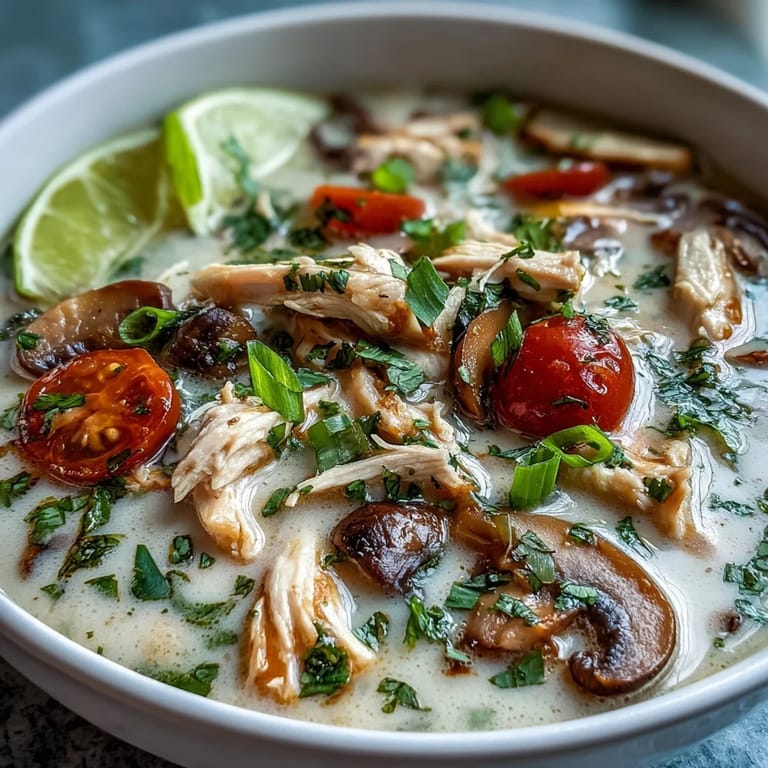
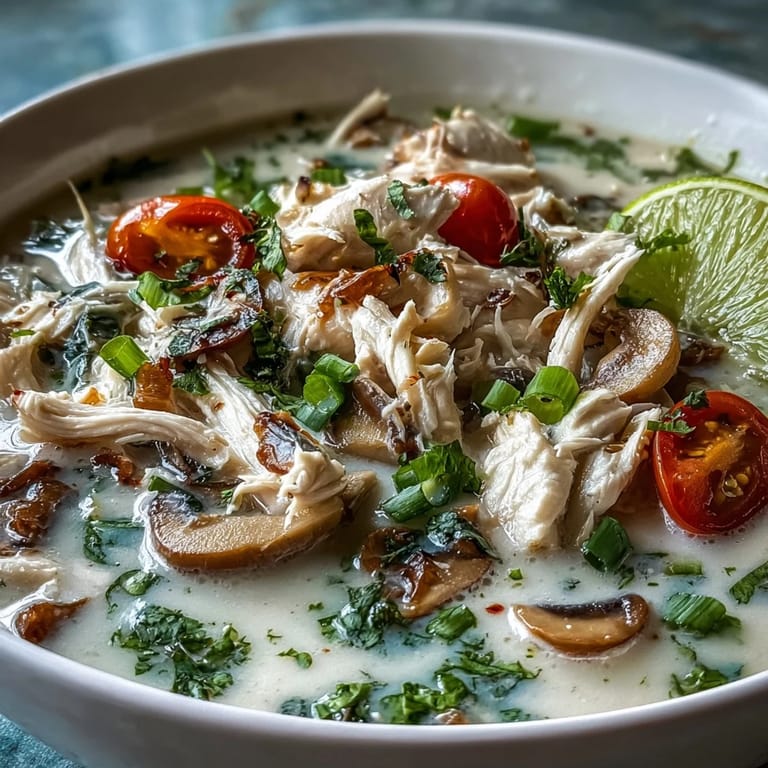
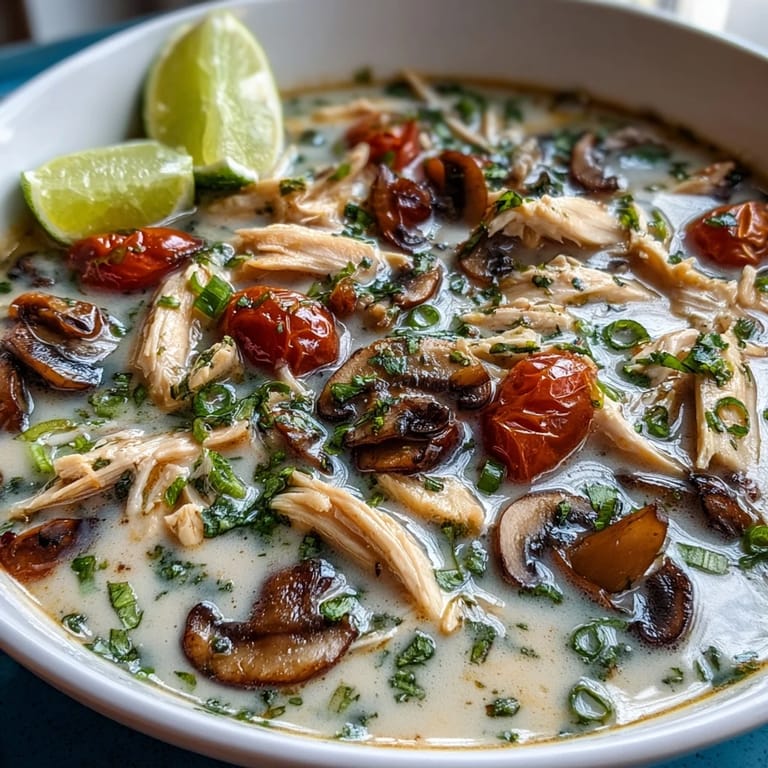
- Ladle the soup into bowls and scatter fresh cilantro, sliced green onions, and lime wedges across the top. A few slivers of red chili add both color and heat if that's your preference.
 Pin It
 A friend once asked me why I always made the same soup when company came, and I realized it's because this one never fails to shift the mood of a gathering. There's something about spooning rich, fragrant broth into a bowl that says I'm taking care of you, and people feel that.
The Secret of Proper Infusion
The first time I rushed this soup, I threw everything in at once and wondered why it tasted flat. Then I learned that those 5 minutes of simmering the aromatics alone is where the magic happens—the lemongrass oils, the pepper notes of galangal, the brightness of lime leaves all need time to surrender their essence to the broth. Now I set a timer and use those minutes to set the table or slice my garnishes, knowing the soup is building its foundation while I'm moving around the kitchen.
When to Stop Stirring
I learned this lesson by accident when I aggressively stirred the coconut milk in and ended up with a slightly broken, separated soup that tasted fine but looked less inviting. Gentle is the word that matters here—once that coconut milk goes in, you're stirring just enough to combine, then letting the heat do the work. The soup will tell you when it's ready by releasing that incredible aroma that fills your entire kitchen.
Customize Without Apology
This soup is flexible in the way great recipes are—it respects what you have on hand while staying true to its identity. I've made it with half the chilies for guests who don't like heat, added extra mushrooms when I had them, swapped in thin-sliced zucchini when tomatoes weren't in season. The frame stays the same, but you're painting with your own ingredients and preferences.
- For vegetarian or vegan versions, trade the chicken for firm tofu cubes and use vegetable broth instead.
- If you can't find galangal, fresh ginger works as a substitute though the flavor profile shifts toward warmth.
- Serve with jasmine rice on the side to make it a complete meal that sticks with you.
 Pin It
 This soup has quietly become the answer to so many different kinds of days, from when someone needs comfort to when you want to feel like you've traveled somewhere warm. Make it once and you'll understand why it's called the best ever.
Recipe FAQs
- → What makes Tom Kha Gai different from other Thai soups?
Tom Kha Gai is distinguished by its rich coconut milk base, unlike the clear broth of Tom Yum. The combination of creamy coconut, tangy lime, salty fish sauce, and aromatic herbs like lemongrass and galangal creates a uniquely velvety yet bright flavor profile that's both comforting and refreshing.
- → Can I make this soup vegetarian?
Yes, simply substitute the chicken with firm tofu and use vegetable broth instead of chicken stock. Replace fish sauce with soy sauce or tamari to maintain the savory depth while keeping it plant-based.
- → What can I use if I can't find galangal or kaffir lime leaves?
Fresh ginger works well as a galangal substitute, though it has a slightly different flavor profile. Lime zest can replace kaffir lime leaves for that citrusy aroma. While the taste won't be exactly traditional, these alternatives still produce a delicious aromatic soup.
- → How spicy is this soup?
The spice level is adjustable based on the number of Thai bird's eye chilies used. Three crushed chilies provide moderate heat, but you can reduce or increase this amount to suit your preference. The creamy coconut milk also helps temper the spice.
- → Why shouldn't the soup boil after adding coconut milk?
Boiling coconut milk can cause it to separate and become grainy. Simmering gently preserves the silky smooth texture that makes Tom Kha Gai so luxurious. This slow cooking also ensures the chicken stays tender rather than becoming tough.
- → What should I serve with Tom Kha Gai?
Steamed jasmine rice is the traditional accompaniment, perfect for soaking up the flavorful broth. The soup also works well as a starter or light main course. Fresh herbs and extra lime wedges on the side let diners customize their bowls.