 Pin It
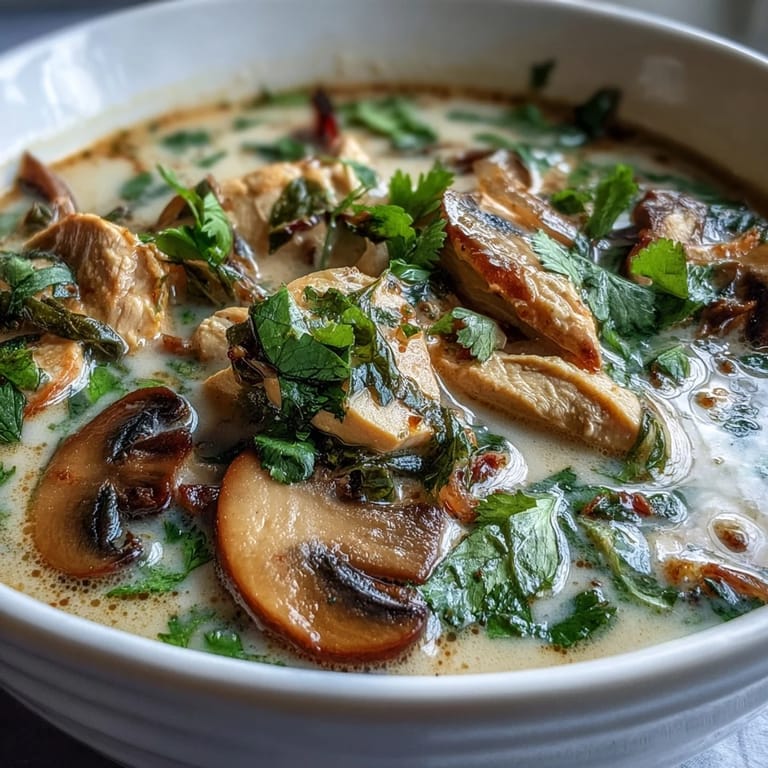
 My first real encounter with tom kha gai happened on a rainy Bangkok evening, sitting in a tiny open-air shophouse where an elderly woman stirred an enormous pot with the kind of practiced ease that comes from forty years of muscle memory. She handed me a steaming bowl and I watched the steam curl up, carrying that unmistakable aroma of lemongrass and coconut—and suddenly understood why this soup has survived centuries of Thai cooking. What struck me most wasn't the complexity, but how something so fragrant and layered could taste so effortlessly balanced.
I've made this soup dozens of times since then, but one evening stands out: my partner came home exhausted from work and I'd simmered the broth with galangal and lemongrass for just long enough that the entire apartment smelled like a Thai market. We sat at the kitchen counter, bowls in hand, and they asked me halfway through if I'd somehow traveled back to that Bangkok shophouse without them. That's when I realized this soup does something special—it transports people, feeds them, and somehow makes them feel looked after all at once.
Ingredients
- Chicken broth: Use quality broth here—it's the foundation, and a good one elevates everything that follows without requiring a long simmer.
- Lemongrass: This is non-negotiable; the smashing releases the oils and fragrance, and frozen stalks work beautifully if fresh isn't available.
- Galangal: Seek this out at Asian markets because it's distinctly different from ginger—more floral and slightly medicinal in the best way.
- Makrut lime leaves: Their citrus bite is essential; tearing them by hand rather than cutting bruises the leaves just right and releases more aroma.
- Thai bird's eye chilies: Lightly crush them rather than mincing so you control the heat as the soup simmers.
- Chicken thighs: Dark meat stays tender and flavorful when sliced thin; don't be tempted by chicken breast, which can dry out.
- Full-fat coconut milk: This matters—the cream content creates that silky mouthfeel that makes the soup memorable.
- Fresh mushrooms: Straw mushrooms are traditional, but cremini work when the specialty market isn't available.
- Fish sauce: Use restraint at first, tasting as you go; it anchors the flavors but overpowering the soup is easy.
- Palm sugar: It dissolves smoothly and adds a subtle sweetness that brown sugar can approximate but not quite replicate.
Tired of Takeout? 🥡
Get 10 meals you can make faster than delivery arrives. Seriously.
One email. No spam. Unsubscribe anytime.
Instructions
- Infuse your broth:
- Pour chicken broth into a medium pot and bring to a gentle simmer—too vigorous and the aromatics scatter instead of melding. Add smashed lemongrass, galangal slices, torn lime leaves, and crushed chilies, then let them perfume the broth for 5 to 7 minutes while the kitchen fills with that unmistakable fragrance.
- Cook the chicken and shallot:
- Stir in your thinly sliced chicken and shallot, watching as the chicken changes from pale to opaque within 3 to 4 minutes. The slender slices cook quickly and stay tender this way.
- Add mushrooms and cream:
- Scatter in your sliced mushrooms and pour in the full-fat coconut milk slowly, stirring gently as you go. Bring the soup back to a gentle simmer—aggressive heat can cause the coconut to separate.
- Season with intention:
- Add fish sauce, palm sugar, and lime juice one ingredient at a time, tasting between additions. This is where the magic happens: finding that balance where salty, sweet, and sour dance together without one overpowering the rest.
- Finish and serve:
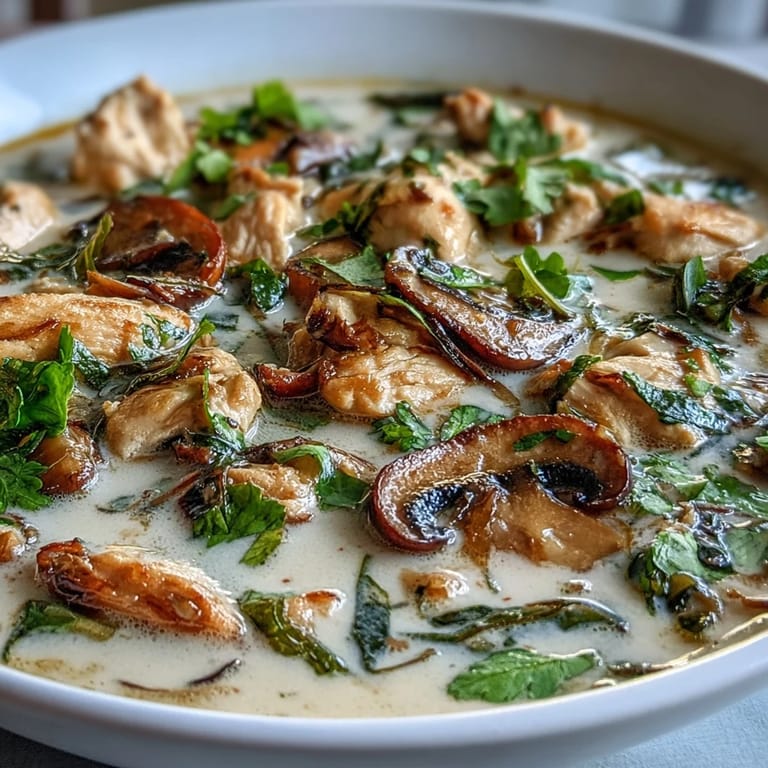
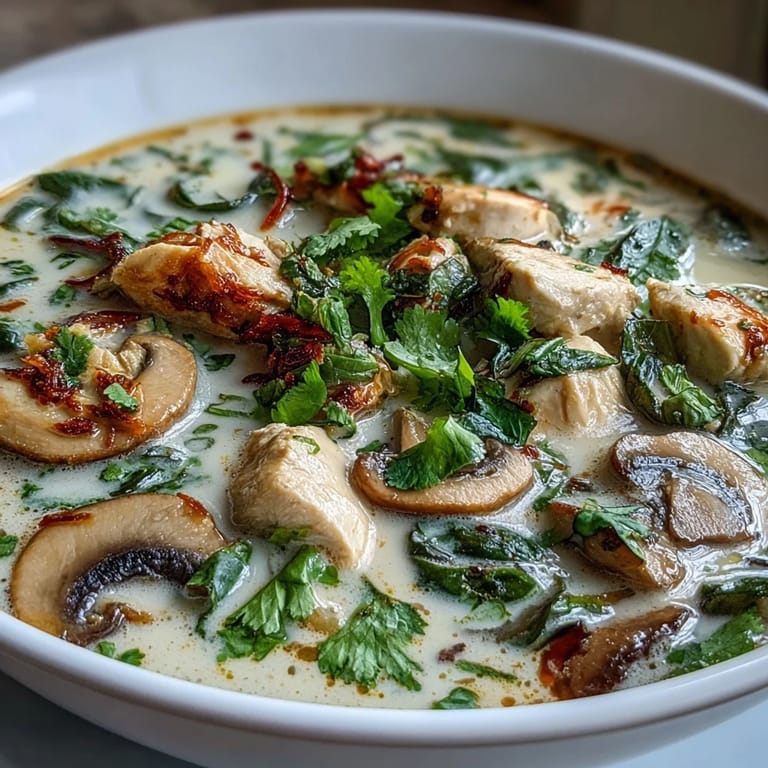
- Remove from heat and strain out the lemongrass, galangal, and lime leaves if you prefer a cleaner look, though some people leave them in for diners to navigate. Ladle into bowls, scatter cilantro and green onions over top, and serve with lime wedges for adjusting at the table.
 Pin It
 There's a moment early in any soup-making experience where you realize aromatics aren't just flavoring agents—they're the entire conversation happening in your pot. With tom kha gai, I learned that patience during those first 5 minutes of infusing makes the difference between a good soup and one that tastes like it traveled across an ocean to reach your bowl.
The Ritual of Balance
Thai cooking, more than most cuisines, lives in equilibrium—not a single note dominating, but four flavors in constant conversation. When you're seasoning this soup, you're not just adding ingredients; you're learning a language. The first time I made it, I added all the fish sauce at once and had to dilute the entire pot. Now I know that a teaspoon tastes, a second teaspoon tastes different, and the third one teaches you something about restraint. This soup became my teacher in understanding why less can absolutely be more.
Adapting Without Apology
If you're vegetarian or vegan, this soup translates beautifully—vegetable broth replaces chicken broth, cubed tofu or thin-sliced King oyster mushrooms replace chicken, and a splash of soy sauce or tamari stands in for fish sauce. A friend once made it this way at a dinner party where half the table was flexitarian, and no one felt like they were eating a compromise dish. The coconut, aromatics, and careful seasoning carry everything forward, proving that authentic flavor isn't about following protocol but understanding what makes the dish sing.
What Happens After the First Spoonful
This soup rewards slow eating, and that's almost its defining characteristic. The first sip is heat and brightness, the middle spoonful reveals layers of coconut and galangal, and somewhere around the fourth or fifth taste, you understand why people keep returning to this recipe year after year. Serve it with steamed jasmine rice if you want something more substantial, or stand alone if you're seeking comfort in its purest form.
- Always taste before serving—lime juice and fish sauce vary, so adjust the final seasoning to your preference and your guests' heat tolerance.
- Fresh cilantro and green onions aren't garnish; they're the final note that brightens everything underneath.
- This soup reheats gently on low heat and tastes somehow even better the next day once the flavors have truly married together.
 Pin It
 Tom kha gai is the kind of soup that teaches you something each time you make it, whether that's about aromatics, balance, or the simple power of feeding someone something warm and fragrant. Make it whenever you need to feel transported, or whenever someone you care about needs reminding that comfort tastes like coconut milk and lime.
Recipe FAQs
- → Can I make Tom Kha Gai ahead of time?
Yes, prepare the soup up to 2 days in advance. Store without garnishes and reheat gently over low heat, adding fresh cilantro and green onions just before serving. The flavors actually develop and deepen overnight.
- → What can I substitute for galangal?
Fresh ginger works as the closest substitute, though the flavor profile will differ slightly. Use a bit more ginger since galangal has a more intense, piney citrus note. Look for galangal at Asian markets for the most authentic taste.
- → How do I prevent the coconut milk from curdling?
Keep the heat at a gentle simmer rather than a rolling boil. Stir gently and avoid vigorous boiling. Also, add coconut milk after the broth has infused with aromatics, and don't let it come to a furious boil once added.
- → Can I freeze Tom Kha Gai?
Freezing works well, though the coconut milk may separate slightly upon thawing. Reheat gently while stirring to recombine. For best results, freeze without garnishes and add fresh herbs after reheating.
- → How spicy should this soup be?
Traditional Tom Kha Gai offers mild to moderate heat from Thai bird's eye chilies. Start with 2-3 chilies lightly crushed—this releases flavor without overwhelming spice. Adjust according to your preference, remembering you can always add more heat but can't remove it.
- → What's the difference between Tom Yum and Tom Kha?
Tom Yum features a clear, sour broth while Tom Kha includes coconut milk for creaminess. Both share similar aromatic ingredients like lemongrass, galangal, and lime leaves, but Tom Kha's richness comes from the coconut milk base.