 Pin It
 There's something about the smell of sautéed carrots and celery that instantly transports me to my nonna's kitchen in Tuscany, though I didn't actually grow up there—I just visited once and never forgot how she'd start every soup the same way, with that holy trinity of vegetables softening in olive oil. When I came home and tried to recreate that moment without the plane ticket, this Tuscan White Bean Soup became my answer, a way to capture that warmth without leaving my own kitchen. The first time I made it, I was standing at my stove on a gray Tuesday evening, and by the time the lemon zest hit the pot, my entire apartment smelled like comfort.
I made this for a friend who was going through a rough breakup, and she showed up at my door looking absolutely exhausted, and I just wordlessly handed her a steaming bowl with that little golden drizzle of olive oil on top. We didn't talk about much, but she sat at my kitchen counter for three hours, asking for a second bowl halfway through, and sometimes the most profound thing you can offer someone is soup that tastes like someone actually cares. That's when I realized this wasn't just a recipe—it was a small act of showing up for people.
Ingredients
- Olive oil: Use a decent quality oil for sautéing (you'll taste it), and save your expensive extra-virgin for finishing—the heat destroys the delicate notes anyway.
- Yellow onion, carrots, and celery: This trio is the foundation, and yes, it matters that you dice them roughly the same size so they cook evenly.
- Garlic: Mince it fresh just before adding; jarred garlic tastes like regret in a jar.
- Kale: Remove those woody stems ruthlessly—they'll never soften and you'll find yourself chewing them like gum.
- Lemon zest: Grab a microplane or the smallest holes on your box grater; those big shreds taste bitter and feel wrong in the mouth.
- Cannellini beans: Always rinse canned beans under cold water to wash away the starchy liquid that makes soup gluey.
- Vegetable broth: Low-sodium is essential because you'll be seasoning throughout, and you don't want an overly salty final product.
- Thyme and rosemary: Dried herbs work beautifully here; if using fresh rosemary, chop it finely so you don't end up with sharp needle-like pieces.
- Bay leaf: It's easy to forget to remove, so place it somewhere visible or use a tea infuser ball.
- Red pepper flakes: This is optional but worthwhile—it adds warmth without heat, just a whisper of complexity.
- Lemon juice: Squeeze it fresh, never that bottled stuff that tastes like chemicals.
- Parmesan and extra-virgin olive oil: These finishing touches are where the magic happens; don't skip them or rush them.
Tired of Takeout? 🥡
Get 10 meals you can make faster than delivery arrives. Seriously.
One email. No spam. Unsubscribe anytime.
Instructions
- Build your base with the holy trinity:
- Heat olive oil in a large pot over medium heat and add diced onion, carrots, and celery, stirring occasionally until the vegetables soften and the kitchen starts smelling undeniably good, about 6 to 8 minutes. You'll know it's ready when the onion becomes translucent and the carrots start to yield when you poke them with your wooden spoon.
- Wake up the garlic:
- Add minced garlic and let it cook for just about a minute—you want it fragrant and slightly golden, not brown and bitter. This short window is crucial, so watch it closely and stir constantly.
- Introduce the kale:
- Stir in your chopped kale and watch it wilt down dramatically over 2 to 3 minutes, releasing a deeper green color. It's one of those small kitchen miracles that never gets old.
- Build the body with beans and broth:
- Add the drained cannellini beans, vegetable broth, water, dried thyme, rosemary, bay leaf, and red pepper flakes if you're using them, then season generously with salt and pepper. Give everything a good stir to distribute the flavors evenly.
- Simmer and let it meld:
- Bring the soup to a boil, then reduce heat and let it bubble gently uncovered for about 20 minutes, stirring occasionally and tasting as you go. The vegetables will become even more tender and the flavors will start melting into each other.
- Create creamy texture without cream:
- This is the secret move—scoop out about a cup of soup with beans and vegetables, mash it roughly with a fork (or blend it if you want something smoother), then stir it back into the pot. This adds body and creaminess without any dairy, making every spoonful feel more substantial.
- Finish with brightness:
- Remove the bay leaf, then stir in the fresh lemon zest and lemon juice and let it simmer for 2 more minutes so the lemon flavor disperses throughout. Taste and adjust seasoning because salt and pepper are your friends here.
- Serve with intention:
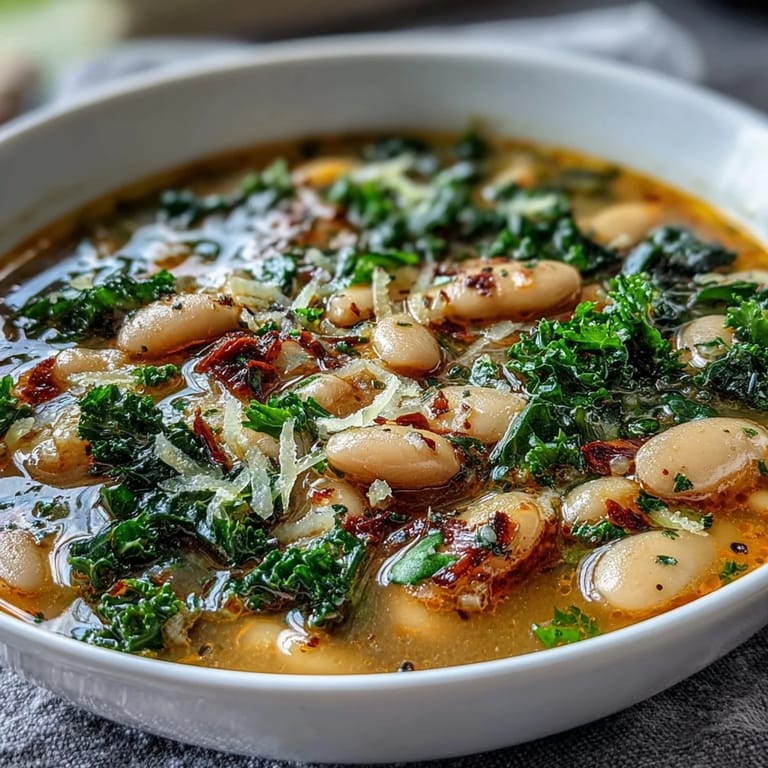
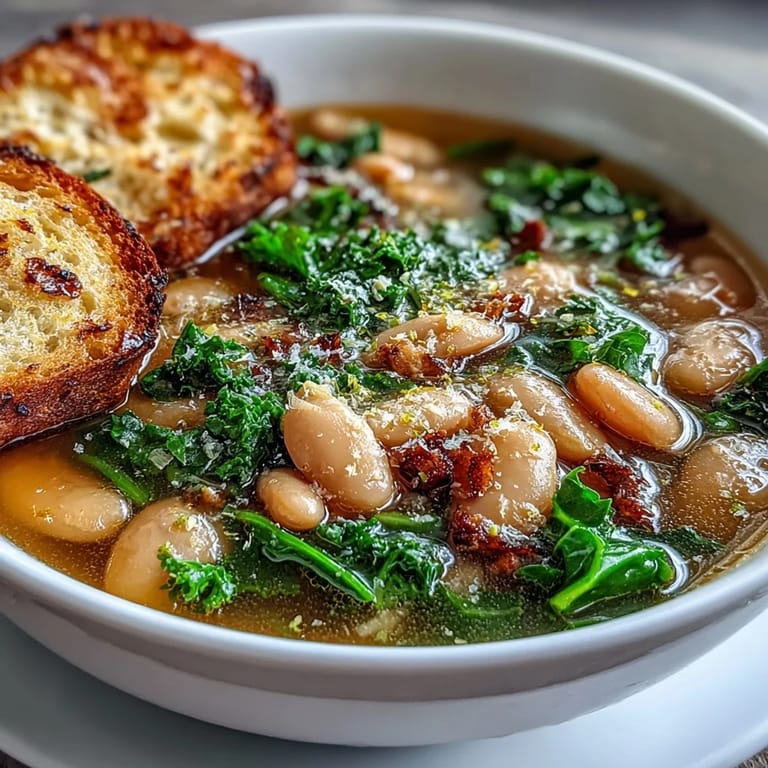
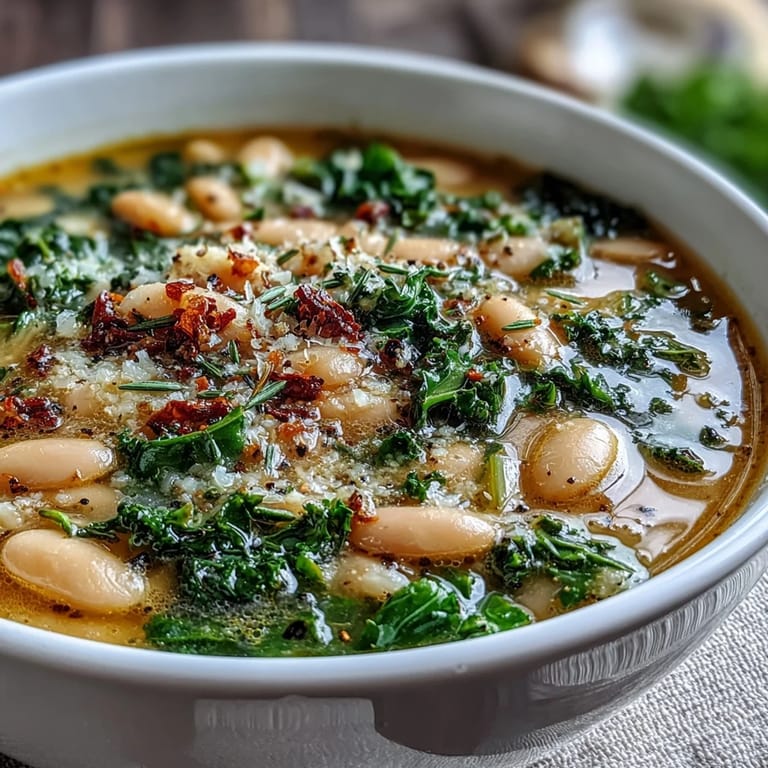
- Ladle into bowls and top each one with grated Parmesan and a generous drizzle of extra-virgin olive oil. That finishing oil matters more than you'd think—it adds richness and brings everything into focus.
 Pin It
 My partner came home one evening to find me standing over a pot with my eyes closed, just breathing in the steam, and instead of thinking I'd lost it, they quietly grabbed two bowls and sat down across from me. We ate our soup in almost complete silence, and afterward they said it tasted like home, which made me realize that sometimes the best meals are the ones where you don't have to say much at all. That's what this soup does—it speaks for itself.
Variations That Work Beautifully
This soup is honestly a canvas, and I've played with it in every season. In autumn, I've added diced butternut squash because something about the sweetness against the kale feels right when the weather turns cool. During spring, I've swapped the kale for fresh spinach and added a handful of fresh basil at the end, transforming it into something lighter and more delicate. Winter calls for the original version, but summer? I sometimes serve it at room temperature with extra lemon juice and fresh herbs, and it becomes something entirely different—almost like a deconstructed salad in a bowl.
Making It Your Own
The beauty of Tuscan cooking is that it doesn't demand perfection; it invites interpretation. I've made this soup with whatever vegetables I had in the crisper drawer, swapping carrots for fennel, adding cherry tomatoes toward the end, even throwing in leftover roasted vegetables from the night before. One memorable evening, a vegetarian friend mentioned she missed sausage in soups, so I crumbled some Italian sausage into her bowl at the end, and suddenly it became a hybrid that worked for everyone at the table. Trust your instincts and your pantry.
Serving and Storage Wisdom
This soup improves over a day or two in the refrigerator as flavors continue to marry, so don't hesitate to make it ahead for a busy week. It keeps for about five days, and reheats gently over medium-low heat with a splash of extra broth if needed, though I've found it's actually better the second day, like the soup finally decided to fully introduce itself. Serve it with crusty bread for something more substantial, or on its own if you want to appreciate every component. I always keep some fresh lemon wedges and quality olive oil nearby because people love personalizing their bowl at the table, and there's something convivial about letting everyone finish their own soup exactly how they want it.
- Freeze it in portions for up to three months, and it thaws beautifully without losing any integrity.
- If the soup thickens too much over time, thin it with water or broth rather than using leftover milk or cream.
- Always add the Parmesan and olive oil finish right before serving for maximum impact.
 Pin It
 This soup has become my default answer when someone asks what to make on a tired evening or for someone who needs feeding with care. There's something profound about a simple bowl of beans and greens that tastes like it took hours but only asked for your presence for under an hour.
Recipe FAQs
- → What type of beans are used in this soup?
Cannellini beans provide a creamy texture and mild flavor that complements the kale and seasonings well.
- → Can I substitute kale with another green?
Yes, baby spinach or Swiss chard can be used as alternatives for a softer texture and milder taste.
- → How do I enhance the soup’s creaminess without cream?
Mashing a portion of the beans into the broth adds natural creaminess and body without dairy.
- → Is the soup suitable for a vegan diet?
Simply omit Parmesan cheese or use a plant-based alternative to keep it vegan-friendly while maintaining flavor.
- → What herbs best complement the flavor profile?
Thyme, rosemary, and bay leaf balance the earthiness of the beans and kale, while lemon zest brightens the soup.