 Pin It
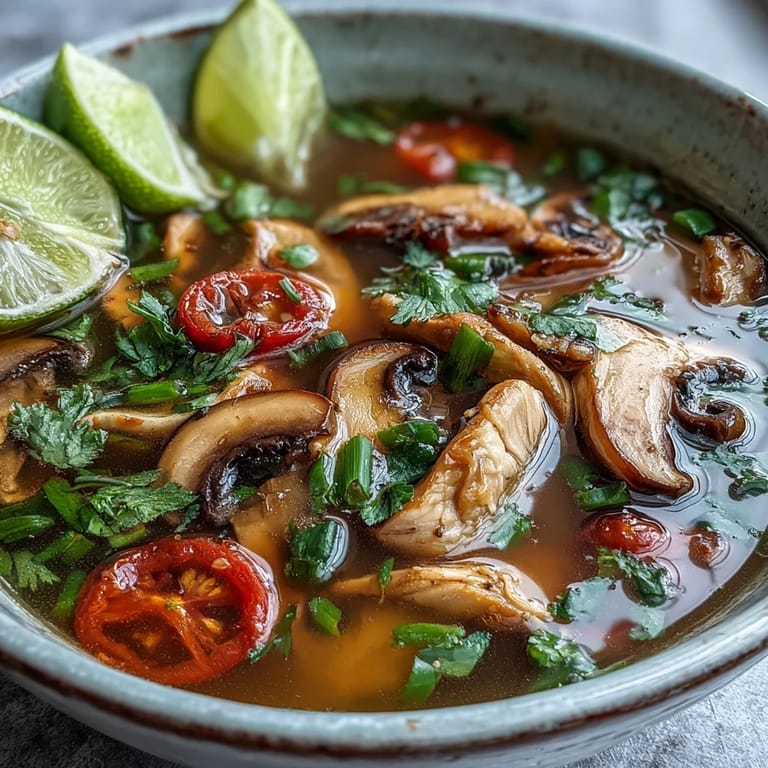
 The first time I made tom yum, I stood in my kitchen reading a recipe that seemed impossibly complicated, then one whiff of bruised lemongrass changed everything. That sharp, floral burst told me this wasn't about following steps perfectly, it was about coaxing aromas into a broth until it sang. Now whenever I simmer this soup, I'm transported to a small Bangkok restaurant where the cook casually smashed herbs like she was having a conversation with the pot. It's become my favorite weeknight soup, the kind that feels like both comfort and adventure in one bowl.
I made this soup for my sister during one of those unexpected cold snaps in spring, and watching her face when she tasted it told me everything. She'd had tom yum before but never understood the hype until she got the homemade version, where the herbs taste fresher and the broth tastes like it actually cost something to make. That's when I stopped thinking of tom yum as complicated and started seeing it as a gift you give people when you want them to taste something real.
Ingredients
- Boneless, skinless chicken thighs or breasts (400 g, thinly sliced): Thighs stay tender longer than breasts, but either works; slicing them thin means they cook in minutes and absorb the broth like little flavor sponges.
- Chicken stock (1.2 liters): Use homemade if you have it, but good quality store-bought matters here since the broth is the foundation.
- Lemongrass stalks (2, trimmed and smashed): The outer layers are tough, so peel those away and use the pale inner part; bruising releases oils that no amount of simmering alone can extract.
- Fresh galangal slices (4 slices, about 12 g, or 2 tsp dried): It's sharper and more peppery than ginger, and fresh makes a noticeable difference, though dried works in a pinch.
- Makrut lime leaves (5, torn into pieces): These aren't like regular lime leaves; they have this citrusy complexity that bottled lime juice can't quite replicate, so seek them out if possible.
- Birds eye chilies (4, lightly crushed): Crushing them rather than slicing preserves their structure while releasing heat gradually, so you can taste the soup evolving as it cooks.
- Mushrooms (150 g, sliced): Oyster mushrooms are traditional and have a silky texture, but button or cremini work just fine in a pinch.
- Tomatoes (2 medium, cut into wedges): Cutting them into wedges rather than dicing means they soften without disappearing, and you get pockets of tangy juice in each spoonful.
- Small onion (1, sliced): A thin slice adds sweetness that balances the heat and sourness.
- Garlic cloves (3, smashed): Smashing rather than mincing means the garlic flavors the broth without getting lost in it.
- Fish sauce (3 tbsp): This is the soul of tom yum, bringing umami depth; start with 3 tbsp but taste before committing to more.
- Fresh lime juice (2 tbsp, plus more to taste): Freshly squeezed tastes bright and alive in a way bottled lime juice never quite achieves.
- Sugar (1 tsp): A tiny amount balances the sourness without making anything sweet, just rounds out the flavors.
- Salt (½ tsp, or to taste): Adjust at the end once you've added everything else.
- Fresh cilantro (2 tbsp, chopped): A last-minute addition that brings green, fresh notes to a warm bowl.
- Spring onions (1–2, thinly sliced): Similar to cilantro, they add a gentle onion bite that brightens the whole thing.
- Extra lime wedges: Not just garnish; squeezing lime juice directly into your bowl is part of the eating experience, letting you customize each spoonful.
Tired of Takeout? 🥡
Get 10 meals you can make faster than delivery arrives. Seriously.
One email. No spam. Unsubscribe anytime.
Instructions
- Release the aromatics:
- Take your lemongrass stalks, galangal slices, and makrut lime leaves and lay them on a cutting board. Using the flat side of a heavy knife, press down firmly and give each one a solid whack; you'll hear a small cracking sound and suddenly the whole area smells like a Thai market. This bruising step is non-negotiable because it cracks open the cells and lets all those fragrant oils loose into your broth.
- Build the aromatic broth:
- Pour your chicken stock into a large pot and crank the heat to high until you see big rolling boils. Drop in your bruised lemongrass, galangal, makrut lime leaves, the crushed chilies, and smashed garlic cloves all at once. Let it simmer uncovered for 5 minutes without touching it; you're building a fragrant base that will flavor everything you add later.
- Cook the chicken and onions:
- Once the broth is fragrant enough to fill your kitchen, add your thinly sliced chicken and onion. Simmer for 8 to 10 minutes, and as foam rises to the surface (especially from the chicken), just skim it off with a spoon; you want a clear, clean-looking broth, not a murky one.
- Add the vegetables:
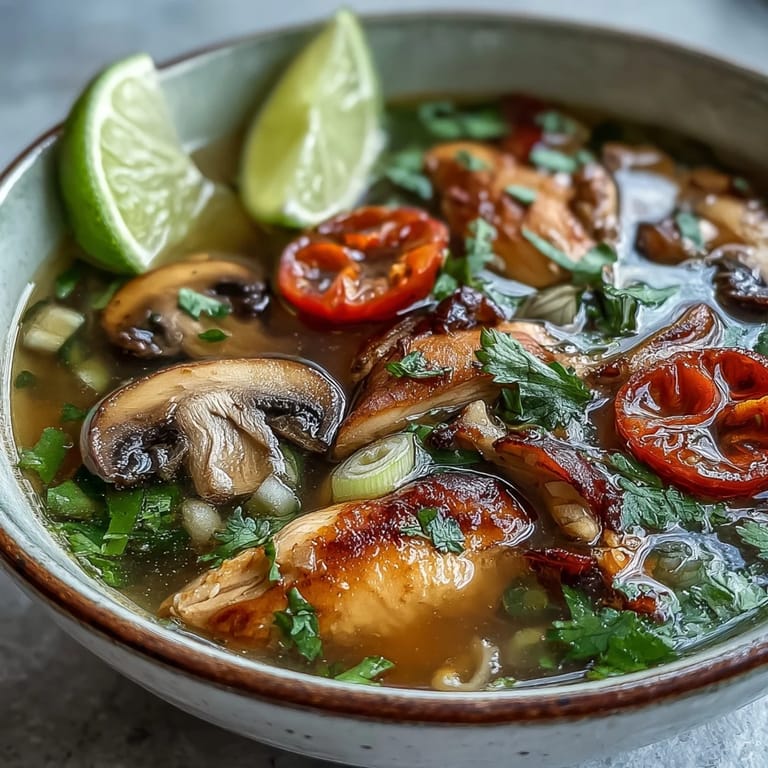
- Slide in your sliced mushrooms and tomato wedges and cook for another 5 to 7 minutes until the vegetables have softened but still hold their shape. The mushrooms should be tender, and the tomatoes should have started to blur slightly at the edges.
- Taste and balance:
- Stir in your fish sauce, lime juice, sugar, and salt, then taste a spoonful of broth directly from the pot. This is where you become the chef, adjusting the balance of sour (lime), salty (fish sauce), and spicy (chilies) until it tastes exactly how you want it; there's no one right answer here.
- Finish and serve:
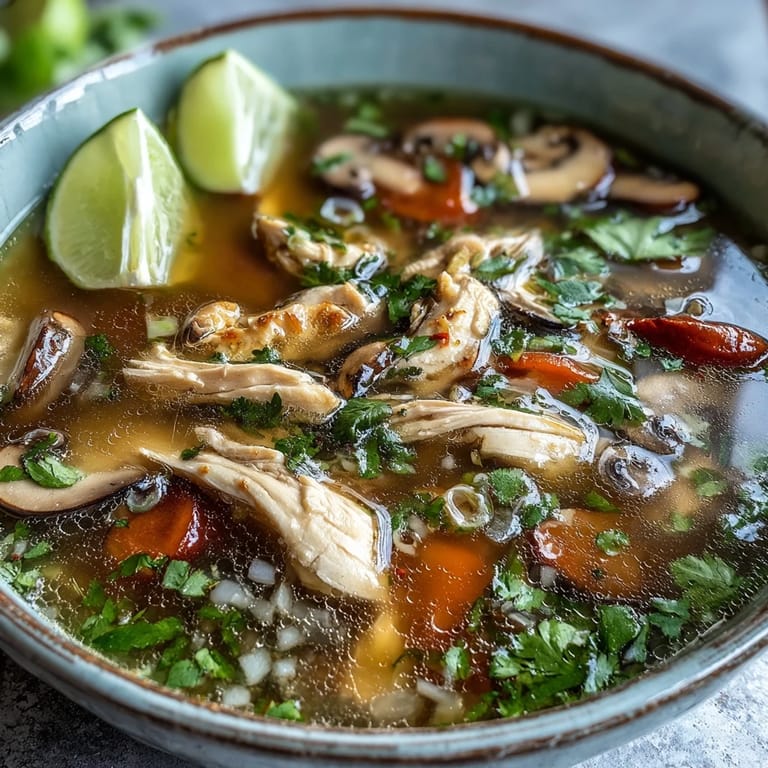
- If you prefer a cleaner broth, you can remove the lemongrass, galangal, and lime leaves now, or leave them for extra flavor. Ladle the soup into bowls and top with fresh cilantro, spring onions, and a lime wedge on the side so people can adjust the sourness as they eat.
 Pin It
 There's a moment near the end of cooking tom yum when you add the lime juice and fish sauce and the broth suddenly shifts from being just hot and herb-scented to becoming alive and complex. It happens in seconds, and somehow that moment reminds me why I love cooking Thai food in particular, because so much of it is about understanding that heat, salt, sour, and spicy all need each other to create something that feels whole.
Understanding the Balance
Tom yum teaches you something about Southeast Asian cooking that's hard to learn any other way. The soup isn't spicy, salty, or sour on its own; it's the combination of all three working together that creates the experience. This is why tasting and adjusting at the end matters so much, and why two people can make tom yum from the same recipe and end up with different bowls. I learned this the hard way by making it exactly according to measurements the first few times and wondering why it never tasted quite right until I realized my palate, my stock, and my lime juice were all slightly different from whoever wrote the recipe.
Variations and Swaps
Once you understand how tom yum works, you can play with it in ways that feel natural. I've made it with shrimp instead of chicken on nights when I wanted something even lighter, and the soup shifts in character but stays recognizable. The creamy version with coconut milk is an entirely different beast, turning warm and comforting instead of bright and spicy, which is lovely when the weather turns cold or when you're cooking for someone who finds the original too intense.
Serving Suggestions and Tips
Tom yum becomes even more of a meal when you serve it alongside jasmine rice, which soaks up the broth like a sponge and gives you something hearty to anchor the spice and sourness. I also love putting out a small bowl of extra lime wedges, some chili oil, and maybe a sprinkle of fried shallots for people to customize their own bowls. The beauty of tom yum is that it's flexible enough to become what you need it to be.
- If you find the soup too spicy, a splash of coconut milk or a squeeze of sweetness from the sugar balances it without dumbing down the flavors.
- Leftover tom yum keeps in the fridge for 3 days and actually tastes better the next day as the flavors deepen and meld together.
- Don't skip the fresh herbs at the end; cilantro and spring onions feel like a luxury but they're what separates homemade from the stuff that tastes like it came from a packet.
 Pin It
 Making tom yum became one of those skills I didn't realize I was developing until I suddenly found myself making it without thinking, adjusting flavors by instinct instead of checking a recipe. That's when I knew it had stopped being a recipe and become something I actually understood, which is really what cooking is all about.
Recipe FAQs
- → What makes Tom Yum sour?
The signature sourness comes from freshly squeezed lime juice. The amount can be adjusted to your taste preference, with extra lime wedges served on the side for those who prefer an extra tangy kick.
- → Can I make this soup less spicy?
Absolutely. Reduce the number of birds eye chilies or remove them entirely after infusing the broth. You can also seed the chilies before adding them, which significantly lowers the heat level while maintaining flavor.
- → What's the difference between Tom Yum and Tom Yum Goong?
Tom Yum refers to the soup itself, while Goong means shrimp. Tom Yum Goong features shrimp instead of chicken. Both share the same aromatic broth base with lemongrass, galangal, and lime leaves.
- → Can I use dried galangal instead of fresh?
Yes, you can substitute 2 teaspoons of dried galangal for the fresh version. Soak it briefly in warm water before adding to the broth to help rehydrate and release its aromatic oils.
- → How do I store leftovers?
Store cooled soup in an airtight container in the refrigerator for up to 3 days. Reheat gently on the stovetop, adding fresh lime juice and herbs before serving to restore the vibrant flavors.
- → Can I make a creamy version?
Yes! Add 60 ml (¼ cup) of evaporated milk or coconut milk just before removing from heat. This creates Tom Yum Num Khon, a rich and creamy variation loved by many.