 Pin It
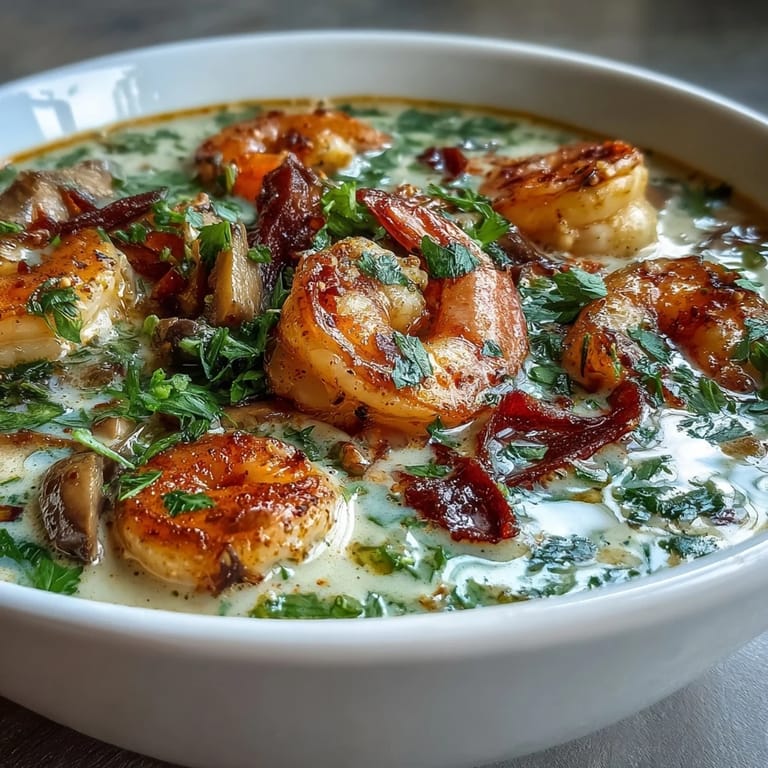
 There's something about the smell of lemongrass hitting hot oil that instantly transports you somewhere warm and humid, where street vendors are ladling soup into bowls at dusk. I discovered this Thai coconut shrimp soup on a rainy Tuesday when I had nothing but coconut milk and shrimp in the kitchen, and somehow it became the dish I crave whenever I need comfort that feels both exotic and simple. The first spoonful surprised me—how could something this quick deliver so much depth? Now whenever friends mention they're tired or sick, this is what I make, because it tastes like someone's taking care of you.
I made this for my sister last winter when she was feeling run down, and watching her face light up at that first taste reminded me why I love cooking so much. She kept asking what was in it, convinced I'd added some secret ingredient, but it was just really good curry paste doing its job and fresh herbs doing theirs. That bowl became a little moment between us, quiet and nourishing, the kind of thing you don't forget.
Ingredients
- Large raw shrimp, 350g (12 oz), peeled and deveined: These cook in minutes and turn tender and sweet, the backbone of your soup.
- Lemongrass, 2 stalks, trimmed and smashed: Smashing it opens up all those bright, citrussy oils—this is where the magic starts.
- Kaffir lime leaves, 4, torn: Optional but worth hunting for, they add a floral note you can't replicate with regular lime.
- Garlic, 3 cloves, minced: Gets mellow and sweet as it simmers in the coconut milk.
- Onion, 1 small, thinly sliced: Softens into almost nothing, creating body for the broth.
- Mushrooms, 100g (3.5 oz), sliced: Any kind works, but shiitake gives you an earthiness that pairs beautifully with coconut.
- Red chili, 1 small, sliced: Optional, but I always add it for that gentle heat that builds as you eat.
- Fresh ginger or galangal, 1 thumb-sized piece, sliced: Ginger is warmer, galangal is more peppery and authentic—either transforms the flavor profile.
- Coconut milk, 400ml (14 oz): Use full-fat for richness; shake the can well before pouring.
- Chicken or vegetable broth, 500ml (2 cups): The canvas for everything else.
- Thai red curry paste, 2 tbsp: This is your shortcut to complexity—don't skip it or dilute it.
- Fish sauce, 2 tbsp: Trust it, even though it smells aggressive at first; it's the umami that makes everything taste more like itself.
- Lime juice, 1 tbsp, plus more to taste: Added at the end so it stays bright and doesn't cook out.
- Sugar, 1 tsp: Balances the heat and tang in the gentlest way.
- Fresh cilantro, for garnish: Peppery and sharp, cuts through the richness beautifully.
- Lime wedges and sliced green onions, for garnish: Finish the bowl with texture and freshness.
Tired of Takeout? 🥡
Get 10 meals you can make faster than delivery arrives. Seriously.
One email. No spam. Unsubscribe anytime.
Instructions
- Build your flavor base:
- Heat a splash of oil in a large pot over medium heat and add your onion, garlic, lemongrass, ginger, and chili. Let them sizzle for 2–3 minutes until the kitchen smells like a Bangkok market—you'll know it's ready when the garlic turns golden at the edges.
- Wake up the curry paste:
- Stir in the red curry paste and cook for exactly 1 minute, letting it toast slightly in the oil. This step releases all its aromatic compounds and prevents it from tasting raw.
- Create the liquid foundation:
- Pour in the coconut milk and broth, add your kaffir lime leaves if using, and bring everything to a gentle simmer. The soup should bubble softly, never aggressively—this keeps the flavors delicate.
- Cook the vegetables:
- Add the mushrooms and let them cook for 5 minutes until they're just tender. They'll absorb some of that creamy coconut flavor and add a subtle earthiness.
- Add the shrimp:
- Drop in your shrimp and cook for 2–3 minutes, just until they turn pink and opaque throughout. Overcook them by even a minute and they'll turn rubbery, so watch them carefully.
- Season to taste:
- Stir in the fish sauce, sugar, and lime juice, then taste and adjust. You might want more lime for brightness, more fish sauce for depth, or more sugar if the heat is overwhelming—this is your moment to make it perfect for your palate.
- Finish and serve:
- Remove the lemongrass, ginger, and lime leaves with a slotted spoon—they've done their job. Ladle the soup into bowls and scatter cilantro, green onions, and a lime wedge on top, inviting people to add more brightness as they eat.
 Pin It
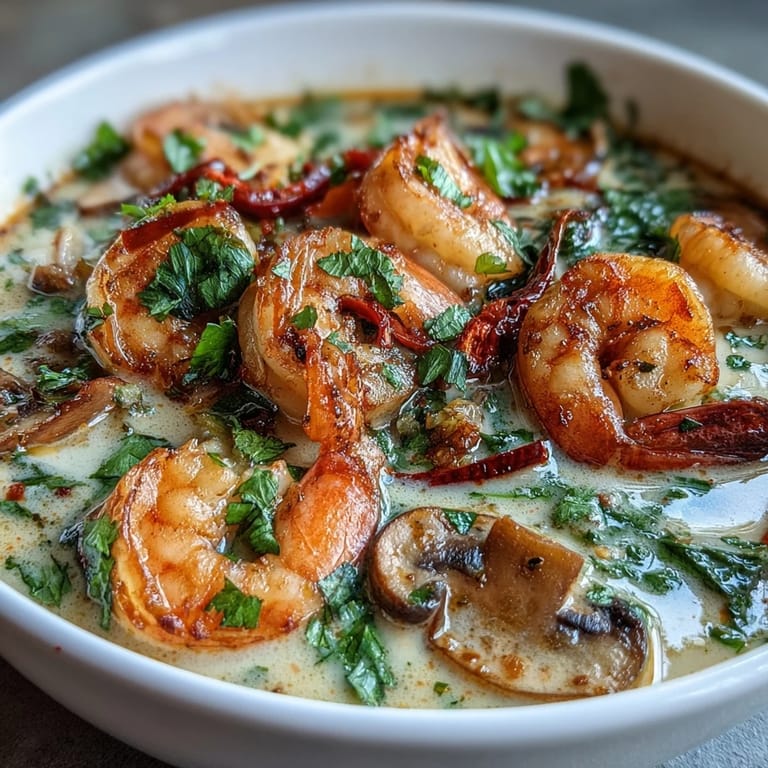
 There's something almost meditative about how quickly this soup comes together, yet how complete it feels in a bowl. I've learned that the magic isn't in complexity—it's in respecting each ingredient and knowing exactly when to add it, then stopping before you've overthought it.
The Art of Balancing Thai Flavors
Thai cooking is all about the push and pull between four tastes: spicy, salty, sour, and sweet. In this soup, the red curry paste and chili bring heat, the fish sauce adds salt and funk, lime juice provides acid, and a tiny bit of sugar softens everything into harmony. The trick isn't getting them all equal—it's making them dance together, each one loud enough to be heard but no single note overpowering the others. When you taste your soup and something feels flat, it's usually one of these four that needs a nudge.
Variations That Actually Work
I've made this soup about thirty times now, and almost every time I change something based on what's in my kitchen or how I'm feeling. Baby corn adds a subtle sweetness, sliced bell peppers bring color and crunch, bamboo shoots give you texture, and spinach wilts in beautifully right at the end if you want something green. For a vegetarian version, press firm tofu and add it where the shrimp would go, swapping fish sauce for soy sauce—it loses some of its oceanic quality but gains an earthiness that works in its own way. None of these changes break the recipe; they just personalize it.
Beyond Soup: What This Teaches You
Making this soup teaches you something valuable about cooking in general: that aromatics are your foundation, that layering flavors beats dumping them all in at once, and that tasting as you go gives you way more control than following a recipe to the letter. Every time you make it, you're learning how your stovetop behaves, what curry paste tastes like in your kitchen, and how your own mouth responds to heat and acid. These small discoveries compound into actual cooking confidence.
- Serve it with jasmine rice if you want the soup to be a complete meal, or enjoy it on its own as something lighter and more meditative.
- Make it in a big batch and refrigerate it for up to three days—the flavors actually deepen as it sits, though you might need to add fresh herbs again when you reheat.
- Toast some coconut flakes and scatter them over the top for an extra dimension of richness that guests always ask about.
 Pin It
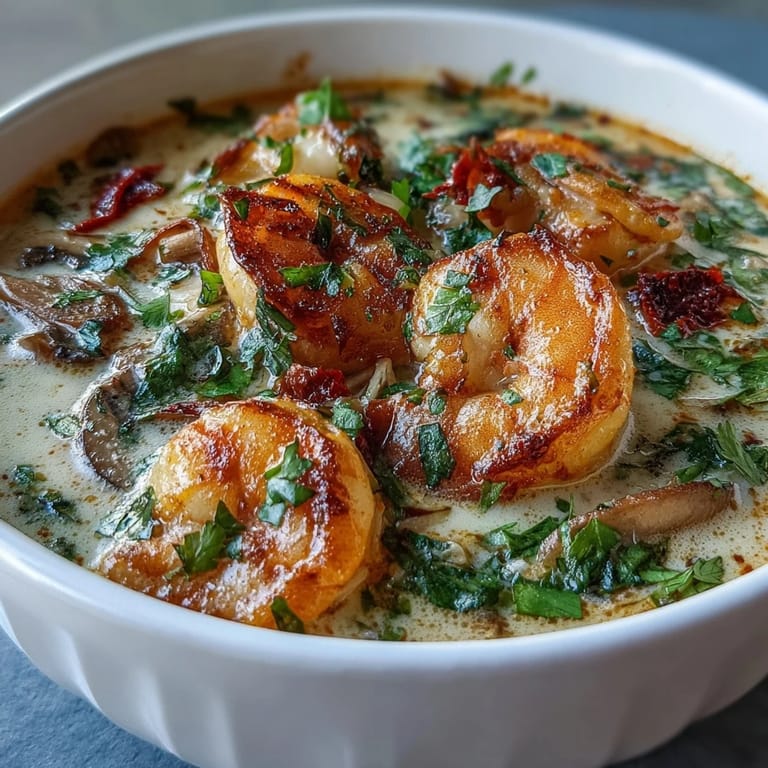
 This soup became my answer to a lot of different moments: when someone needs feeding, when I'm craving something that tastes expensive but costs almost nothing, when I want to feel like I've traveled without leaving home. That's the gift of a good recipe—it works harder than you expect it to.
Recipe FAQs
- → Can I make this soup vegetarian?
Substitute shrimp with firm tofu cubes and replace fish sauce with soy sauce or a vegetarian fish sauce alternative. The result remains satisfying and full of Thai flavors.
- → How spicy is this soup?
The heat level depends on your red curry paste brand and whether you add the optional fresh chili. Start with less curry paste and adjust upward to control the spice to your preference.
- → Can I use frozen shrimp?
Yes, thaw frozen shrimp completely and pat them dry before adding to the broth. They may need an extra minute to cook through depending on size.
- → What can I serve with this soup?
Jasmine rice is the classic accompaniment to soak up the flavorful broth. You could also serve with crusty bread or enjoy it on its own as a light yet satisfying meal.
- → How long does this keep in the refrigerator?
Store in an airtight container for up to 2 days. Reheat gently over low heat to avoid separating the coconut milk. The shrimp may become slightly firmer after reheating.
- → Can I freeze this soup?
Freezing is not recommended as coconut milk can separate and shrimp texture changes when frozen. It's best enjoyed fresh within 1-2 days of preparation.