 Pin It
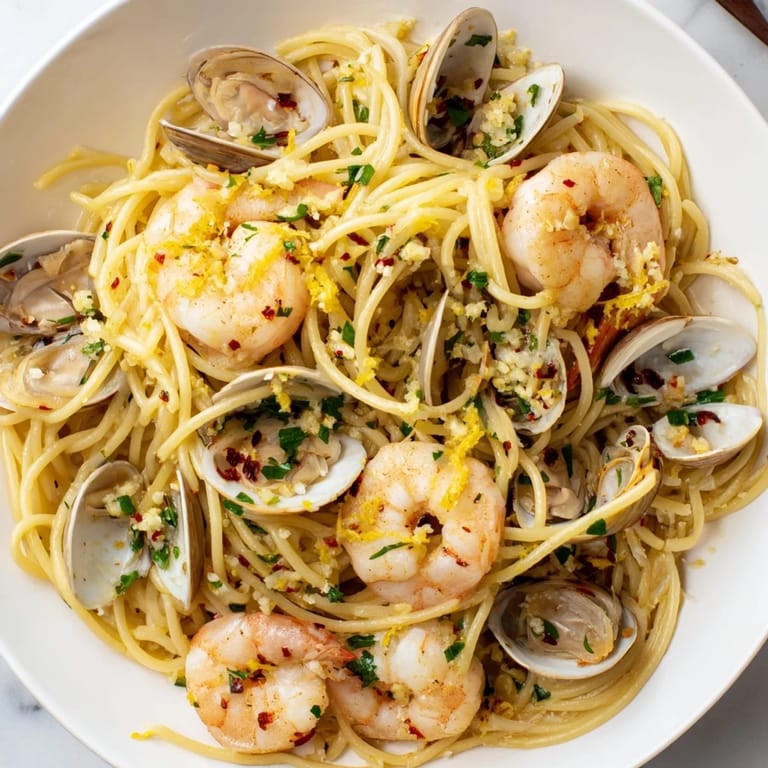
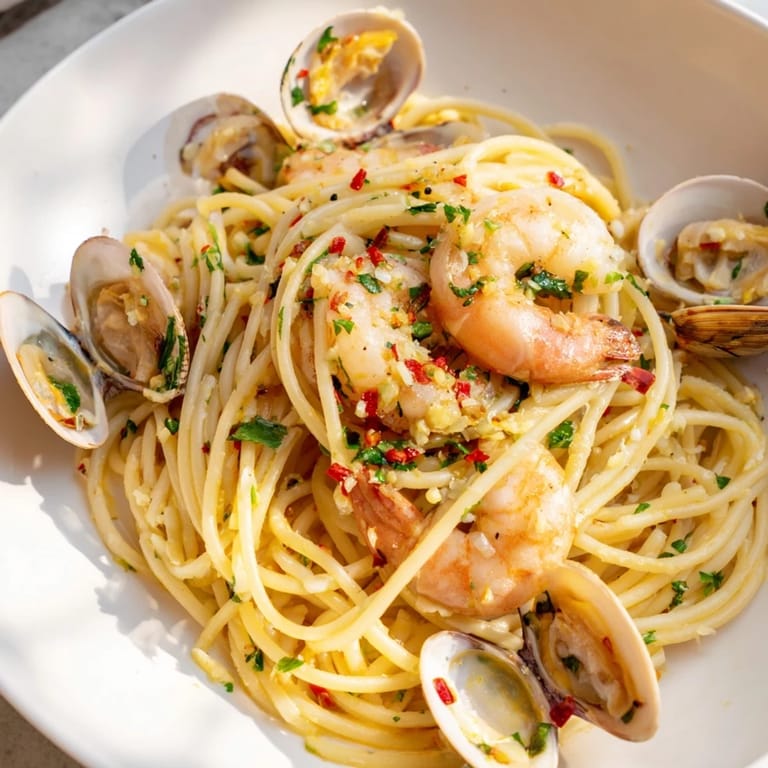
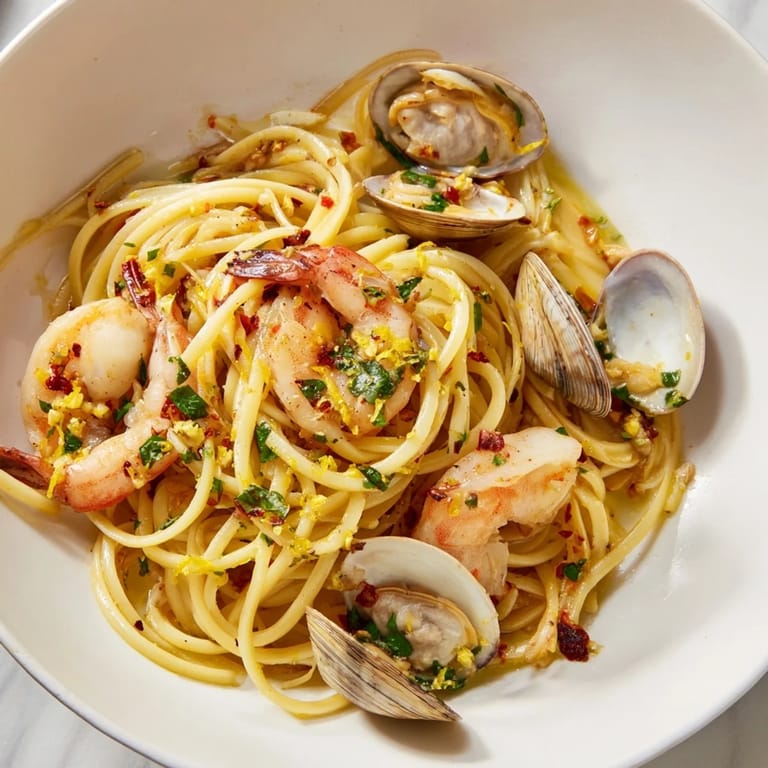
 There's something about late summer evenings that makes me crave this dish—when the market has the most pristine seafood piled high on ice and the air still carries warmth from the day. I first made Seafood Pasta Aglio e Olio on a whim, pulling shrimp and clams from my fridge and realizing I had everything else already in my pantry. Twenty minutes later, I was twirling spaghetti coated in that golden, garlicky oil, tasting the sea in every bite, and understanding why this simple Italian preparation has endured for generations.
I remember cooking this for friends who'd just returned from a trip to Amalfi, and watching their faces light up when they tasted it was worth every carefully sliced garlic clove. One guest asked if I'd learned it in Italy, and I had to admit it came together almost accidentally, but that's when I realized the best meals often do—they happen when you're not overthinking them.
Ingredients
- Large shrimp (250 g / 9 oz), peeled and deveined: Quality shrimp makes all the difference here; they cook in seconds and need to be truly fresh or they'll turn rubbery.
- Fresh clams (500 g / 1 lb), scrubbed and rinsed: Buy them the day you're cooking and listen for that light tap sound when you knock shells together—closed clams are happy clams.
- Spaghetti (400 g / 14 oz): The thin strands catch that precious garlic oil better than thicker pastas, creating every bite you want.
- Extra virgin olive oil (6 tbsp): Don't skimp here; use the good oil you actually enjoy tasting, because it's literally the main component.
- Garlic cloves (5), thinly sliced: Slice them yourself rather than using pre-minced; thin slices toast more evenly and give you better control over that crucial golden-brown moment.
- Red chili flakes (1/2–1 tsp, to taste): Start with less than you think you need; you can always add more heat but you can't take it back.
- Dry white wine (1/2 cup): Any wine you'd drink works perfectly here, and the acidity helps deglaze the pan while the alcohol cooks off.
- Lemon zest and juice: The brightness from fresh lemon is what ties everything together and lifts the seafood flavors.
- Fresh flat-leaf parsley (1/4 cup), chopped: Add most of it at the end so it stays vivid green and fresh-tasting rather than wilted.
- Salt and freshly ground black pepper: Taste as you go because seafood seasons differently depending on the day.
Tired of Takeout? 🥡
Get 10 meals you can make faster than delivery arrives. Seriously.
One email. No spam. Unsubscribe anytime.
Instructions
- Get your water boiling and pasta started:
- Fill a large pot with water, salt it generously (it should taste like the sea), and bring it to a rolling boil before adding spaghetti. This gives everything time to come together while the pasta cooks.
- Build your golden garlic oil:
- Heat olive oil in a large skillet over medium heat, then add sliced garlic and chili flakes—you'll smell the transformation happening almost immediately. Stop as soon as the garlic turns pale gold (about one minute), because the moment it darkens your whole dish shifts from elegant to bitter.
- Give the shrimp their moment:
- Slide the shrimp into that garlicky oil and let them sauté for two minutes until they just turn pink. They cook fast, so stay close and don't wander off.
- Welcome the clams to the party:
- Pour in white wine and nestle the clams into the skillet, then cover it and let the steam work. Shake the pan every minute or so, and after three to five minutes the clams will open like they're waking up—discard any stubborn ones that refuse.
- Bring everything together:
- Return the shrimp to the skillet, add your drained pasta along with lemon zest, lemon juice, and most of the parsley. Toss everything together, adding splashes of that reserved pasta water until you have a silky, glossy sauce clinging to each strand.
- Taste, season, and serve:
- Give it a final taste and adjust salt and pepper, then serve immediately while everything is still hot and the aromas are at their peak.
 Pin It
 There was an afternoon when I made this for someone I was trying to impress, and halfway through cooking the shrimp I realized I'd forgotten to buy wine. I grabbed whatever white I had in the fridge, a slightly off-dry Riesling, and it turned out to be the best version I'd ever made—unexpected things in the kitchen often work out better than planned.
The Art of Aglio e Olio
This dish teaches you something fundamental about Italian cooking: that simplicity isn't boring, it's a discipline. With only four or five main ingredients, every one has to be excellent and every technique matters. There's no sauce to hide behind, no cream to mask mistakes, just the pure conversation between good oil, garlic, seafood, and pasta.
Timing Is Everything
The beauty of this recipe lives in the rhythm of cooking, not in the complexity. Start your water first, then move to your oil, and by the time the garlic is golden your pasta will be halfway done. It's almost choreography, and once you've done it once your hands remember the pacing. This is why it feels elegant even though you're really just moving quickly through five or six straightforward steps.
Making It Your Own
I've made versions with mussels when clams looked tired at the market, added a handful of calamari because it was there, even tried it with homemade pasta once (which elevated it into something transcendent). The foundation is so strong that it welcomes experimentation.
- Mussels work beautifully and often cost less than clams while still delivering that briny sweetness.
- A whisper of red pepper flakes can become a whole tablespoon if you love heat, or disappear entirely if you prefer subtlety.
- Finish with a drizzle of really good olive oil right before serving for a final touch of richness that feels indulgent.
 Pin It
 Every time I make this, it takes me back to why I fell in love with cooking in the first place—the way simple ingredients, proper timing, and a little attention transform into something that tastes far more complicated than it actually is. That's the real magic of pasta aglio e olio.
Recipe FAQs
- → What type of pasta works best?
Spaghetti is ideal for this dish due to its long strands that hold the garlic-infused oil and seafood sauce well.
- → Can other seafood be used instead of shrimp and clams?
Yes, alternatives like mussels or calamari can be used to vary the flavor and texture while maintaining the dish's spirit.
- → How do you avoid overcooking the garlic?
Saute garlic over medium heat briefly until golden and fragrant—about one minute—to prevent bitterness.
- → Is it necessary to save pasta water?
Yes, reserved pasta water helps create a silky sauce by loosening and binding the oil and seasonings to the pasta.
- → What wine pairs well with this seafood pasta?
A crisp white Italian wine like Pinot Grigio complements the garlic and seafood flavors beautifully.