 Pin It
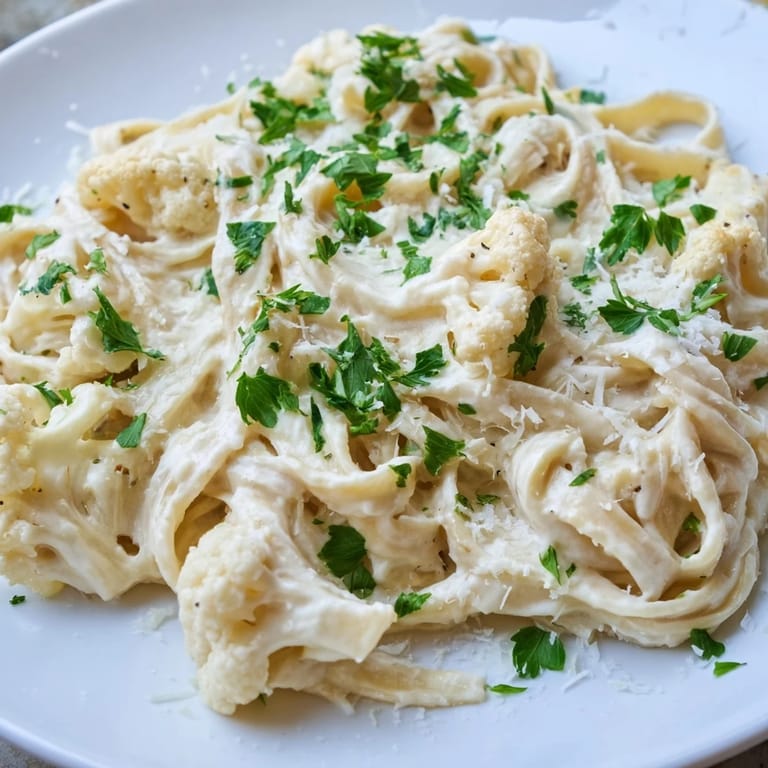
 There was no grand plan the night I blended roasted cauliflower into pasta sauce. I had half a head wilting in the crisper and a craving for something creamy without the heaviness. The kitchen smelled like toasted garlic and caramelized edges, and I thought, why not? What came out of the blender was silky, golden, and tasted like I'd been making it for years. My husband looked up from his bowl, confused and impressed, and asked if I'd snuck cream into it.
I made this for my sister once when she was trying to eat lighter but still wanted comfort food. She twirled her fork through the fettuccine, took a bite, and said it tasted like a hug. That's when I knew this recipe wasn't just a clever trick. It was something that could show up on a Tuesday night or at a table full of guests and feel right either way.
Ingredients
- Cauliflower: The star of the sauce, it becomes sweet and almost buttery when roasted until golden, so don't skip the caramelization.
- Garlic: Roasting mellows it into something creamy and sweet, not sharp, which blends beautifully into the sauce.
- Whole milk: It adds just enough richness to make the sauce silky without feeling heavy on your stomach.
- Parmesan cheese: Use the real stuff, freshly grated, because it brings a nutty, salty depth that pre-shredded just can't match.
- Unsalted butter: A little goes a long way here, adding smoothness and helping the cauliflower roast to perfection.
- Fettuccine: Wide noodles hold the sauce best, but honestly, any pasta shape you love will work just fine.
- Nutmeg: Just a hint warms the whole dish and makes it taste like you spent way more time on it than you did.
- Salt and black pepper: Season boldly, taste as you go, and adjust until it sings.
- Fresh parsley and extra Parmesan: Optional, but they add a pop of color and a final layer of flavor that feels special.
Tired of Takeout? 🥡
Get 10 meals you can make faster than delivery arrives. Seriously.
One email. No spam. Unsubscribe anytime.
Instructions
- Get the oven ready:
- Preheat to 425°F and line a baking sheet with parchment so nothing sticks. This high heat is what gives the cauliflower those sweet, crispy edges.
- Prep and roast the vegetables:
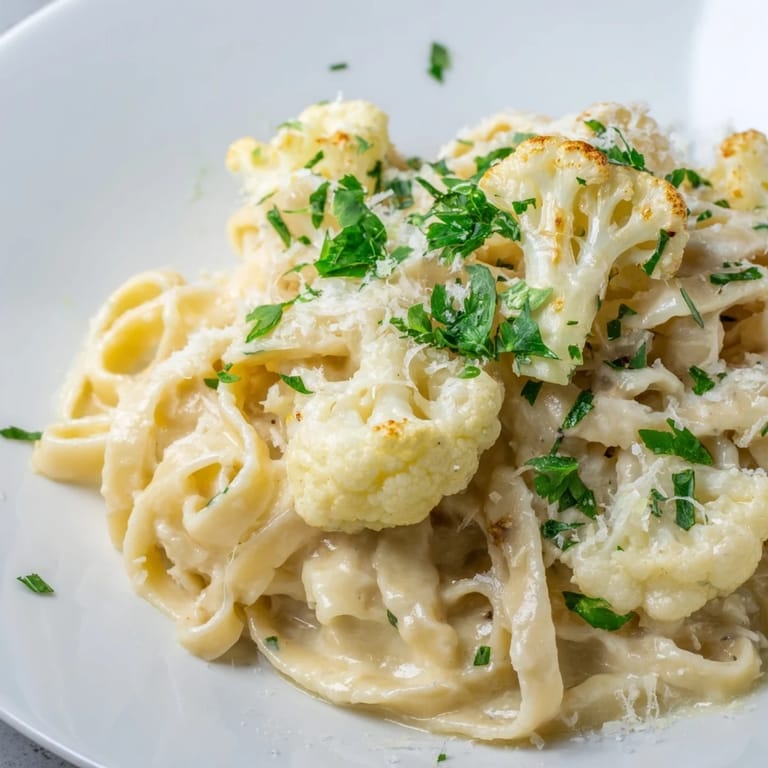
- Toss cauliflower florets and peeled garlic cloves with a tablespoon of butter, spread them out evenly, and roast for 25 to 30 minutes, stirring halfway through. You want them golden and tender, with some charred bits for flavor.
- Cook the pasta:
- Boil your pasta in well salted water according to the package, and before you drain it, scoop out a cup of that starchy pasta water. It's liquid gold for adjusting your sauce later.
- Blend the sauce:
- Add roasted cauliflower, garlic, the rest of the butter, milk, Parmesan, nutmeg, salt, and pepper to a blender and run it until it's completely smooth. If it's too thick, splash in some of that reserved pasta water until it looks creamy and pourable.
- Warm and toss:
- Pour the sauce into a large skillet over medium heat and let it bubble gently, then toss in the drained pasta and stir until every strand is coated. The sauce should cling to the noodles like a glossy hug.
- Serve it up:
- Plate it while it's hot, and finish with a sprinkle of parsley and extra Parmesan if you're feeling fancy. It tastes best right away, when everything is still steaming.
 Pin It
 The first time I served this to friends, I didn't tell them it was made with cauliflower until after they'd finished. One of them looked at me like I'd performed magic. It wasn't about tricking anyone, it was about proving that vegetables can be just as comforting and crave worthy as anything rich and heavy. That night, this dish stopped being just dinner and became a quiet little victory.
Make It Your Own
A squeeze of lemon juice right before serving brightens the whole thing and cuts through the richness in the best way. If you want to make it lighter on dairy, swap the milk for unsweetened almond or oat milk, it won't be quite as creamy, but it still works. I've also stirred in sautéed mushrooms, wilted spinach, or even crispy chickpeas when I wanted more texture and substance on the plate.
Storage and Reheating
Leftovers keep in the fridge for up to three days in an airtight container, though the sauce may thicken as it sits. When you reheat it, add a splash of milk or pasta water and warm it gently on the stove, stirring often so it doesn't break. I've found that reheating in the microwave works in a pinch, but the stovetop gives you more control and keeps the sauce silky.
Helpful Notes
If you're cooking for someone who's gluten free, just swap in your favorite gluten free pasta and everything else stays the same. For a dairy free version, use plant based butter and milk, and replace the Parmesan with a cashew based or nutritional yeast blend. I've also made this with frozen cauliflower when fresh wasn't available, just roast it a little longer to drive off the extra moisture.
- Roast the cauliflower until some pieces are deeply golden, that's where the flavor lives.
- Blend the sauce longer than you think you need to, silky smooth makes all the difference.
- Serve it hot and fresh, this dish is at its best straight from the pan.
 Pin It
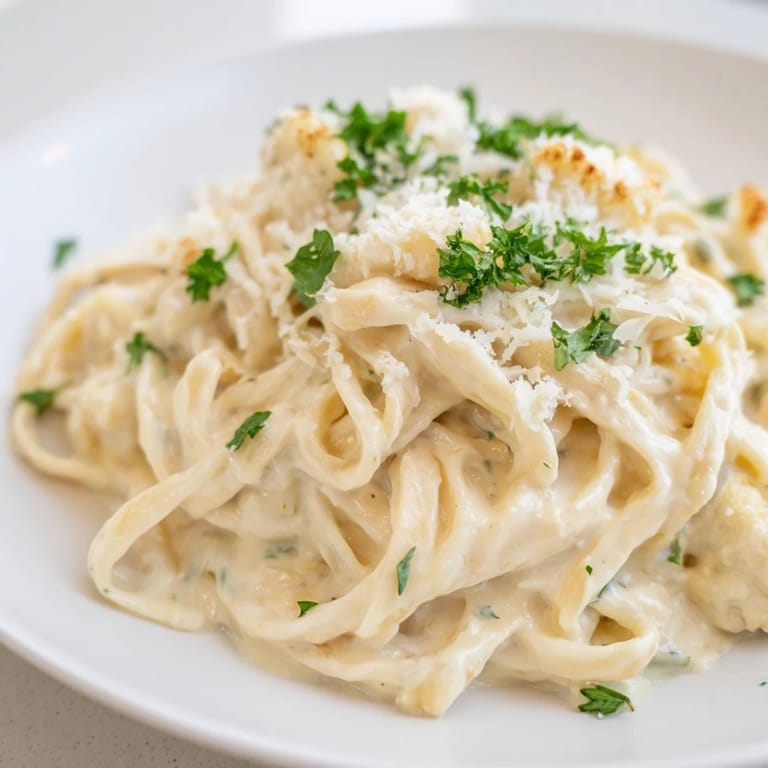
 This dish has become my go to when I want something that feels special without a lot of fuss. It's proof that comfort food doesn't have to be heavy, and that a little creativity in the kitchen can turn something simple into something you'll make again and again.
Recipe FAQs
- → Can I make this sauce ahead of time?
Yes, prepare the blended sauce up to 24 hours in advance and refrigerate. Reheat gently in a skillet over medium heat, adding a splash of pasta water or milk to restore creaminess before tossing with fresh pasta.
- → What if my sauce is too thick?
Simply whisk in reserved pasta water a tablespoon at a time until you reach your preferred consistency. The starchy pasta water helps the sauce cling beautifully to the noodles.
- → Can I substitute the pasta type?
Absolutely. Fettuccine works wonderfully, but pappardelle, linguine, or even gluten-free varieties pair beautifully with this creamy sauce. Choose pasta with good surface area to hold the sauce.
- → How do I make this dairy-free?
Replace whole milk with unsweetened plant-based alternatives like almond or oat milk, swap butter for olive oil, and use nutritional yeast or dairy-free Parmesan. The flavor profile changes slightly but remains delicious.
- → Why roast the cauliflower instead of steaming?
Roasting caramelizes the florets, developing deeper, sweeter flavors that create a more robust and satisfying sauce compared to steamed cauliflower, which can taste bland.