 Pin It
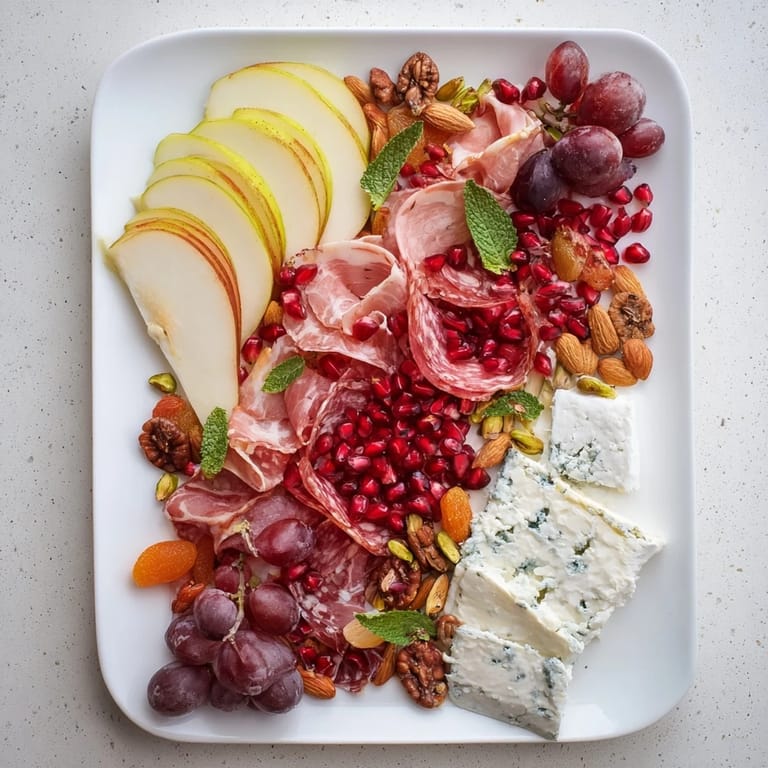
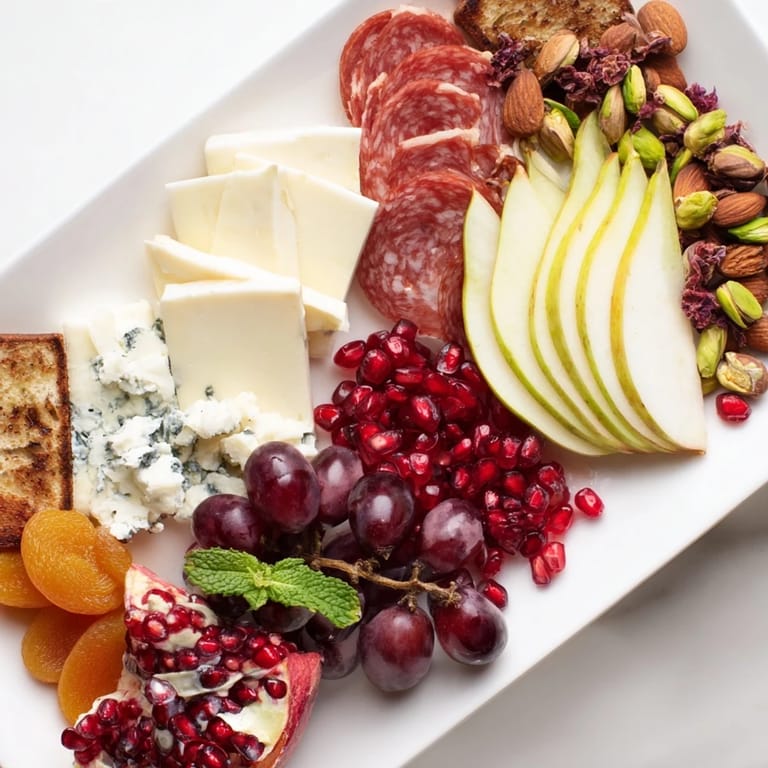
 I'll never forget the afternoon I discovered that a cheese board could be art. It wasn't just about throwing ingredients onto a platter anymore—it was about creating something that made people pause before they ate. That's when I fell in love with the idea of the Pomegranate Jewel Cascade, a board where every element flows like water, and those ruby-red pomegranate seeds catch the light like edible jewels. I've made this for dinner parties and intimate gatherings, and it never fails to become the centerpiece conversation starter before anyone even tastes a bite.
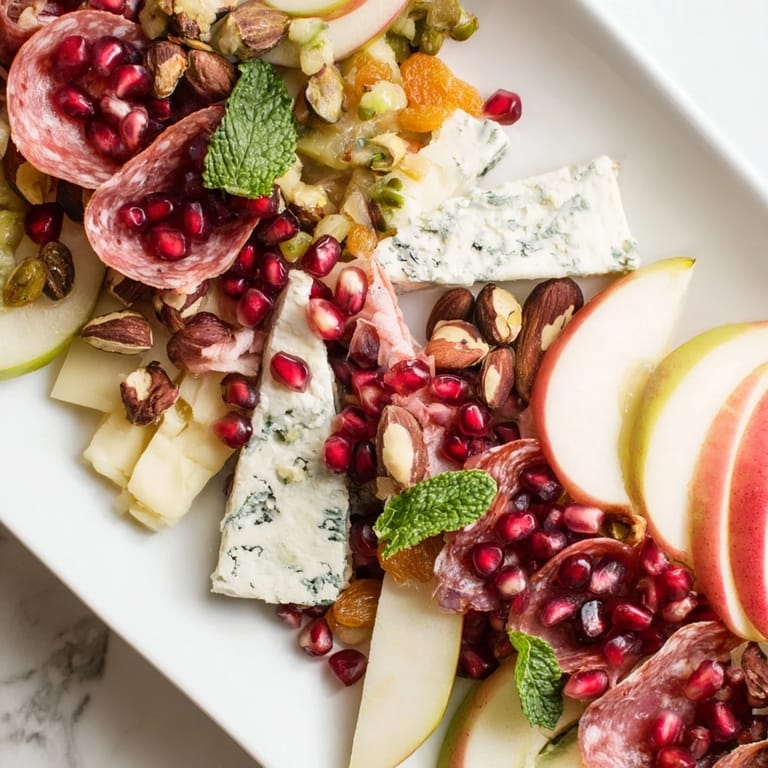
I remember my sister's face when she walked into my kitchen for a dinner party and saw this board laid out. She actually gasped. The way the colors flowed diagonally across the platter, with those glowing pomegranate arils scattered like scattered garnets, made her feel welcomed before she'd even sat down. That's when I realized a beautiful board is its own love language.
Ingredients
- Creamy goat cheese, 100 g sliced: This is your soft, tangy anchor—it plays beautifully with both sweet and savory. I learned to slice it when it's slightly cold, making cleaner cuts that look more intentional on the board.
- Aged Manchego, 100 g sliced: The nutty, slightly salty character keeps things interesting and adds that Spanish touch. Its firm texture means clean lines when you arrange it.
- Blue cheese, 100 g crumbled: Don't skip this—the pungent bite is what makes people come back for another nibble. Crumble it just before assembling so it looks freshly done.
- Prosciutto, 80 g thinly sliced: Its delicate, salty nature feels luxurious without overwhelming. Let it drape naturally—those folds are part of the visual magic.
- Spicy salami, 80 g thinly sliced: The kick adds depth and makes the sweet fruits sing by contrast. This is where the board gets personality.
- Pomegranate arils, from 1 large pomegranate: These jewels are non-negotiable. They're tart, they're beautiful, and they make every bite feel celebratory. Pro tip: de-seed your pomegranate over a bowl of water to keep the seeds pristine and your hands clean.
- Red grapes, 1 small bunch halved: The sweetness balances the salty meats. Halving them makes them easier to grab and doubles their visual impact.
- Pear, 1 ripe thinly sliced: Slice just before serving so it doesn't brown. Its creamy texture and subtle sweetness are a gentle contrast to the bold flavors.
- Apple, 1 small thinly sliced: The crisp, slightly tart note is the cherry on top. I usually use a Granny Smith for its tartness and firm structure.
- Dried apricots, 50 g halved: Their concentrated sweetness and jewel-like color add visual drama and chewy texture.
- Dried figs, 40 g sliced: Earthy and slightly honeyed, they feel fancy without any pretense.
- Toasted pistachios, 40 g: The nutty crunch is addictive. Toasting them yourself brings out their flavor in a way pre-toasted nuts can't match.
- Roasted almonds, 40 g: Another layer of crunch that rounds out the texture experience.
- Honeycomb, 1 small piece: This is the unexpected treasure. Its golden sweetness paired with the slight bitterness of cheese is pure magic.
- Fig jam, 1 small jar: Sweet, jammy, and the bridge between cheese and fruit. It ties the whole board together.
- Crusty baguette, 1 sliced: The vehicle for everything else. A good crust means it won't get soggy even if someone lets it sit for a while.
- Artisan crackers, 80 g: For those who want texture without the bread. I keep a variety because different crackers pair with different cheeses.
- Fresh mint leaves: The finishing garnish that adds color, aroma, and a subtle freshness that lifts everything.
Tired of Takeout? 🥡
Get 10 meals you can make faster than delivery arrives. Seriously.
One email. No spam. Unsubscribe anytime.
Instructions
- Envision your flow:
- Take a moment to study your board or platter. Imagine a diagonal line flowing from the top left corner down to the bottom right—this will be your guide. It's like choreography; everything moves with intention along this path.
- Lay down your cheese foundation:
- Start placing your cheese slices and crumbles along that diagonal, alternating between the creamy goat, the nutty Manchego, and scattered bits of blue cheese. Leave breathing room between each—this isn't about crowding, it's about rhythm. You should be able to see the board peeking through, creating visual gaps that make everything look intentional.
- Drape the cured meats:
- Now gently lay the prosciutto and salami between the cheese sections, letting them fold naturally. Don't flatten them—those gentle ripples and waves are what create movement on the board. Let the edges overlap just a bit, like they're dancing together.
- Weave in the fruits:
- Place your fresh fruit slices and grape halves along the diagonal, filling in some of the gaps. Pear and apple slices should go in last to minimize browning, but arrange them knowing exactly where they'll land. The colors should flow and complement, not clash.
- Scatter pomegranate jewels:
- This is the moment when everything transforms. Generously sprinkle pomegranate arils across the entire cascade, focusing on clusters in some spots for visual impact. Watch them catch the light—that's your signal you're doing it right.
- Add the textural surprises:
- Tuck pistachios and almonds into the gaps, almost like they're hiding in a treasure map. These little pockets of crunch will delight people as they explore.
- Place your sweet accents:
- Nestle your piece of honeycomb and small bowl of fig jam at either end of the cascade. They're the bookends of your story—gateway flavors that hint at what's to come.
- Frame with bread and crackers:
- Fan out your baguette slices and crackers along both sides of the diagonal, creating an easy path for people to grab vehicles for all the toppings.
- Finish with mint:
- Scatter fresh mint leaves across the board just before serving. They're the final whisper of freshness, and they catch the light in a way that tells everyone this is special.
- Serve at room temperature:
- Bring the board out and watch the magic happen. Room temperature means all the flavors are awake and vibrant, ready to sing together.
 Pin It
 I'll never forget when my grandmother took a bite of this board at my wedding shower and told me it was almost too beautiful to eat. Almost. She ate three plates. That's when I understood that the best recipes aren't just about flavor or nutrition—they're about creating a moment where people feel seen and celebrated.
The Art of Arrangement
Assembling a cheese board is less like following a recipe and more like creating a landscape painting. Every element has a role—the bold colors of the pomegranate arils are your highlights, the creamy cheese is your soft shadows, and the meats are your texture. The diagonal flow isn't arbitrary; it guides the eye and makes grabbing things feel natural and intentional. I've learned that people eat with their eyes first, and when a board looks like someone cared about beauty, they taste the care in every bite.
Cheese Selection and Substitutions
The three cheeses I've chosen represent a texture and flavor spectrum: soft, aged, and pungent. But here's the beautiful secret—this board is deeply forgiving. If your guests don't love blue cheese, swap it for aged Cheddar. If you can't find Manchego, Gruyère or even good Brie will sing the same song. I once made this board in a small town with limited cheese options, and I used what they had—and it was still magnificent. The pomegranate arils and the overall composition matter more than hitting specific ingredients.
Timing and Make-Ahead Magic
This is the kind of dish that lets you look like a composed host even when you're feeling slightly frazzled. Most of the prep can happen hours before: slice your cheeses and fruits, toast your nuts, arrange your mise en place. The only things to do at the last moment are slicing the apple and pear (to prevent browning) and scattering the pomegranate arils. For a party, this means you're genuinely relaxed when guests arrive instead of stuck in the kitchen with knife marks on your fingers.
- Slice cheeses and dried fruits the morning of serving and store them in airtight containers
- Toast your own nuts if you have time—they taste infinitely better and cost less
- Keep apple and pear slices in lemon water if you must prepare them early; it prevents browning beautifully
 Pin It
 Making this board has taught me that entertaining doesn't have to mean hours in the kitchen. It means showing up with intention, choosing quality ingredients, and arranging them with care. That's where the real hospitality lives.
Recipe FAQs
- → How do I create the diagonal cascade effect?
Arrange cheeses, meats, fruits, and nuts in a flowing diagonal line from one corner of the board to the opposite, alternating elements for contrast and visual appeal.
- → What can I substitute for the cured meats for vegetarian options?
Omit cured meats and increase the variety of nuts, roasted vegetables, or additional cheeses to maintain richness and texture.
- → How should I prepare the pomegranate for use on the board?
Remove arils (seeds) carefully from the pomegranate and sprinkle them generously along the cascade for a jewel-like sparkle and tart flavor.
- → What pairings complement this cheese and fruit arrangement?
Serve with a crisp rosé, sparkling wine, or a refreshing non-alcoholic pomegranate spritzer to enhance the vibrant flavors.
- → Can I make this board gluten-free?
Yes, replace baguette and crackers with gluten-free alternatives to accommodate dietary needs without compromising variety.
- → How far in advance can I prepare the board?
As much of the board features fresh elements, assemble it shortly before serving to maintain freshness and visual appeal.