 Pin It
 I discovered this dish at an intimate dinner party where the host spent more time artfully arranging appetizers than actually talking to guests—and somehow that obsession with presentation paid off completely. The moment I bit into that first folded slice, I realized the geometry wasn't just for show; it changed how the marinade clung to the meat, how the flavors unfolded across my palate, and honestly, how I thought about what an appetizer could be. What started as me being impressed by the visual turned into genuine curiosity about the technique itself. Now whenever I make it, I chase that same satisfying click when each fold holds just right.
I remember making this for a work function where I was nervous about bringing something "too fancy," but the moment people started picking up pieces, the energy completely shifted. Someone asked for the recipe, someone else went back for thirds, and the quiet appreciation in the room felt better than any compliment could be. That's when I knew this wasn't just a pretty plate—it was the kind of dish that makes people slow down and actually taste their food.
Ingredients
- Beef carpaccio or very thinly sliced roast beef (300 g): The thinner the slice, the easier it folds and the more elegantly it drapes; ask your butcher to slice it paper-thin, and keep it cold right up until folding.
- Extra virgin olive oil (2 tbsp): This carries the flavor and creates the silky mouthfeel, so choose one you actually like tasting on its own.
- Soy sauce, gluten-free (1 tbsp): It deepens the savory notes without making the dish taste Asian-specific; the balance matters here.
- Lemon juice (2 tsp): Brightness cuts through the richness and keeps the whole thing from feeling heavy.
- Dijon mustard (1 tsp): A subtle tang that rounds out the marinade and prevents it from being one-dimensional.
- Freshly ground black pepper (1/2 tsp) and sea salt (1/4 tsp): Grind your pepper right before mixing; it makes a real difference in the snap of flavor.
- Baby arugula (40 g): Peppery and delicate, it's the foundation that keeps the beef from sliding around on the plate.
- Toasted sesame seeds (2 tbsp): They add texture and a nutty depth that feels like the final flourish.
- Finely chopped chives (1 tbsp): Mild onion flavor, and they can double as edible ties if your folds need reinforcement.
- Shaved Parmesan cheese (50 g): Use a vegetable peeler to create proper shavings; chunks are less elegant and distribute poorly.
Tired of Takeout? 🥡
Get 10 meals you can make faster than delivery arrives. Seriously.
One email. No spam. Unsubscribe anytime.
Instructions
- Build your marinade first:
- Whisk together the olive oil, soy sauce, lemon juice, Dijon mustard, pepper, and salt in a small bowl until everything looks emulsified. Set aside about a tablespoon for finishing; the rest is your working marinade.
- Prepare the beef canvas:
- Lay your beef slices on a cutting board or plate, making sure they're not overlapping. Using a pastry brush, paint each slice lightly with the marinade, letting it soak in just slightly but not drowning the meat.
- Master the fold:
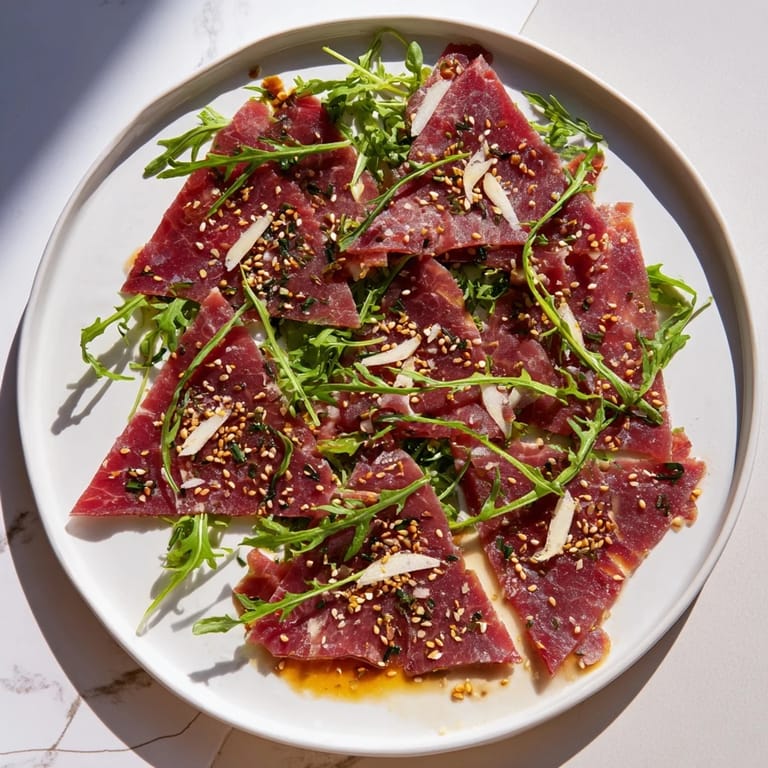
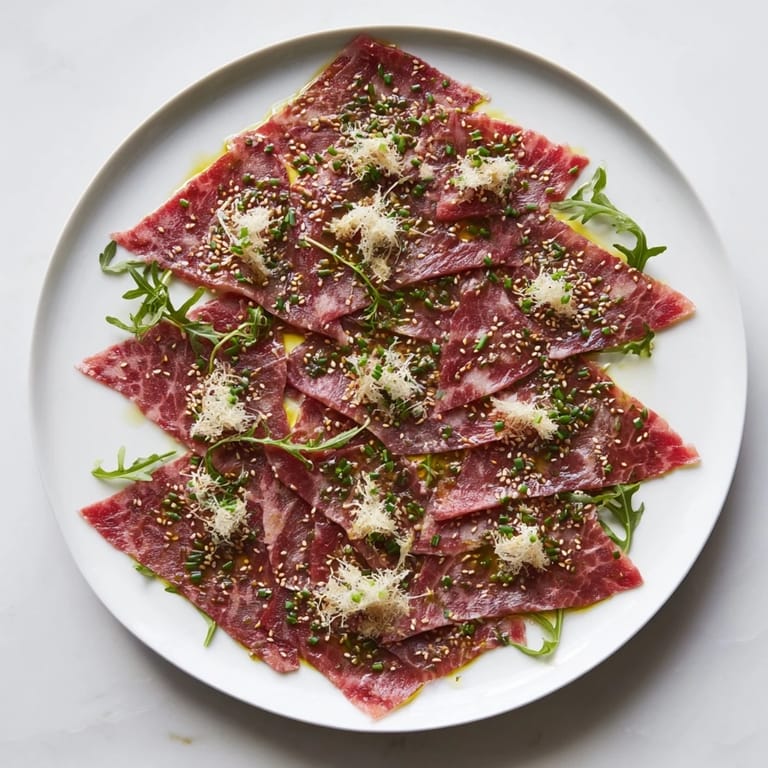
- This is where patience lives. Take one slice and fold it gently into a triangle, then fold again if you want a smaller shape, or try a fan by folding it accordion-style. Let the beef tell you where it wants to go—forcing it will tear it.
- Secure if needed:
- If a fold feels like it might unfold, slip a chive stem under it or use a cocktail pick to anchor it gently. You're supporting, not skewering.
- Build the platter:
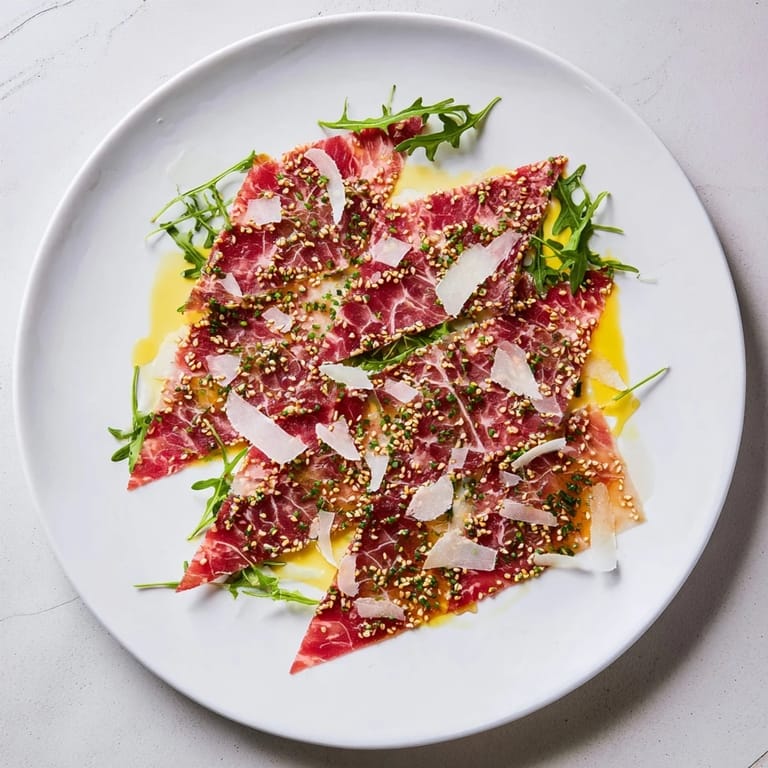
- Arrange your bed of baby arugula first, then nestle each folded beef piece into it like you're creating a little landscape. The arugula holds everything steady and adds color.
- Finish with the garnishes:
- Scatter the toasted sesame seeds across everything, add the chopped chives, then use a vegetable peeler to rain down those Parmesan shavings. Just before serving, drizzle the remaining marinade in thin lines around the plate.
 Pin It
 I've watched this dish transform a table of people scrolling on their phones into actual conversation. There's something about having to touch your food, to work a little bit to get it into your mouth, that makes eating feel intentional instead of just mechanical. That moment when everyone stops and pays attention—that's what good appetizers do.
Why Folding Matters
The geometry isn't just theater. Each fold creates surface area for the marinade to cling to, and the layered texture changes how the beef releases its flavor as you eat it. Flat slices would be pretty, but folded slices become a small experience. I learned this the hard way by trying to speed through the folding once, stacking the beef instead, and the dish lost something indefinable—that little pause of discovery when you bite into it and realize it's more textured than you expected.
The Temperature Game
Cold beef is essential, but there's a window where it's cold enough to fold but not so cold it's brittle. About 10 minutes out of the refrigerator is usually perfect; the slices become pliable without being floppy. If you're working slowly, lay the stack back on ice between folds so it stays cooperating. I ruined an entire batch once by letting it warm up while I was being too careful with each fold—by the time I finished, the first ones had already lost their shape.
Pairing and Serving Wisdom
Serve this right before your guests are starving; it's not filling, so if they're ravenous, they'll scarf it down without really experiencing it. A crisp Sauvignon Blanc or dry rosé cuts through the richness beautifully, and thinly sliced baguette or rice crackers give people something to build on if they want to make it a fuller bite. The beauty of this appetizer is how it works as a solo bite or as an opener that preps the palate for whatever comes next.
- Prep all your garnishes ahead of time so assembly stays calm and focused.
- If Parmesan shavings fall before serving, just gently place them back on the plate—nobody will know.
- Make the marinade hours ahead; the flavors only get better as they sit together.
 Pin It
 This dish reminds me that sometimes the most impressive food comes not from complicated techniques but from respect for good ingredients and the willingness to slow down. Make it when you want people to remember eating, not just the fact that they ate.
Recipe FAQs
- → What cut of beef is best for folding?
Thinly sliced beef carpaccio or roast beef works best as it’s pliable and easy to shape without tearing.
- → How do you keep the folded beef shapes intact?
Gentle folding and occasionally securing with chive stems or cocktail picks help maintain the geometric shapes.
- → Can this dish be customized for different diets?
Yes, thinly sliced tuna or salmon can be used as alternatives for pescatarian preferences.
- → What garnishes complement the folded beef?
Baby arugula, toasted sesame seeds, chopped chives, and shaved Parmesan add fresh and nutty elements.
- → Is cooking required for this dish?
No cooking is needed since it uses raw thinly sliced beef, making preparation quick.
- → How long does the marinade enhance flavor?
Brushing the marinade on before folding and drizzling before serving provides a bright, balanced taste.