 Pin It
 I stumbled upon these mason jar noodle meals during a particularly hectic month at work when lunch breaks became non-existent. The first time I assembled them on Sunday evening, I was skeptical about how fresh they'd remain, but was genuinely surprised when Thursday's jar tasted just as vibrant as Monday's. The layering technique keeps everything perfectly crisp, and there's something oddly satisfying about watching all those colorful ingredients stack up like a culinary art project.
Last summer, I brought these jars on a picnic with friends who had never seen anything like them before. We found a shady spot under an oak tree, added the hot water, gave them a good shake, and everyone marveled at how a proper meal could emerge from such a simple container. My friend Eliza immediately took photos and texted me three days later to say shed made a week's worth for her office lunches.
Ingredients
- Dried ramen or rice noodles: I prefer the thin rice noodles as they rehydrate perfectly with just hot water, no actual cooking needed at serving time.
- Protein options: Rotisserie chicken works brilliantly here when youre in a rush, but I often marinate tofu in a bit of the same sauce ingredients overnight for extra flavor.
- Fresh vegetables: The order matters – harder veggies like carrots go in first after the protein while delicate greens stay near the top away from the sauce.
- Sauce ingredients: The combination of soy, vinegar, and sesame creates that umami foundation that makes these jars so addictive and satisfying.
- Toppings: Dont skip the crushed peanuts – that textural contrast transforms these from good to unforgettable.
Tired of Takeout? 🥡
Get 10 meals you can make faster than delivery arrives. Seriously.
One email. No spam. Unsubscribe anytime.
Instructions
- Prep your noodles right:
- Cook the noodles until theyre just shy of al dente, since theyll continue softening slightly in the jar. Rinse them thoroughly under cold water to stop the cooking process and remove excess starch.
- Create your flavor base:
- Whisk the sauce ingredients until the honey fully dissolves, creating a beautiful amber-colored liquid that will eventually permeate the entire jar. You might be tempted to skimp on the ginger, but its warming bite is what makes the sauce special.
- Layer strategically:
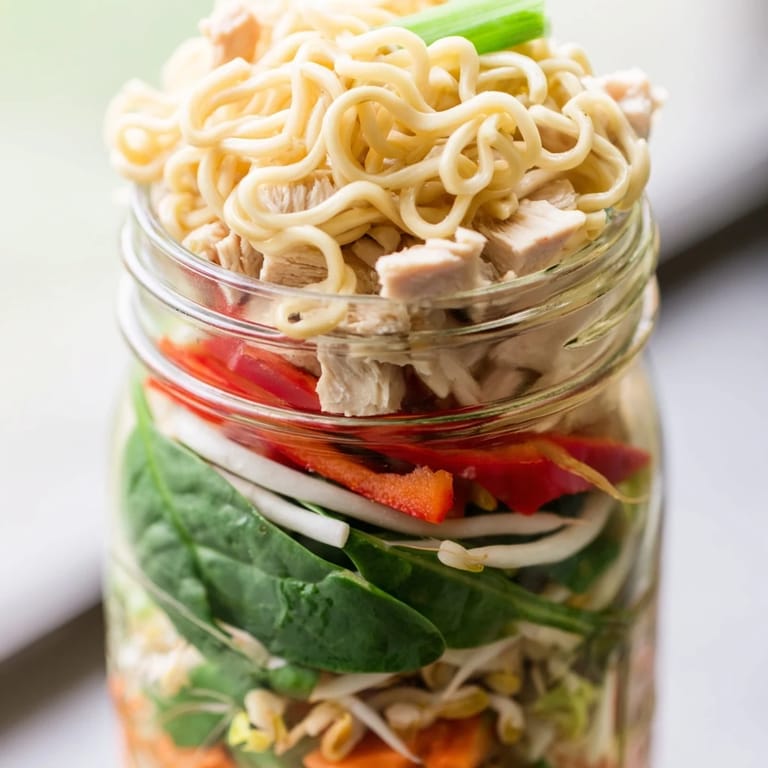
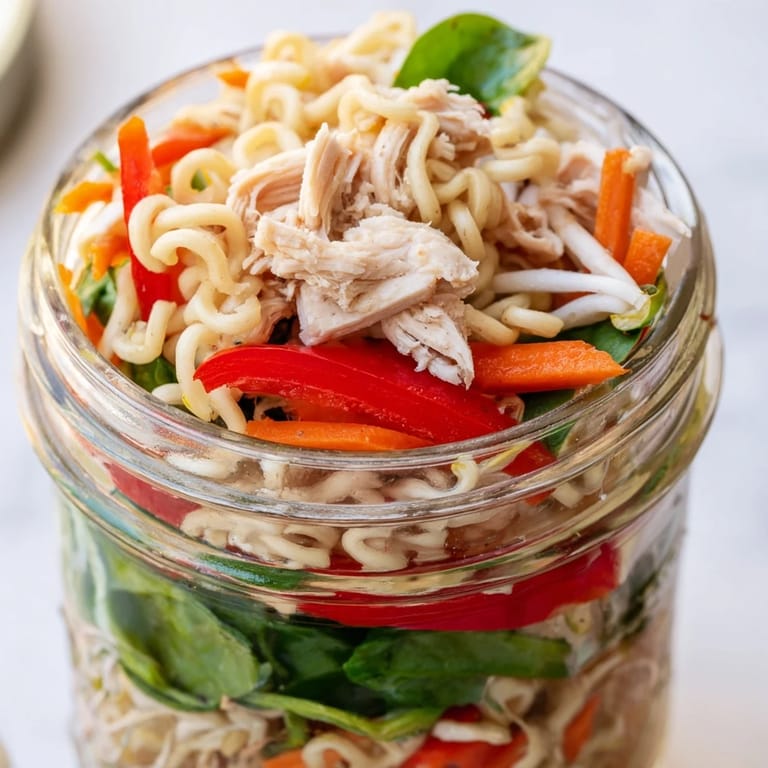
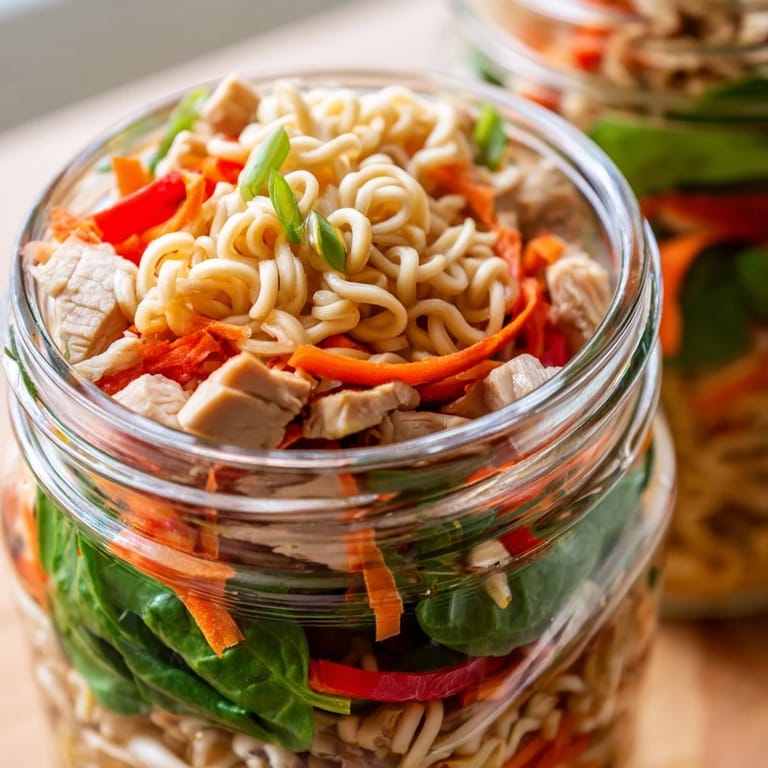
- Pour sauce into the bottom of each jar first, then add protein which serves as a barrier protecting other ingredients from getting soggy. Think of building each jar like a protective tower with the most delicate items safely distanced from the moisture.
- Pack with purpose:
- Add your vegetables in order of firmness, starting with carrots and peppers, then greens and bean sprouts. Don't press down too firmly – a little breathing room allows the hot water to circulate later.
- Finish with noodles:
- Add your cooled noodles as the final layer, creating a protective cap that keeps everything in place. Leave about an inch of space at the top for expansion when you add hot water later.
- The magic moment:
- When youre ready to eat, simply add hot water, replace the lid, let it steep for a few minutes, then shake gently to distribute the sauce. The transformation from layered ingredients to complete meal still feels like a small miracle every time.
 Pin It
 My daughter initially rolled her eyes at these jars when I started making them for her school lunches, calling them another one of mom's weird food projects. A month later, I overheard her explaining the concept to her friends with such enthusiasm, even offering to make some for their next study group. Those simple jars had somehow become her signature thing, and watching her pride as she demonstrated how to mix them properly warmed my heart in the most unexpected way.
Prep Ahead Strategies
I've learned that having a miniature assembly line makes the process quicker – I set up four jars in a row and add each component to all jars before moving to the next ingredient. This approach cuts my prep time nearly in half compared to completing one jar at a time, and turns what could feel like a chore into an almost meditative Sunday ritual that prepares me mentally for the week ahead.
Storage Solutions
While these jars keep beautifully for four days in the refrigerator, I discovered that placing a small piece of paper towel on top of the noodles before sealing absorbs any excess condensation and keeps everything even fresher. The jars should always be stored upright – I learned this lesson the hard way after a briefcase disaster that left my laptop smelling like sesame oil for weeks.
Customization Ideas
Over time, I've created seasonal variations of these jars that reflect what's available at the farmers market or just what mood I'm in. Winter versions with udon noodles and hearty mushrooms provide comfort on cold days, while summer versions with rice noodles and cucumber keep things light and refreshing.
- For a breakfast version, try using congee or rice porridge base with soft-boiled eggs and morning-friendly toppings like furikake or crispy shallots.
- If you're following a keto diet, replace the noodles with spiralized zucchini and add extra protein and avocado chunks just before serving.
- Keep a few empty jars at work with shelf-stable noodles inside, then just add hot water from the office kettle when you're too busy to pack lunch.
 Pin It
 These humble jars have saved me countless hours and dollars over the years, but their true value isn't just practical. They represent a small act of care I can provide for myself and my family even during the busiest weeks.
Recipe FAQs
- → How long can I store these mason jar noodles?
These noodle jars stay fresh in the refrigerator for up to 4 days when properly sealed. Keep the sauce at the bottom to prevent the noodles from becoming soggy.
- → Can I make this dish vegetarian or vegan?
Yes, simply use tofu or edamame as your protein and substitute maple syrup for honey in the sauce. This makes it completely plant-based and delicious.
- → What type of noodles work best for this preparation?
Ramen or rice noodles work perfectly. For a low-carb version, try spiralized zucchini or shirataki noodles. Just cook according to package directions and rinse with cold water.
- → Do I need to add hot water before eating?
Yes, add about half a cup of hot water to the jar, let it sit for 2-3 minutes to warm everything through and blend the flavors, then mix well and enjoy.
- → Can I customize the vegetables in this dish?
Absolutely! Feel free to swap in mushrooms, snap peas, cabbage, or any crisp vegetables you prefer. The layering method works with most fresh, crunchy vegetables.
- → Is this dish gluten-free?
It can be made gluten-free by using tamari instead of soy sauce and choosing rice noodles or other gluten-free noodle varieties. Always check all product labels for certification.