 Pin It
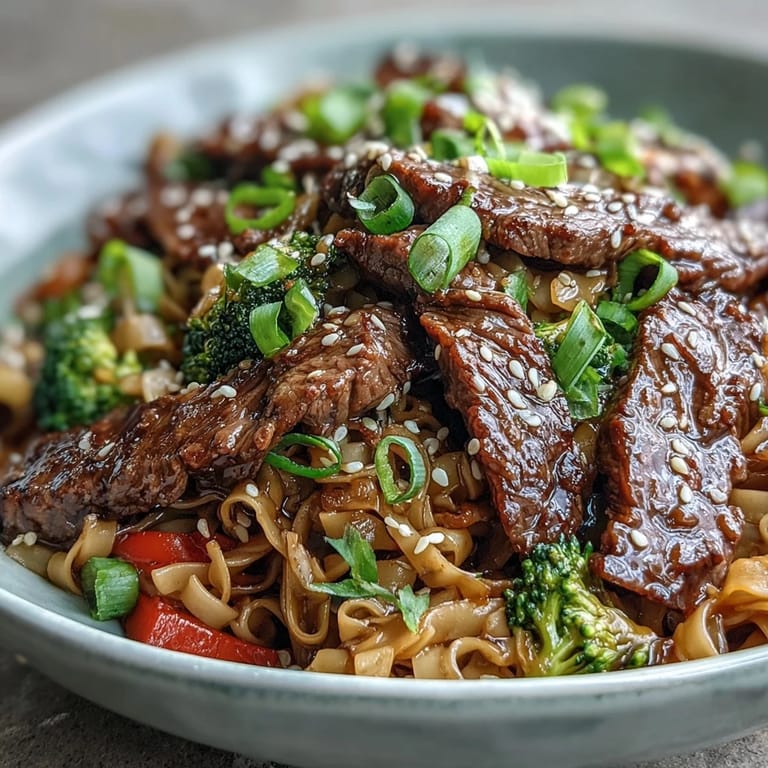
 My neighbor Jun came over one winter evening with a bag of rice noodles and a craving she couldn't shake. We didn't have much in the fridge, just flank steak I'd meant to freeze and a drawer full of orphaned vegetables. She showed me how to slice the beef paper-thin, her knife moving faster than mine ever could, and within half an hour we were twirling glossy noodles around our forks while snow piled up outside. That night turned into a ritual, and now every time I make this dish, I think of her laugh echoing through my kitchen.
I made this for my son's college friends during finals week, and they descended on the skillet like gulls on boardwalk fries. One of them asked if I'd been to culinary school. I hadn't, but I'd learned that high heat and a confident hand with garlic can make anything feel impressive. They went back for seconds, then thirds, scraping the pan clean before I could even pack leftovers.
Ingredients
- Rice noodles: These silky strands soak up sauce without turning mushy, and they're naturally gluten-free if you need that flexibility.
- Flank steak: Slicing it thin against the grain is the secret to tender bites that don't turn chewy, and freezing it for 15 minutes makes cutting easier.
- Broccoli florets: They add crunch and a slight bitterness that balances the sweet-savory sauce beautifully.
- Bell pepper: Red or yellow varieties bring sweetness and vibrant color that makes the whole bowl look alive.
- Carrot: Julienned thin, they cook quickly and add a subtle earthiness that rounds out the vegetables.
- Green onions: A fresh, sharp garnish that wakes up every bite right before it hits your mouth.
- Garlic and ginger: This aromatic duo is non-negotiable; they perfume the oil and build the foundation for everything else.
- Soy sauce: The salty backbone of the sauce, and using low-sodium gives you control over the final seasoning.
- Brown sugar: It dissolves into a glossy glaze that caramelizes slightly on the edges of the beef.
- Sesame oil: Just a tablespoon adds a nutty richness that lingers long after the bowl is empty.
- Vegetable oil: A neutral high-heat oil that won't burn when you crank the skillet up.
- Sesame seeds: A tiny crunch and visual finish that makes the dish feel complete.
Tired of Takeout? 🥡
Get 10 meals you can make faster than delivery arrives. Seriously.
One email. No spam. Unsubscribe anytime.
Instructions
- Soften the noodles:
- Cook the rice noodles according to package directions, usually just a few minutes in boiling water. Drain them well and toss with a tiny drizzle of oil so they don't clump while you prep everything else.
- Sear the beef:
- Heat vegetable oil in a large skillet or wok over medium-high until it shimmers, then add the thinly sliced flank steak in a single layer. Let it sear undisturbed for about a minute before flipping, cooking for 2 to 3 minutes total until browned but still juicy, then remove and set aside.
- Wake up the aromatics:
- In the same skillet, toss in minced garlic and grated ginger, stirring constantly for about 30 seconds until the air smells like a street market. Don't let them burn or they'll turn bitter.
- Stir-fry the vegetables:
- Add broccoli, bell pepper, and carrot to the hot skillet, stirring and tossing for about 5 minutes until they're tender but still have a bit of snap. The edges should char slightly, adding little pockets of caramelized flavor.
- Mix the sauce:
- While the vegetables cook, whisk together soy sauce, brown sugar, and sesame oil in a small bowl until the sugar dissolves completely. Taste it; it should be bold and a little sweet.
- Bring it all together:
- Return the beef to the skillet and pour the sauce over everything, stirring to coat each piece evenly. The sauce will sizzle and thicken slightly as it hits the hot pan.
- Toss in the noodles:
- Add the cooked rice noodles and gently toss everything together using tongs or a spatula, working quickly so the noodles heat through and get slicked with sauce in about 2 minutes. Be gentle or the noodles will break.
- Garnish and serve:
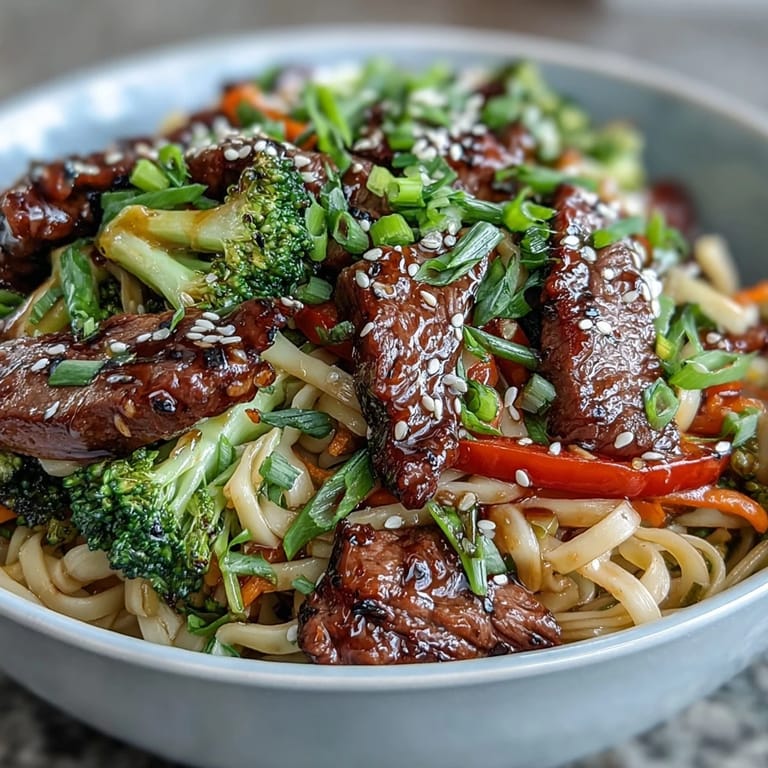
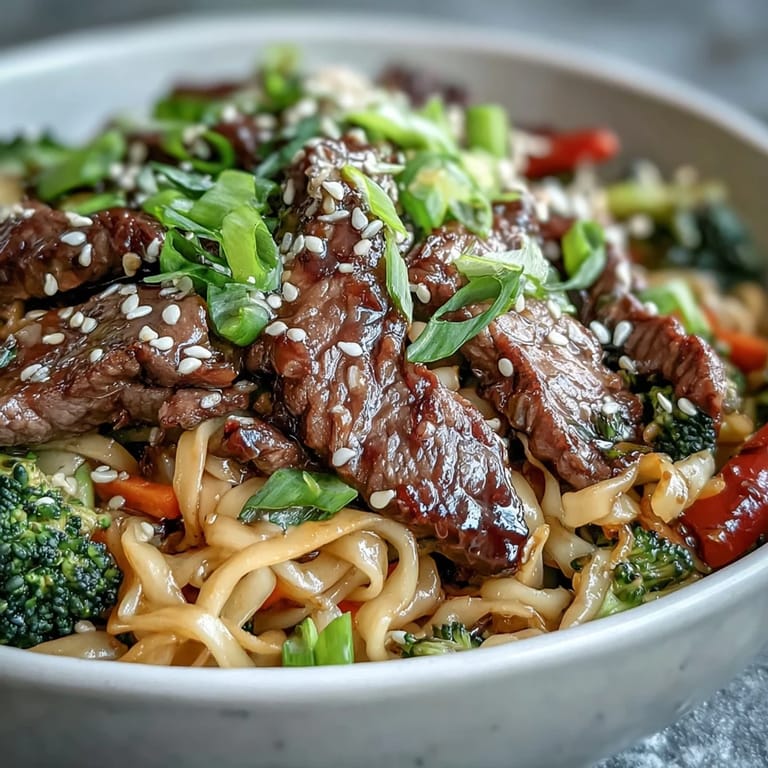
- Transfer to bowls and scatter chopped green onions and sesame seeds over the top. Serve immediately while everything is still steaming.
 Pin It
 The first time I served this at a potluck, someone asked for the recipe before they'd even finished their first bowl. I scribbled it on the back of a napkin, and a week later she texted me a photo of her own version with zucchini and chicken. That's when I realized this dish doesn't need perfection; it just needs heat, confidence, and whatever's in your fridge.
Choosing Your Protein
Flank steak is my go-to because it's affordable and flavorful, but I've also used sirloin when it's on sale. Chicken thighs work beautifully if you slice them thin and cook them a minute longer, and firm tofu can stand in for a plant-based version as long as you press it dry first. The key is cutting everything to similar sizes so it all cooks evenly in that hot skillet.
Adjusting the Heat
If you like a bit of fire, stir a teaspoon of gochujang or a squeeze of sriracha into the sauce before pouring it over the beef. I once added too much and had to cool it down with a spoonful of honey, which actually made it even better. Start small, taste as you go, and remember you can always add more heat but you can't take it back.
Storing and Reheating
Leftovers keep in an airtight container in the fridge for up to three days, though the noodles soak up more sauce as they sit. When reheating, I add a splash of water or broth to the skillet and warm everything over medium heat, tossing gently until it loosens up. A quick hit in the microwave works too, but the skillet brings back a little of that fresh-cooked texture.
- Add a handful of snap peas or thinly sliced zucchini if you want more crunch and color.
- Swap rice noodles for udon or even spaghetti if that's what you have; the sauce doesn't discriminate.
- Double the recipe and freeze half the cooked beef and sauce separately for a head start on next week's dinner.
 Pin It
 This dish has pulled me out of weeknight ruts more times than I can count, and it never feels like a compromise. Keep the ingredients on hand, and you'll always have a way to turn ordinary evening into something that feels like a small celebration.
Recipe FAQs
- → Can I use a different cut of beef?
Yes, sirloin, ribeye, or skirt steak work well. Slice thinly against the grain for tenderness.
- → What can I substitute for rice noodles?
Udon, soba, or even spaghetti can replace rice noodles. Adjust cooking time based on noodle type.
- → How do I make this spicier?
Add sriracha, gochujang, or red pepper flakes to the sauce for heat. Start with 1 teaspoon and adjust to taste.
- → Can I prepare this ahead of time?
Cook components separately and combine when ready to serve. Noodles may absorb sauce, so reserve extra for reheating.
- → Is this gluten-free?
Use gluten-free soy sauce or tamari and certified gluten-free rice noodles to make this completely gluten-free.
- → What vegetables work best in this dish?
Broccoli, bell peppers, carrots, snap peas, zucchini, and mushrooms all pair beautifully with the sauce.