 Pin It
 My kitchen window was wide open one August afternoon when I dumped too much orzo into boiling water, thinking it would never be enough. Ten minutes later I had a mountain of tender pasta and no plan. I grabbed what was left in the crisper, a lemon that had been sitting on the counter for days, and the crumbly feta I'd been nibbling straight from the package. What started as a mistake turned into something I now make on purpose every week.
I brought this to a backyard cookout once, tucked between potato salad and coleslaw, and watched it disappear first. Someone asked if I'd ordered it from a restaurant. I didn't admit I'd made it in twenty minutes while still wearing pajama shorts. It's become my go to whenever I need to look like I tried harder than I did.
Ingredients
- Orzo pasta: This rice shaped pasta holds dressing beautifully and doesn't clump like other small pastas, just rinse it well after draining or it will stick together in one solid mass.
- Cherry tomatoes: Halve them so their juice mixes into the dressing, creating little pockets of brightness in every bite.
- Cucumber: Dice it small and leave the skin on for color and a bit of snap, watery cucumber ruins everything so pat it dry if it looks too moist.
- Red onion: A small amount goes a long way, dice it fine so it distributes without overwhelming, and if you're sensitive to raw onion soak it in cold water for five minutes first.
- Kalamata olives: Their briny punch balances the creamy feta, but if you're not an olive person the salad still works without them.
- Feta cheese: Crumble it yourself from a block rather than buying pre crumbled, it tastes sharper and doesn't have that weird coating.
- Fresh parsley and dill: These bring the whole thing to life, dried herbs can't replicate what fresh ones do here.
- Extra virgin olive oil: Use the good stuff because you'll taste it, this isn't the time for the cheap bottle from the back of the pantry.
- Lemon juice: Freshly squeezed makes all the difference, bottled lemon juice has a flat metallic taste that ruins the brightness.
- Dried oregano: It adds that unmistakable Greek flavor, earthy and warm, just don't use the oregano that's been in your spice drawer since 2019.
- Dijon mustard: A small spoonful emulsifies the dressing and adds a subtle tang you can't quite place but will miss if you skip it.
Tired of Takeout? 🥡
Get 10 meals you can make faster than delivery arrives. Seriously.
One email. No spam. Unsubscribe anytime.
Instructions
- Boil the orzo:
- Bring a large pot of salted water to a rolling boil, add the orzo, and cook until it's tender but still has a slight bite, about eight to ten minutes. Drain it in a colander and rinse under cold water to stop the cooking and wash away excess starch, then let it sit and cool completely.
- Combine the vegetables and cheese:
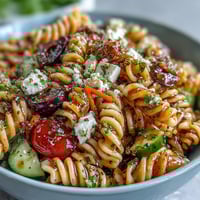
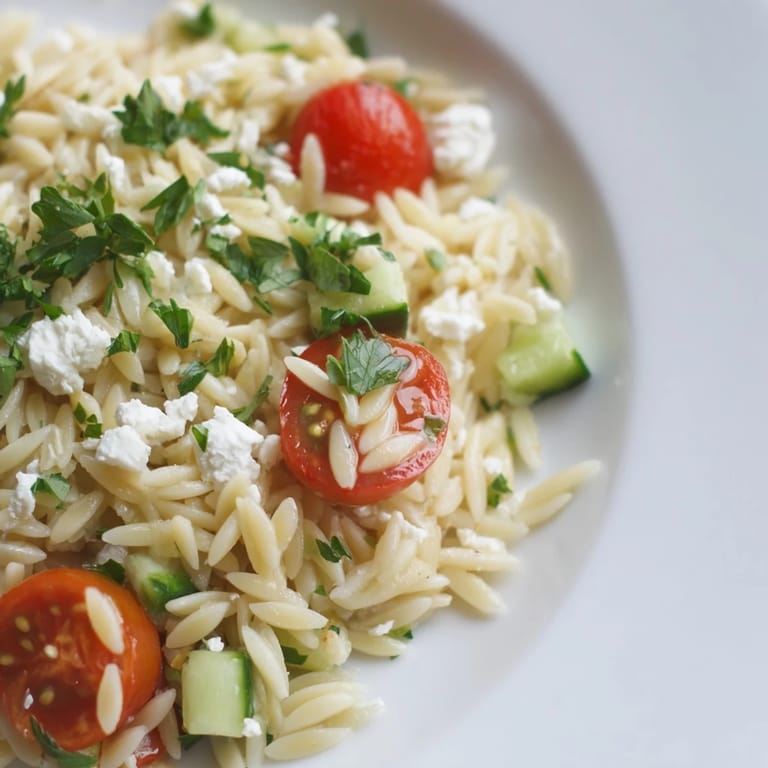
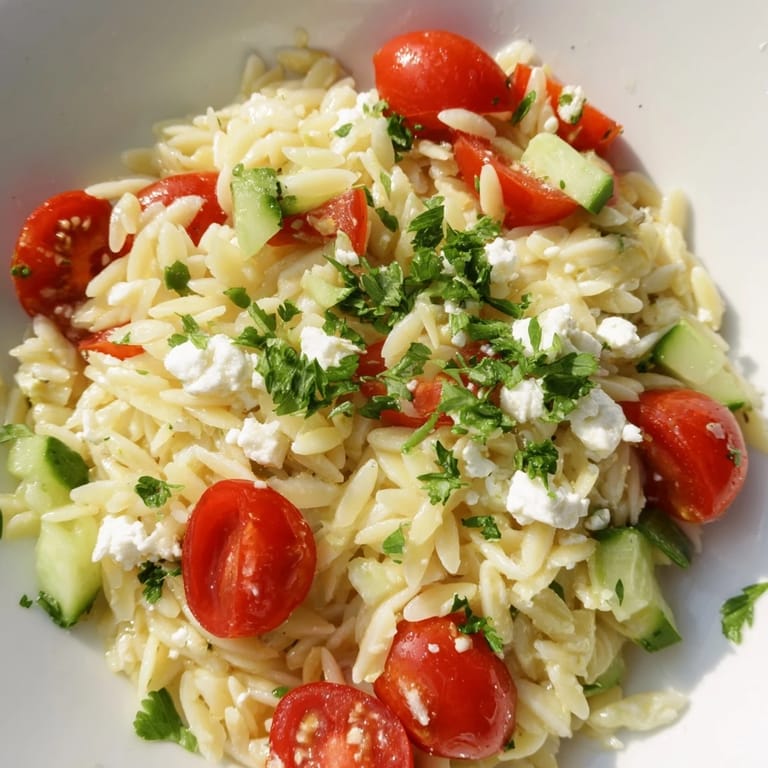
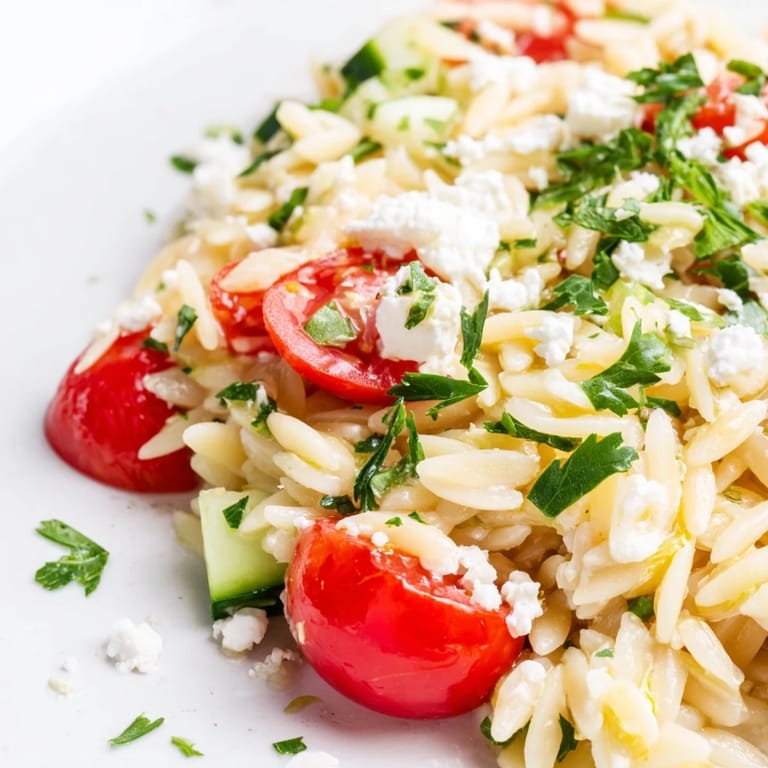
- In a large bowl, toss together the cooled orzo, halved cherry tomatoes, diced cucumber, finely diced red onion, sliced olives if you're using them, crumbled feta, chopped parsley, and dill. Use your hands if you want, it's faster and nothing breaks.
- Make the dressing:
- In a small bowl or jar, whisk together the olive oil, lemon juice, oregano, Dijon mustard, salt, and pepper until it looks smooth and slightly thickened. If you use a jar you can just shake it hard with the lid on, which is what I do when I don't want to wash a whisk.
- Dress the salad:
- Pour the dressing over the orzo mixture and toss gently with a big spoon or your hands until every piece is lightly coated. Don't drown it, you want everything glossy but not swimming.
- Chill and adjust:
- Taste it and add more salt, pepper, or lemon juice if it needs it, then cover and chill for at least ten minutes before serving. The flavors will deepen and the salad will taste more like itself after it sits.
 Pin It
 One evening I packed this into a container and ate it on the porch while the sky turned pink. My neighbor leaned over the fence and asked what smelled so good, and I realized it was just lemon and oregano drifting through the air. We ended up sharing the bowl and talking until the streetlights came on.
Making It Your Own
I've added grilled chicken when I needed more protein, and once I stirred in a can of drained chickpeas because that's what I had. Both worked. You could swap red wine vinegar for the lemon juice if you want something less bright and more mellow. I've also seen people add artichoke hearts or roasted red peppers, and while I haven't tried it myself I can see how it would be good.
Storing and Serving
This salad keeps well in the fridge for up to two days, though the cucumbers will start to weep a little on day three. I usually make it in the morning and let it chill until dinner, which gives the flavors time to marry. Serve it cold or let it come to room temperature, both ways work depending on the weather and your mood.
A Few Last Thoughts
If you're bringing this somewhere, transport the dressing separately and toss everything together when you arrive so it stays crisp. I learned that after showing up to a picnic with a soggy bowl nobody wanted to touch. The red onion can be strong, so if you're serving this to people who are picky about raw onion just leave it out or use half the amount.
- Taste the feta before you add extra salt, some brands are saltier than others and you can always add more but you can't take it back.
- If the salad seems dry after sitting in the fridge, drizzle a little more olive oil and toss it again before serving.
- Fresh herbs matter here more than in most recipes, so don't skip them or substitute dried, it won't be the same.
 Pin It
 This is the kind of dish that makes you feel competent in the kitchen without much effort. It's bright and satisfying and always tastes like summer, even in February.
Recipe FAQs
- → Can I make this salad ahead of time?
Yes, this salad is excellent for meal prep. You can assemble it several hours ahead or even a day in advance. Keep it refrigerated in an airtight container. The flavors actually meld beautifully as it sits. Add the dressing just before serving if you prefer a crispier texture, or mix it in earlier for a more marinated taste.
- → What can I substitute for feta cheese?
Goat cheese, ricotta salata, or halloumi are excellent alternatives. For a dairy-free option, try cashew feta or nutritional yeast for a tangy flavor. Each substitution will give the salad a slightly different character while maintaining the Mediterranean essence.
- → How do I prevent the orzo from getting mushy?
Cook the orzo to al dente according to package directions, usually 8-10 minutes. Immediately drain and rinse under cold water to stop the cooking process. This prevents overcooking and ensures the pasta maintains its tender yet slightly firm texture in the finished salad.
- → Can I add protein to this dish?
Absolutely. Grilled chicken breast, white beans, or roasted chickpeas work wonderfully. For seafood options, try grilled shrimp or canned tuna. These additions make the salad more substantial while keeping the Mediterranean flavor profile intact.
- → What's the best way to store leftovers?
Store the salad in an airtight container in the refrigerator for up to two days. If the dressing separates, simply give it a quick stir before serving. The pasta will absorb more dressing over time, so you may want to add extra olive oil and lemon juice when reheating.
- → Can I use fresh lemon juice instead of bottled?
Fresh lemon juice is highly recommended for the brightest flavor. Bottled juice tends to taste more acidic and lacks the vibrant citrus notes that make this dressing special. Squeeze fresh lemons just before preparing the dressing for optimal taste.