 Pin It
 I still remember the first time I created a glazed ham centerpiece board—it was for a holiday brunch that felt like it needed something special, something that would make everyone pause and actually see the table before diving in. I'd spent the morning glazing ham in the oven, the kitchen filling with this intoxicating smell of brown sugar and mustard, and when I pulled it out caramelized and glistening, I realized I had the perfect anchor for something bigger. That board became a conversation starter, a edible landscape that told a story about care and generosity. Now it's my go-to when I want to feed people without spending all day in the kitchen, and honestly, watching guests assemble their own perfect bites feels like the whole point.
I made this board for my sister's birthday brunch, and what struck me most wasn't the compliments about the ham—though there were plenty—it was seeing my eight-year-old nephew carefully pairing apple slices with aged cheddar, completely absorbed in his own flavor discoveries. The board had become this wonderful tool for connection, where everyone at the table was engaged and delighted in their own way.
Ingredients
- Boneless ham (3–4 lbs): The star of the show—boneless means you get more actual meat, and this size is perfect for feeding a crowd without being overwhelming. Choose one that's been pre-cooked so you're just warming and glazing.
- Brown sugar and honey: These create that lacquered, caramelized exterior that makes people lean in close. The honey adds a subtle sophistication that brown sugar alone can't quite achieve.
- Dijon mustard: This cuts through the sweetness with sharp, bright flavor—don't skip it or your glaze will taste one-dimensional.
- Apple cider vinegar: The secret ingredient that makes the glaze sing. It adds complexity and prevents the whole thing from being cloying.
- Ground cloves: Completely optional but deeply traditional—just a whisper of it makes people wonder what that warm spice note is.
- Aged cheddar, brie, blue cheese, and gouda: This mix gives you salty, creamy, pungent, and buttery all in one board. Vary the textures too—some sliced, some in wedges.
- Red and green grapes on the vine: They add color and sweetness, plus something fun about eating directly from the vine feels celebratory.
- Fresh strawberries and apple slices: Strawberries add brightness; apples provide crisp contrast. Toss apple slices in a tiny bit of lemon juice so they don't brown.
- Cherry tomatoes, cucumbers, olives, and cornichons: These are your savory anchors—they balance all the richness and add necessary acidity and crunch.
- Dried apricots: Sweet-tart and chewy, they're the element that makes people pause and say, 'Oh, that's good.'
- Baguette, crackers, and breadsticks: Your delivery vehicles. Mix textures and shapes so there's something for every pairing preference.
- Whole grain mustard and fig jam: The spread heroes—guests love having options, and fig jam with blue cheese is a combination that feels accidentally sophisticated.
- Roasted nuts: Almonds or pecans add richness, crunch, and sophistication. Toast them yourself if you can—the flavor difference is worth it.
- Fresh herbs: Rosemary and thyme are not just pretty—they add an herbal brightness that makes the whole board feel intentional and alive.
Tired of Takeout? 🥡
Get 10 meals you can make faster than delivery arrives. Seriously.
One email. No spam. Unsubscribe anytime.
Instructions
- Prepare your glaze with intention:
- In a small saucepan, combine the brown sugar, honey, Dijon mustard, apple cider vinegar, and cloves if using. Heat it gently, watching it transform from grainy to syrupy—this should take about 5 minutes. You want it pourable but thick enough to coat the back of a spoon. The kitchen will smell absolutely incredible at this point.
- Ready your ham for roasting:
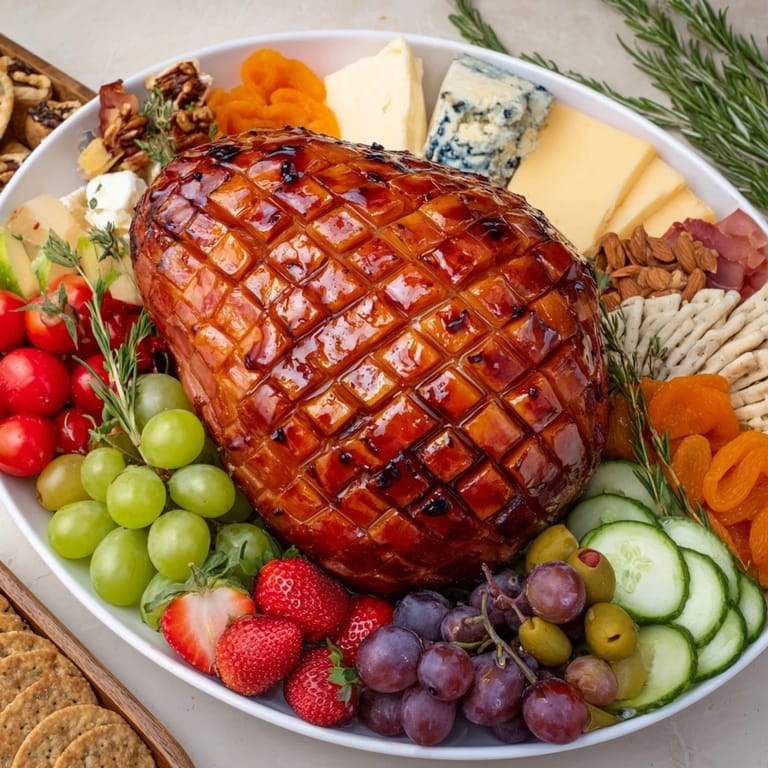
- Preheat your oven to 350°F. Place the ham in a roasting pan and use a sharp knife to score the surface in a crosshatch diamond pattern—make shallow cuts, just breaking the surface. This isn't about being fancy; the pattern helps the glaze sink in and creates those caramelized edges that people will fight over. Brush the ham generously with your glaze, working it into those scored lines.
- Roast with patience and attention:
- Slide the ham into the oven. Set a timer for 20 minutes, then return and baste—that means brushing more glaze over everything, letting it pool in the pan and spooning it back over the ham. Keep doing this every 20 minutes for 1 to 1.5 hours total. The ham isn't really cooking; you're building layers of glaze and letting them caramelize. When the surface is deep amber and sticky-looking, you're done. It should take about 1.5 hours for a 3–4 lb ham.
- Let it rest like it matters:
- Pull the ham from the oven and let it sit for at least 15 minutes. This resting time is crucial—it allows the meat to relax and makes slicing cleaner. If you're feeling fancy, you can shape thin slices into roses by rolling them loosely, or just slice them thick and arrange them overlapping on your board.
- Build your board like you're painting:
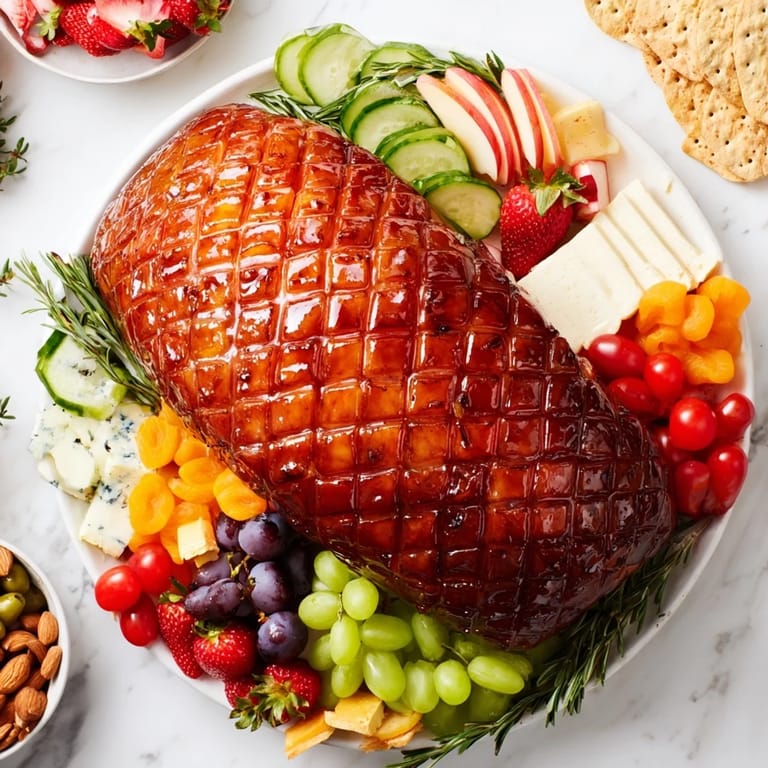
- Start with the largest board or platter you own. Place the glazed ham or your ham arrangement right at the center. Now think about balance and color—alternate cheeses, never putting the same type next to itself. Tuck grape clusters into gaps, scatter berries throughout, arrange olives and pickles in little clusters. Keep colors distributed so no one area looks empty and another looks crowded. Group similar items together for visual logic—all the creamy stuff in one area, all the sharp stuff in another. Leave small empty spaces so everything can breathe and guests can actually access things without disrupting the whole design.
- Finish with the touches that matter:
- Scatter fresh herb sprigs throughout—between cheeses, tucked among fruits, wherever they'll look natural. Put your mustards, jam, and nuts in small bowls around the board's edges. Arrange crackers, bread slices, and breadsticks in natural groupings. Step back and look at it. Does it feel generous and inviting? Does your eye know where to go? Good. It's ready.
 Pin It
 What I love most about this board is that it dissolved the usual hierarchy of entertaining. There's no stressed-out kitchen moment where the main dish isn't ready. Instead, everyone gathered around this beautiful thing together, and the eating became the whole event. Someone complimented the ham, someone else went back for thirds of the fig jam and blue cheese combination, and my daughter declared it 'the fancy way to eat lunch.' It was simple, it was beautiful, and it brought people together—which is really what this kind of cooking is for.
The Art of Board Assembly
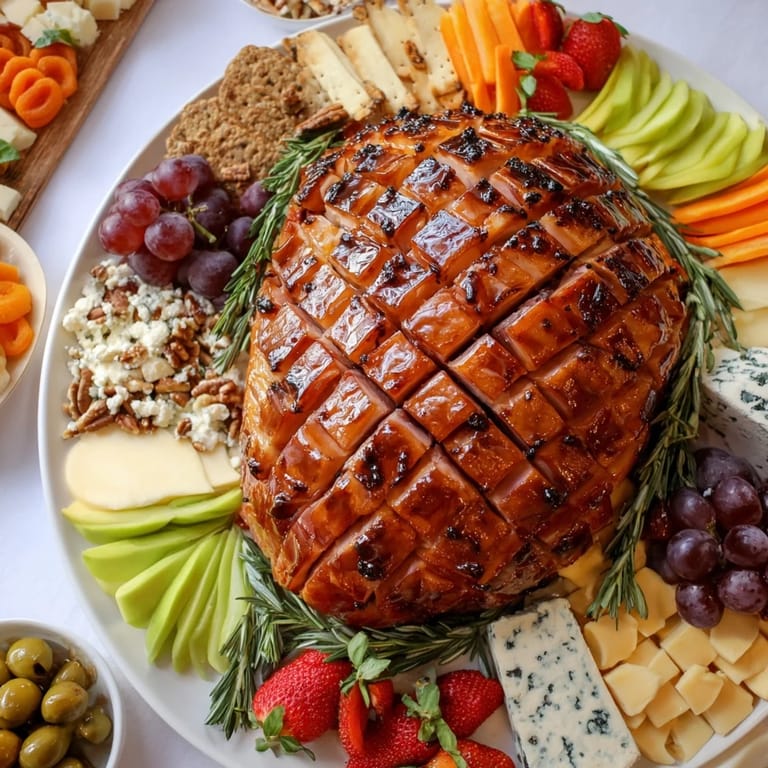
Assembling a charcuterie board is actually a learned skill, and I wish someone had told me this years ago. It's not about random arrangement—there's a gentle logic to it. Think of it like composing a painting: you want variety in every small section, colors distributed evenly, and a rhythm that guides the eye around the whole thing. Start with your anchor (the glazed ham), then build outward in rings. Alternate textures and colors constantly. Put something soft next to something crunchy, something sweet next to something savory. The goal is that no matter where someone's hand reaches, they'll find something interesting. This approach makes the board feel abundant without actually being wasteful, and it's far more impressive than random piling.
Wine and Beverage Pairings
The genius of this board is that it genuinely works with multiple beverage options, which matters when you're entertaining different preferences. A sparkling wine—prosecco, cava, even champagne if you're feeling celebratory—complements the ham's sweetness and the variety of flavors. A dry cider brings an herbal, slightly tannic quality that's wonderful with the cheese and picks up on those clove notes in the glaze. A light-bodied red like a pinot noir won't overpower anything and bridges the sweet and savory beautifully. I've also served this with a slightly chilled rosé, which somehow manages to be perfect with everything on the board. The point is: serve what your guests actually drink, not what you think they should drink.
Make-Ahead and Storage Wisdom
One of the greatest gifts you can give yourself on entertaining day is a plan for what can be done ahead. The glaze can be made the morning of, stored in a container, and reheated gently when you're ready to brush it onto the ham. The ham itself can be roasted up to 8 hours ahead and served at room temperature—actually, it's often better at room temperature because the flavors are more pronounced. You can cut and prep all your fruits and vegetables the morning of, storing them separately in containers so they stay fresh and crisp. The only thing you shouldn't do ahead is arrange the board itself—that final composition benefits from being done within an hour of serving, so everything looks fresh and vibrant.
- Toss sliced apples in a tiny bit of lemon juice immediately after cutting to prevent browning
- Store cut cheeses under parchment paper rather than plastic wrap—they'll taste better and won't get that plastic-y film
- Keep berries separate until just before serving so they don't weep and stain everything around them
 Pin It
 This board has become my answer to 'what do I make for a special occasion that feels impressive but doesn't tie me to the kitchen all day.' It's generous, it's beautiful, and somehow it always makes people feel cared for. That's the real recipe here.
Recipe FAQs
- → How is the ham glazed for this centerpiece?
The ham is brushed with a syrupy glaze made from brown sugar, honey, Dijon mustard, apple cider vinegar, and optional ground cloves, then roasted until caramelized.
- → What cheeses complement the glazed ham best?
Aged cheddar, brie, blue cheese, and gouda provide a mix of sharp, creamy, and mild flavors that pair well with the sweet and savory ham.
- → Can the board accommodate dietary restrictions?
Yes, substituting turkey ham allows a pork-free option. Adding pickled vegetables or deviled eggs can increase variety for different preferences.
- → What fresh ingredients enhance the board's flavor?
Fresh grapes, strawberries, cherry tomatoes, apple slices, and mini cucumbers add freshness and color, balancing the richness of the ham and cheeses.
- → How should the board be presented for best effect?
Arrange the glazed ham or slices at the center, then symmetrically place cheeses, fruits, breads, and accompaniments around it to create an inviting, harmonious display.
- → What beverages pair well with the board?
Light sparkling wines, dry ciders, or light-bodied red wines complement the flavors and enhance the overall experience.