 Pin It
 My roommate brought home a container of falafel from a tiny Middle Eastern spot downtown, and I watched her devour it over quinoa with this silky tahini sauce dripping everywhere. She kept raving about how it tasted restaurant-quality but felt actually nourishing, and I got curious enough to reverse-engineer it in my own kitchen. The first batch was dense and heavy, but after a few attempts I figured out that the secret was keeping the mixture coarse and not overmixing, then baking instead of frying for something lighter. That revelation sparked this bowl, which has become my go-to when I need something that feels both indulgent and genuinely good for me.
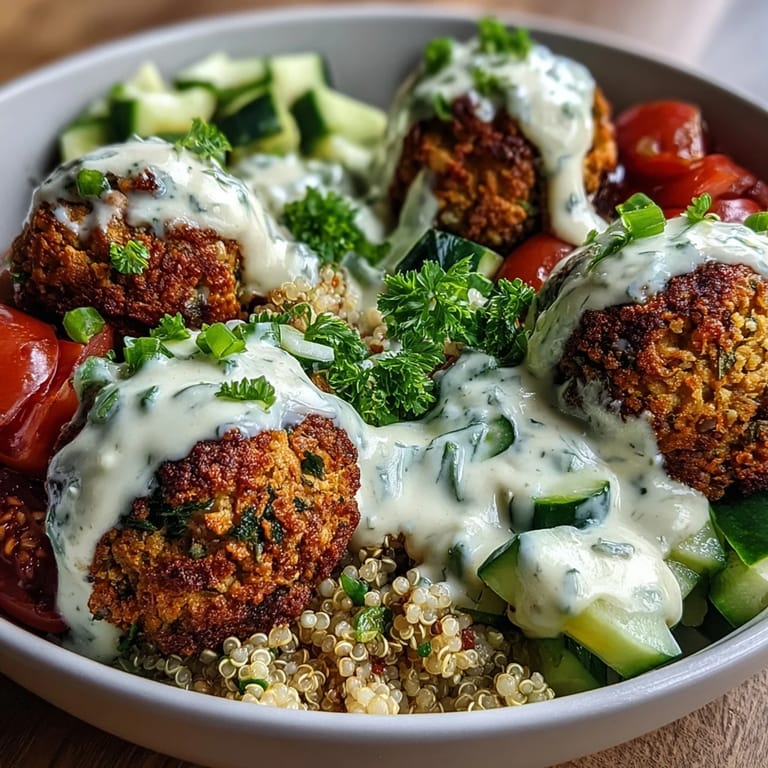
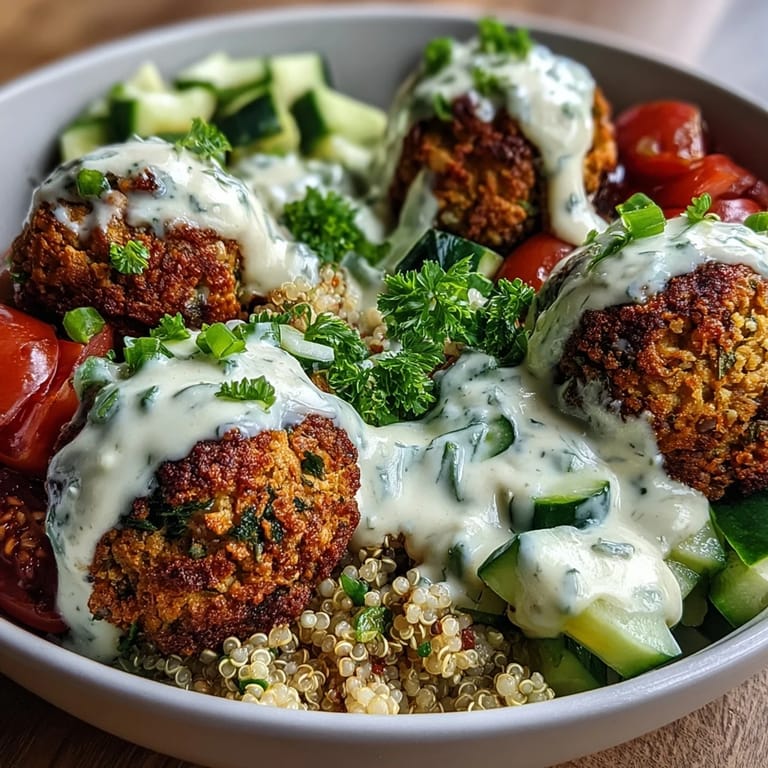
I made this for friends on a random Tuesday evening, and someone asked if I'd trained as a chef because of how balanced and thoughtful the plate looked. Honestly, I was just trying to impress them before they arrived, arranging the cucumber and tomatoes carefully around the falafel, but that moment made me realize how much care and intention can matter even when you're cooking something simple. Since then, I make it whenever I want to feel a little proud of what I'm putting on the table.
Ingredients
- Chickpeas (canned or cooked): The backbone of your falafel, providing protein and that distinctive earthy flavor that makes falafel unmistakable.
- Fresh parsley and cilantro: These aren't just garnish here; they're what makes the falafel taste bright and herbaceous rather than heavy, so use fresh and don't skip them.
- Green onions: They add a gentle onion note without the harshness of raw onion, keeping the texture lighter.
- Chickpea flour: This is the binder that lets you skip traditional deep frying; it holds everything together while keeping things tender inside.
- Cumin and coriander: These warm spices are what your nose expects when falafel is cooking, so measure them generously.
- Quinoa: Rinsed thoroughly removes any bitterness and helps each grain stay separate and fluffy after cooking.
- Tahini: Make sure you're buying pure sesame tahini, not the sweet kind; stir it well before measuring as the oil separates.
- Lemon juice: This brightens everything, from the falafel mixture to the sauce, so use fresh lemon rather than bottled.
Tired of Takeout? 🥡
Get 10 meals you can make faster than delivery arrives. Seriously.
One email. No spam. Unsubscribe anytime.
Instructions
- Set your oven and line your workspace:
- Preheat to 400°F and get a baking sheet lined with parchment; this prevents sticking and makes cleanup actually manageable.
- Build the falafel base:
- Pulse everything together in the food processor until it looks like coarse wet sand with some texture still visible. If you overprocess it becomes gluey, so stop when you still see little flecks of herb.
- Form and oil your falafel:
- Damp hands make this step way less messy; form 12 balls and brush with olive oil so they get crispy rather than dry during baking.
- Bake until golden:
- About 22 to 25 minutes with a flip halfway through; you'll know they're ready when the outside sounds hollow and looks deep golden brown.
- Cook your quinoa simultaneously:
- Combine rinsed quinoa, water, and salt, bring to a boil, then reduce heat, cover, and simmer for 15 minutes. The standing time after is crucial because it lets the grains absorb any remaining moisture and become fluffy.
- Whisk the tahini sauce until smooth:
- Start with 2 tablespoons of water and whisk constantly; the mixture will seem thick and grainy at first, then suddenly transform into something silky and pourable.
- Assemble your bowls with intention:
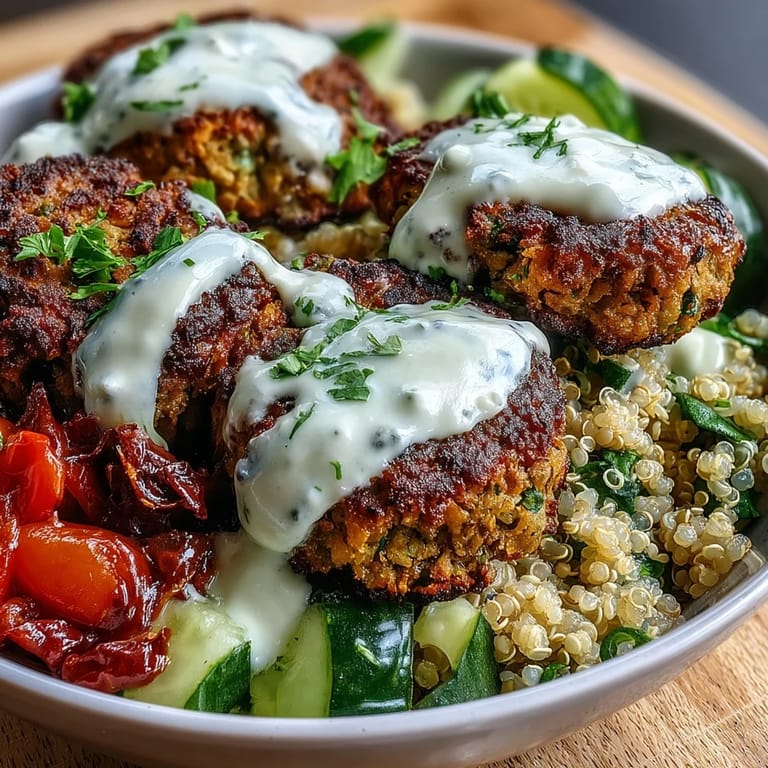
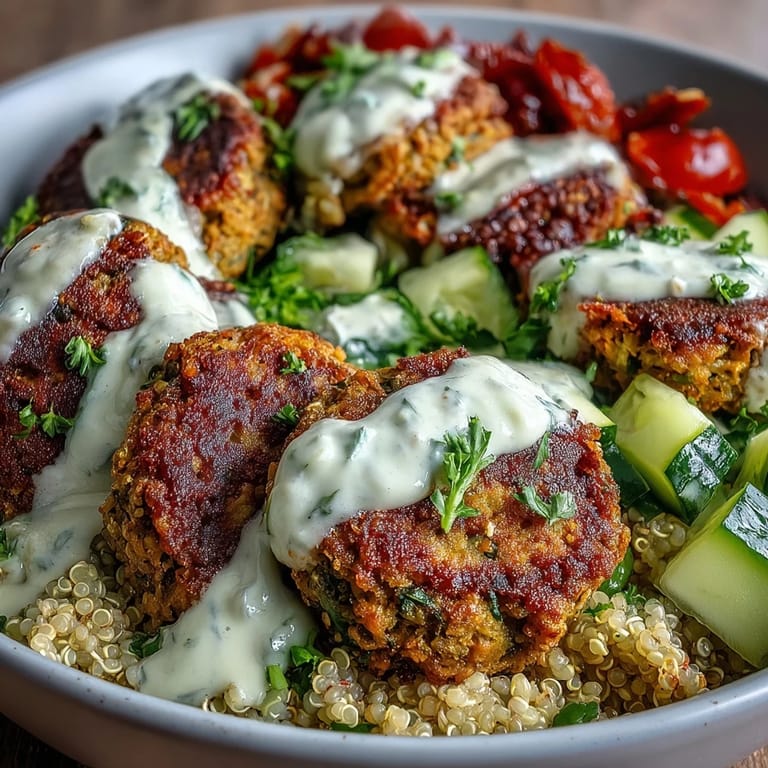
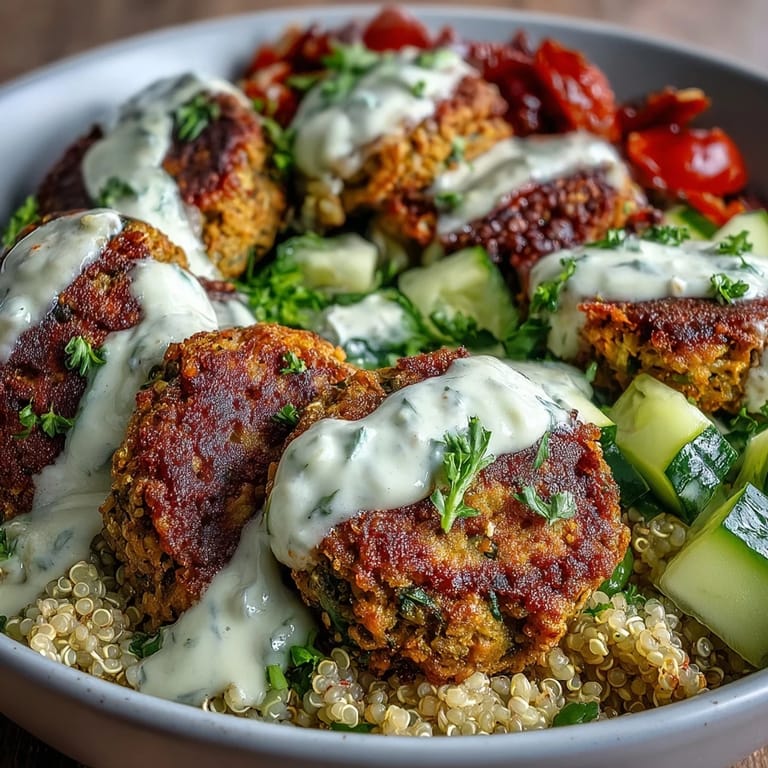
- Layer quinoa as your base, arrange vegetables thoughtfully around the edges, top with three falafel per bowl, then drizzle the tahini sauce so it pools slightly in the center.
 Pin It
  Pin It
 One afternoon while testing this recipe for the third time, my neighbor walked past and the smell of cumin and coriander pulled her into my kitchen. She ended up staying for dinner, and we sat on my porch eating these bowls while the sun set, barely talking because we were too focused on every bite. That's when I knew this recipe had crossed over from being something I made to something worth sharing.
The Best Way to Store and Reheat
I used to assemble the whole bowl and then store it, only to end up with soggy quinoa and wilted greens by the next day. Now I keep everything separate in the fridge, with falafel in one container and the sauce in another, then assemble when I'm ready to eat. The falafel keeps for three days and reheats beautifully in a 350°F oven for about 8 minutes, getting crispy again like you just made them.
Ways to Make It Your Own
This bowl is honestly a template more than a rigid recipe, which is why it's become such a regular dinner in my rotation. I've added roasted beets for earthiness, swapped in kale when tomatoes weren't good, and even used leftover roasted chickpeas instead of falafel when I was in a hurry. The core idea of crispy protein, fluffy grain, fresh vegetables, and tahini sauce works with almost any combination you can imagine.
Make It Heartier or Lighter
On nights when I'm genuinely hungry, I'll serve this with warm pita bread and maybe some hummus on the side, turning it into something almost pizza-like in its satisfaction. Other times, when I just want something nourishing but light, I'll pile extra greens under the quinoa or add raw spinach that wilts slightly from the warm falafel and sauce. The beauty is that you can scale the richness up or down depending on what your body needs that day.
- Toasted pumpkin seeds or slivered almonds add crunch and extra nutrition without overwhelming the other flavors.
- A squeeze of fresh lemon over everything at the end brightens it up if it starts to feel heavy.
- Leftover falafel makes incredible lunch boxes because they hold up well and taste good at room temperature.
 Pin It
  Pin It
 This bowl somehow became comfort food for me, something I make when I want to feel like I'm taking care of myself but still having fun in the kitchen. Every time I arrange those golden falafel on top of fluffy quinoa, I remember why I fell in love with cooking in the first place.
Recipe FAQs
- → Can I make the falafel ahead of time?
Yes, you can prepare the falafel mixture up to 24 hours in advance and store it refrigerated. Shape and bake when ready to serve. Leftover baked falafel keeps well for 3 days and reheats beautifully in the oven.
- → What can I substitute for chickpea flour?
All-purpose flour works as a binder, though chickpea flour enhances the traditional flavor. For gluten-free options, try almond flour or ground oats. Start with 2 tablespoons and adjust as needed.
- → How do I prevent the falafel from crumbling?
Ensure the mixture isn't too wet by draining chickpeas thoroughly. Using damp hands when shaping helps. The chickpea flour acts as a binder—add another tablespoon if the mixture feels too loose.
- → Can I cook the falafel differently?
While baking yields a lovely crisp texture, you can pan-fry in oil for a golden crust or air-fry at 375°F for 15-18 minutes, shaking halfway. Each method produces delicious results.
- → Is this bowl freezer-friendly?
The baked falafel freezes exceptionally well for up to 3 months. Freeze cooled falafel in a single layer, then transfer to a container. Reheat from frozen in a 375°F oven for 10-12 minutes. Assemble bowls fresh.
- → What other vegetables work well?
Shredded cabbage, diced bell peppers, roasted eggplant, or fresh radishes add wonderful texture and flavor. Pickled onions or olives bring tangy brightness that complements the creamy tahini.