 Pin It
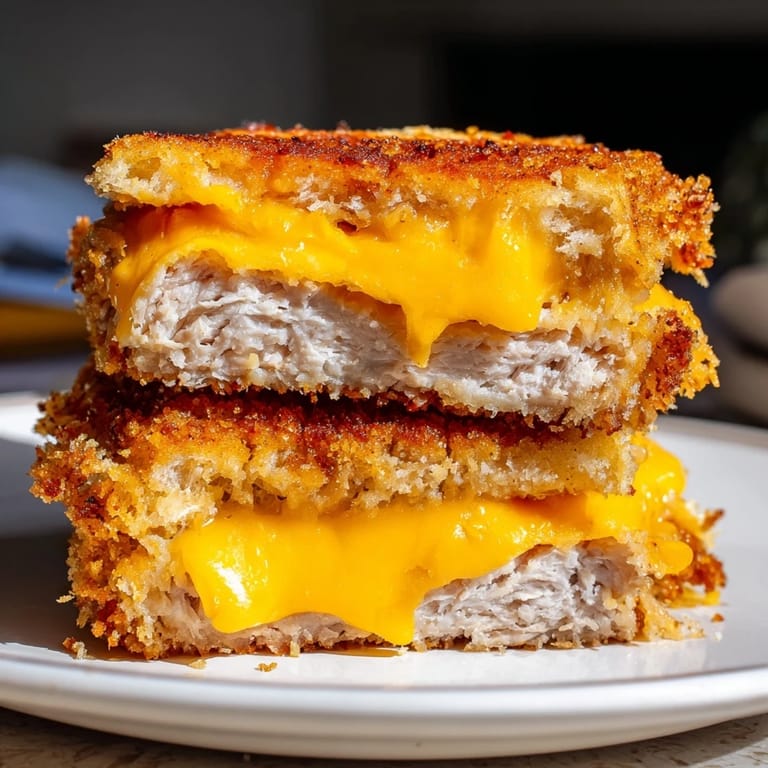
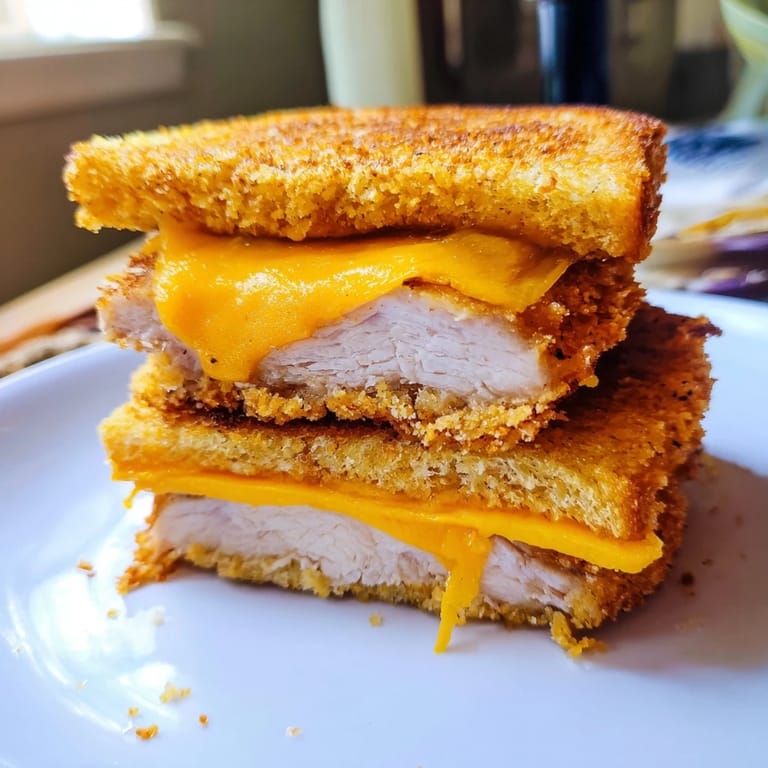
 My friend Sarah called at 6 PM asking if I could make something hearty and unexpected for dinner. I had pork chops thawing and a loaf of sourdough on the counter, and suddenly the idea hit me like a lightning bolt—what if I took everything I loved about a crispy fried pork cutlet and tucked it into a grilled cheese? The kitchen filled with the smell of buttery bread and panko crust, and by the time I pulled the first sandwich off the griddle, golden and oozing melted cheddar, everyone was gathered around wondering what magic had just happened.
I made this for my partner's family last November when we were all snowed in and feeling a little stir-crazy. His mom kept saying she'd never seen anything like it, in a tone that made me genuinely unsure whether that was a compliment. But then she took a second one, and when she asked for the recipe, I knew it had officially passed the test.
Ingredients
- Boneless pork chops, about 1 pound: The sweet spot is chops that are about three-quarters of an inch thick—thin enough to cook through quickly, thick enough that they stay juicy after breading and frying.
- All-purpose flour: This is your first layer of defense against the egg not sticking evenly; don't skip it or your coating will be patchy.
- Large eggs, 2: These need to be beaten until they're completely uniform, otherwise you'll get streaks where the bread doesn't adhere properly.
- Panko breadcrumbs, 1 cup: Regular breadcrumbs will give you a denser crust, but panko is what creates those little air pockets that make the coating actually stay crispy.
- Garlic powder and smoked paprika: The paprika especially is what makes people ask what spice you used—it adds a subtle depth that makes the coating taste intentional rather than plain.
- Salt and black pepper: Season the pork chops themselves before breading, not just the coating, or the meat will taste bland underneath all that crust.
- Vegetable oil for frying: You need enough to come up a quarter-inch in your skillet; if it's too shallow, the bottoms won't crisp evenly.
- Sturdy white or sourdough bread: Flimsy bread will absorb the butter and get soggy before the cheese even melts—you want something substantial that can handle the heat.
- Sharp cheddar cheese, 8 slices: Don't buy pre-sliced if you can help it; a block of cheddar cut to your thickness will melt more evenly and taste noticeably better.
- Unsalted butter, 4 tablespoons: This is your cooking surface, so let it soften to room temperature before you start, which ensures it spreads without tearing the bread.
- Mayonnaise, optional 2 tablespoons: This is a secret weapon—brushed on the outside instead of butter, it creates an even crisper, more golden crust than butter alone.
Tired of Takeout? 🥡
Get 10 meals you can make faster than delivery arrives. Seriously.
One email. No spam. Unsubscribe anytime.
Instructions
- Pat the pork and build your station:
- Dry pork chops are crucial because moisture is the enemy of a crispy coating. Set up your three bowls in a line—flour, beaten egg, panko mixture—and you're ready to move quickly without hesitation.
- Bread each chop with intention:
- Dredge in flour first, coating all sides and tapping off excess. Then dip in egg, letting the excess drip back into the bowl. Finally, press into the panko mixture, really pushing so the breadcrumbs grip the egg layer.
- Get your oil hot and listen for the sizzle:
- When you place a pork chop into the skillet, it should immediately make a confident sizzle sound. If it's too quiet, your oil isn't hot enough yet. Fry 3 to 4 minutes per side until the coating turns deep golden brown and the internal temperature hits 145°F.
- Let the meat rest while you clear space:
- Five minutes might feel short, but this resting time lets the juices redistribute inside the meat so every slice stays tender instead of dry. While you're waiting, get your butter softened and bread sliced.
- Construct each sandwich like you're building something precious:
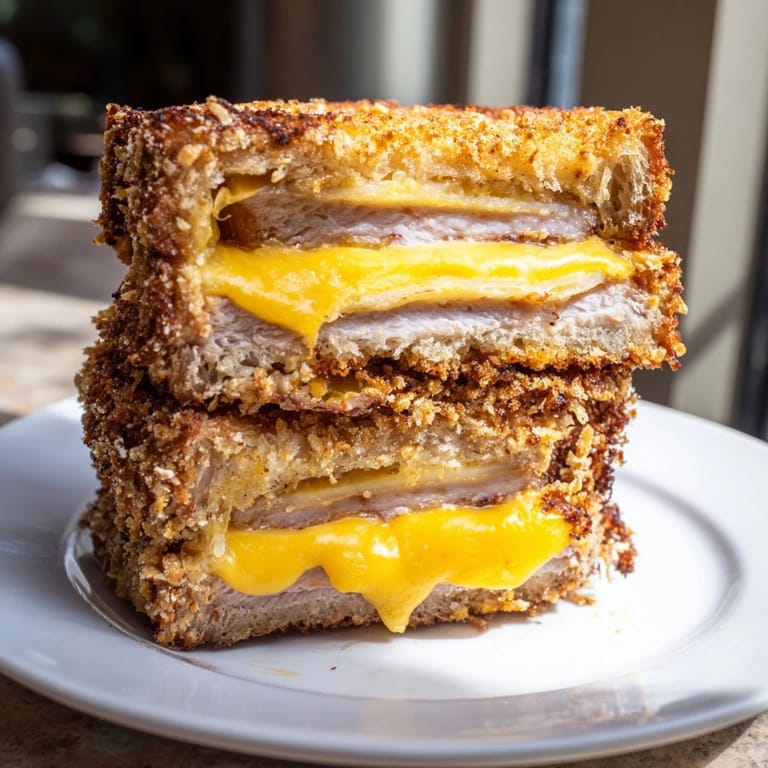
- Spread softened butter on the outside of one bread slice. On the inside, layer cheese, then your sliced pork chop, then another cheese slice on top. Top with the second bread slice, buttered side facing outward.
- Grill until the cheese is a warm puddle inside:
- Medium heat is your friend here—if you go too hot, the outside will burn before the cheese melts. Cook 3 to 4 minutes per side, pressing down gently with a spatula for even browning that makes the cheese seep into every corner.
- Give them two minutes to set up:
- This resting time might be the hardest part because the aroma will be irresistible, but it lets the cheese firm up just slightly so when you cut into it, you don't have a molten lava situation.
 Pin It
 What struck me most about making this sandwich wasn't the technique or even how impressed people were—it was realizing that my favorite meals are usually the ones where I accidentally combined two things I loved and discovered something new. This sandwich became the proof of that idea.
Making the Pork Chop Crust That Actually Stays Crispy
The breading process is where most people slip up, and it's usually because they're moving too fast or not pressing hard enough. When you dip the floured, egg-coated chop into the panko, you need to actually press it down so the breadcrumbs grip the egg layer like they mean it. I learned this the hard way when my first attempt at scaling the recipe for a crowd resulted in coatings that flaked off in the skillet like shattered glass. The second time, I slowed down, pressed deliberately, and the coating became a golden shell that protected the juicy pork inside. Temperature matters too—the oil needs to be hot enough that it immediately seals the outside of the coating, creating that crispy barrier that stays intact even after it gets squeezed between buttery bread and melted cheese.
The Cheese Game: Why Sharp Matters and Texture Counts
I've made this sandwich with five different types of cheese, and I keep coming back to sharp cheddar because it has enough personality to not get completely lost in the richness of the butter, bread, and fried pork. Mild cheddar melts fine but tastes almost bland in comparison. Swiss is excellent if you want something lighter and more subtle, and provolone adds a faint nuttiness that's surprisingly good with the smoked paprika in the crust. The real trick is not layering too much cheese—two slices is enough, because more than that and you're just adding grease without adding flavor, and the sandwich becomes more about the cheese than about the beautiful crispy pork that's the whole point.
Timing, Temperature, and the Perfect Grilled Cheese
The difference between a grilled cheese that's buttery-soft-on-the-outside and one that's genuinely crispy is about 50 degrees and 30 seconds. Too cool and the butter doesn't brown enough to create that satisfying crust; too hot and the outside burns while the inside is still cold and the cheese isn't even melting. Medium heat on a skillet is the safest bet, and 3 to 4 minutes per side usually gets you there, depending on how thick your bread is and how aggressive your pan is about browning things. The spatula pressing matters too—a gentle, steady pressure helps the bread make even contact with the pan so you get a consistent golden color instead of patchy brown spots and pale areas.
- If your spatula is too aggressive, you'll squeeze out the cheese and it'll burn on the pan instead of staying inside the sandwich where it belongs.
- Some people swear that adding mayo to the outside of the bread instead of butter creates an even crisper crust, and they're not entirely wrong—try it and decide for yourself.
- A griddle gives you more even heat than a skillet if you're making multiple sandwiches at once, which matters more than you'd think when you're trying to get them all done at the same temperature.
 Pin It
 This sandwich proved to me that the best kitchen discoveries happen when you stop worrying about whether something is allowed to exist and just try it anyway. Every time I make one, it feels a little less like a recipe and a little more like an old friend you're visiting.
Recipe FAQs
- → How do you achieve crispy pork chops?
Coating pork chops in flour, beaten eggs, and panko breadcrumbs seasoned with garlic powder and smoked paprika ensures a crispy and flavorful crust when fried.
- → What type of bread works best for this sandwich?
Sturdy white or sourdough bread holds up well to the juicy pork and melted cheese without becoming soggy.
- → Can I substitute the cheese used?
Yes, sharp cheddar is recommended, but Swiss or provolone can be used for a different flavor profile.
- → Is mayonnaise necessary for the sandwich?
Mayonnaise is optional and adds extra crispness to the outside of the bread but can be skipped if preferred.
- → How should the sandwich be cooked?
Grill the assembled sandwiches in a skillet or griddle over medium heat until the bread is golden and the cheese melts, about 3–4 minutes per side.